Dairy Free Protein Powder UK: Best Options for Lactose Intolerant Lifters
Around 5 percent of UK adults are lactose intolerant. The best dairy-free protein picks across pea, soy, hemp, rice, egg and beef for 2026.
Kevin, founder of WheyWise
Quick answer
If dairy upsets your stomach, the dairy-free protein to start with is Bulk Vegan Protein. It is a pea and rice blend with no whey, casein or lactose, one of the cheapest plant proteins in the UK, and it builds muscle just as well as whey once you hit your daily protein total. Around 1 in 20 UK adults are lactose intolerant, so if that is you, this is the simplest switch that still tastes fine in a smoothie.
Dairy free protein powder is any protein supplement that contains no milk derived ingredients: no whey, no casein, no milk protein concentrate, and no lactose. The most common dairy free options in the UK are pea protein, pea and rice blends, soy protein isolate, hemp protein, brown rice protein, egg white protein and beef protein isolate. Around 5 percent of UK adults have a diagnosed lactose intolerance, and surveys suggest a much larger group experience bloating, cramps or skin reactions from whey without ever connecting it to the protein source.
This guide covers what dairy free actually means on a UK label, the difference between lactose free and dairy free (they are not the same), the best dairy free protein sources, and which UK products deliver real value in 2026.
What does dairy free protein powder actually mean?
A dairy free protein powder contains zero milk derived ingredients. That rules out whey concentrate, whey isolate, whey hydrolysate, casein, milk protein concentrate, and any blended powder that includes any of these. UK packaging law requires milk to be highlighted in the ingredients list under the FSA's 14 named allergens, so a quick scan of the bold or capitalised ingredients will tell you instantly.
The protein source on a dairy free product will be one of: pea protein isolate, soy protein isolate, brown rice protein, hemp protein, faba bean protein, sunflower or pumpkin seed protein, egg white protein, or beef protein isolate. Most modern UK dairy free powders combine two or more plant sources to cover all nine essential amino acids.
Dairy free is not the same as vegan. Egg white protein and beef protein isolate are both dairy free but not plant based. If you are switching for ethical reasons rather than digestive ones, you want a product labelled vegan rather than just dairy free.
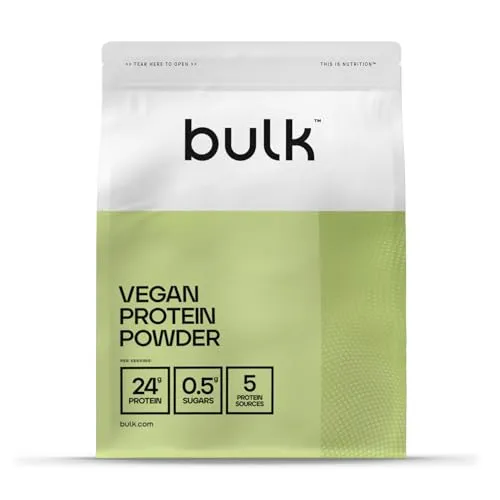
Bulk Vegan Protein Powder
1kg bag
Pea and faba bean dairy free blend from Bulk delivering 23g protein per scoop. Soy free, consistently the cheapest mainstream UK vegan protein during their weekly sales.
Buy Vegan Protein Powder →See the price on AmazonBulk Vegan Protein Powder
1kg bagPros
- + Competitive price for vegan
- + Pea and faba bean blend
- + 23g protein per serving
- + No soy allergen concerns
Cons
- – Slightly gritty plant texture
- – Earthy aftertaste some flavours
- – Lower leucine than whey
●Nutrition per scoop · 24.1g protein in 35g▼
Protein makes up 69%
of this 35g scoop · 115 kcal total
Lactose free vs dairy free, what is the difference?
Lactose free and dairy free are not interchangeable terms, and getting this wrong is the most common mistake UK buyers make.
Lactose free means the lactose sugar has been removed or processed out, but the milk proteins (whey and casein) remain. A high quality whey isolate is naturally very low in lactose because the filtration process removes most of it. Products like Isopure Zero Carb whey isolate are explicitly lactose free but still contain whey protein, which means they are dairy based.
Dairy free means no milk derived ingredients at all. This is what you need if you have a milk protein allergy, follow a vegan diet, or have non lactose dairy sensitivity (which is more common than people realise). It also matters if you have eczema or acne flare ups linked to dairy, because the trigger is often the milk protein, not the lactose.
If your only issue is lactose and you tolerate whey isolate well, a high quality whey isolate is cheaper and higher in protein per 100g than most dairy free alternatives. Compare options on the UK whey isolate comparison. If you react to dairy itself, keep reading.
The best dairy free protein sources
The dairy free protein landscape in the UK splits into plant based and animal sourced.
Pea protein isolate. The most popular plant based protein in the UK. Around 80g of protein per 100g, high in lysine and BCAAs, low in methionine. Pea protein has a complete amino acid profile when combined with rice protein. Mixes well, generally tastes neutral, and is the foundation of most UK vegan blends.
Brown rice protein. 70 to 80g of protein per 100g, high in methionine and cysteine, low in lysine. Combines with pea protein to form a complete amino acid profile. Slightly grittier texture than pea on its own.
Soy protein isolate. 80 to 90g of protein per 100g, complete amino acid profile on its own, the most studied plant protein for muscle building. The downside is that soy is a top UK allergen and some people prefer to avoid it. Often the cheapest dairy free option per 25g of protein.
Hemp protein. 50 to 60g of protein per 100g, high in fibre and omega 3 fats, complete amino acid profile but lower in lysine. Earthy taste, often used as a secondary source in blends rather than a standalone protein.
Egg white protein. 80g of protein per 100g, complete amino acid profile, animal sourced but dairy free. Excellent digestibility, but more expensive and harder to find in the UK. Best for lactose intolerant lifters who are not vegan.
Beef protein isolate. 80g of protein per 100g, complete amino acid profile, no lactose. Niche, expensive, and the protein quality scoring is below whey in most studies. Worth considering only if you are sensitive to both dairy and plant proteins.
Best dairy free protein powders in the UK
Prices change weekly, so cross check live UK pricing on the WheyWise vegan and dairy free comparison before buying. Three brands offer the best balance of price, protein content and UK availability in 2026:
Bulk Vegan Protein Powder. Pea and faba bean blend, around 73g of protein per 100g, 23g of protein per scoop. Soy free. The most consistently affordable dairy free protein in the UK during Bulk's weekly sales. Good baseline option for new dairy free buyers.
Protein Works Vegan Wondershake / Vegan Protein 360. Five plant source blend including pea, brown rice, sunflower, hemp and soy. Added vitamins and minerals. The best taste in the UK vegan category according to most Trustpilot and Reddit feedback, which matters more than people think when you are switching from whey.
MyProtein Pea Protein Isolate. Single source pea protein at around 80g of protein per 100g. Soy free and gluten free. Use it stacked with their rice protein isolate or in recipes rather than as a standalone shake, because pea on its own is incomplete on methionine.

Protein Works Vegan Protein 360 - PLATINUM Innovation
1kg bag
Five source plant blend from Protein Works (pea, rice, sunflower, hemp, soy) with added vitamins. The best tasting dairy free option in the UK according to Reddit and Trustpilot feedback.
Buy Vegan Protein 360 - PLATINUM Innovation →See the price on AmazonPros
- + 5 plant protein source blend
- + Added vitamins minerals turmeric
- + Complete amino acid profile
- + Genuinely good taste for vegan
Cons
- – Premium price highest bracket
- – Thicker chalky texture than whey
- – Large 40g scoop size required
●Nutrition per scoop · 28.4g protein in 35g▼
Protein makes up 81%
of this 35g scoop · 129 kcal total
For a side by side view including Free Soul, Vegan Supplement Store, Peak Supps, Nutrition X, Innermost and Form Performance Protein, the vegan and dairy free comparison page tracks every UK retailer in real time and sorts by cost per 25g of protein.
Can dairy free protein build muscle as well as whey?
Whey has a slight edge for muscle protein synthesis on a gram for gram basis. It is absorbed faster and has a higher leucine content per gram of protein. Multiple meta analyses have shown a small but measurable advantage for whey over single source plant proteins like pea or soy alone over short term studies.
The picture changes when you compare whey to a properly formulated dairy free blend. A pea and rice protein blend with adequate leucine (above 2.5g per serving) and total daily protein matched at 1.6 to 2.2g per kg of body weight produces equivalent muscle and strength gains in 12 week training studies. The total daily protein intake is the variable that matters, not the source.
Egg white protein and beef protein isolate sit between whey and plant blends in terms of absorption speed and amino acid profile. Both are valid choices for dairy free lifters who want an animal based source.
For a deeper read on whey types and how they stack against plant based, see the whey isolate vs concentrate breakdown and the best vegan protein powder UK guide.
How to find the cheapest dairy free protein in the UK
The cheapest dairy free protein in the UK is rarely the bag with the lowest sticker price. Plant proteins range from 50 to 85g of protein per 100g across UK products. A £20 bag at 60g of protein per 100g works out more expensive per 25g of protein than a £25 bag at 80g of protein per 100g. Always compare on cost per 25g of protein, not bag price.
WheyWise normalises every UK dairy free protein to cost per 25g of protein and tracks live pricing across 85+ retailers, including Bulk, MyProtein, Protein Works, Holland and Barrett, Amazon UK and the smaller specialists. The vegan comparison page and the plant based comparison page both surface dairy free options sorted by best value, updated weekly.
Three practical tactics for cutting your dairy free protein bill:
Buy bigger bags. A 2.5kg pea and rice blend is typically 15 to 25 percent cheaper per 100g than a 1kg bag of the same product. If you have committed to a brand you tolerate well, scale up.
Watch for code stacks at MyProtein and Protein Works. Both run frequent 40 to 60 percent off events on their vegan ranges around payday and bank holidays. Sign up to their email lists.
Compare soy alongside pea blends. Soy protein isolate is often the cheapest dairy free option per 25g of protein, but most dairy free buyers exclude it without checking the price gap. If soy works for you, it can save 20 to 30 percent on monthly spend.
Frequently asked questions
Is whey isolate dairy free? No. Whey isolate is derived from milk and is therefore a dairy product, even though the lactose content is very low. If you have a milk protein allergy or follow a strict dairy free diet, choose pea, soy, rice, hemp, egg white or beef protein instead. If your only issue is lactose, a high quality whey isolate may still work for you.
What is the best dairy free protein powder UK? Bulk Vegan Protein Powder is the most consistently affordable, Protein Works Vegan Wondershake is the best tasting, and MyProtein Pea Protein Isolate is the highest in protein per 100g. Live UK pricing is on the vegan and dairy free comparison page.
Is pea protein dairy free? Yes. Pea protein isolate is extracted from yellow split peas and contains no milk, lactose or any animal derived ingredient. It is suitable for vegan, dairy free and lactose intolerant diets.
Can I find dairy free protein in UK supermarkets? Selection is limited. Tesco, Sainsbury's, Asda and Holland and Barrett each carry one or two vegan or dairy free SKUs, usually pea or pea and rice blends. Online retailers like Bulk, MyProtein and Protein Works offer significantly broader ranges and better pricing. The UK supermarket protein guide covers the supermarket options in detail.
Related reading
Vegan Protein vs Whey: What the Evidence Actually Says
Soy actually outscores whey on the modern protein-quality metric, pea and rice do not, and at the budget end of the UK market plant now costs less per gram of protein. A head to head on the evidence rather than the marketing.
9 min read
When to Take Protein Powder: Before or After a Workout? (UK)
When to take protein powder in the UK: before or after your workout, whether the anabolic window is real, the best time of day, and how timing stacks up against total daily protein. Evidence-based, with value picks that work for any schedule.
6 min readHow Much Protein Powder Per Day (and Per Scoop)? UK Guide
How much protein powder to take per day in the UK: how many scoops, how much protein and how many calories are in a scoop, and how to work out your own target. Practical numbers plus a free calculator.
6 min readFind your cheapest protein
1,500 products compared across 8 UK retailers
Sorted by best value per 25g of protein.
Compare all products