Quick answer
One protein bar a day is a reasonable habit for most gym-goers, provided the rest of the diet is mainly whole food and the bar sits well. The limit is set more by the sweetener than by the protein: a bar that uses maltitol can cause wind or loose stools when the daily total builds up, and UK labels print a warning when the polyols pass 10% of the food. Use bars to top up protein between meals rather than to replace them, and pick the bar itself from our best protein bars in the UK guide.
One protein bar a day is a reasonable habit for most gym-goers, as long as the rest of the diet is built mostly from whole food. The sweetener matters more than the protein figure when you eat bars every day, because it decides whether a bar sits well. This guide covers how many a day makes sense, what sugar alcohols do, the UK laxative warning, and how a bar compares with a meal, and it hands the choice of which bar back to our best protein bars in the UK guide.
How many protein bars can you eat a day?
The ISSN position stand on protein and exercise recommends 1.4 to 2.0g of protein per kg of body weight per day for people who train. For an 80kg gym-goer that is 112g to 160g a day, so a 20g bar covers between an eighth and a fifth of the total. That is the whole day's food, so a bar should top up your meals rather than stand in for them.
Most people can manage one bar a day without trouble, and the limit is set more by the sweetener than by the protein. Two Bulk Hero bars add up to 26g of polyols, and the table below shows how quickly the load climbs. Our ingredient guide on why protein bars taste artificial explains how much polyol people notice, including one trial where 30g of maltitol caused no significant symptoms and 40g caused mild rumbling and wind.
| Bars a day | Protein from Bulk Hero (15g each) | Polyols from Bulk Hero (13g each) |
|---|---|---|
| 1 | 15g | 13g |
| 2 | 30g | 26g |
| 3 | 45g | 39g |
Arithmetic on the Bulk Hero Protein Bar label on bulk.com: 15g of protein and 13g of polyols per 50g bar. Other bars in our guide use maltitol too, so the polyol load depends on the bar you pick.
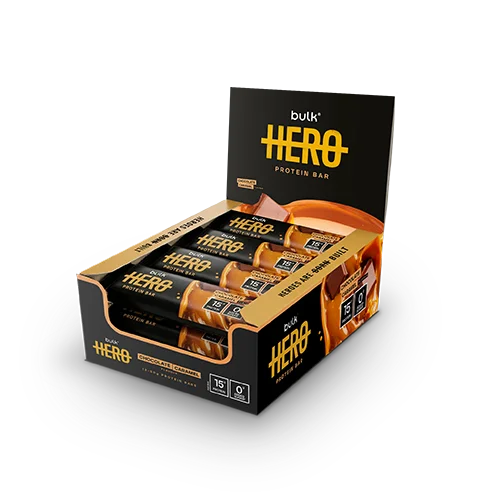
15g protein in 175 kcal, with 13g of polyols
Bulk Hero Protein Bar
Bulk's Hero bar: 15g of protein in 175 kcal, with 1.4g of sugar and 13g of polyols on the same label, per the panel on bulk.com.
Bulk's Hero bar: 15g of protein in 175 kcal, with 1.4g of sugar and 13g of polyols on the same label, per the panel on bulk.com.
Pros
- + 15g of protein in 175 kcal
- + 1.4g of sugar per bar
- + The polyols line shows the sweetener load on the label
Cons
- – 13g of polyols per bar, and Bulk prints a laxative warning
- – Uses sucralose as well as maltitol, plus palm oil
- – Not in our price data, so check the box price on bulk.com
Past two bars a day, most people will notice the polyol load, and three bars is a lot of protein to take from confectionery. If you need more protein than two bars give, add a protein shake or a meal rather than a third bar. That keeps the sweetener load where it is, and the protein total moves in the right direction.
What are sugar alcohols in protein bars?
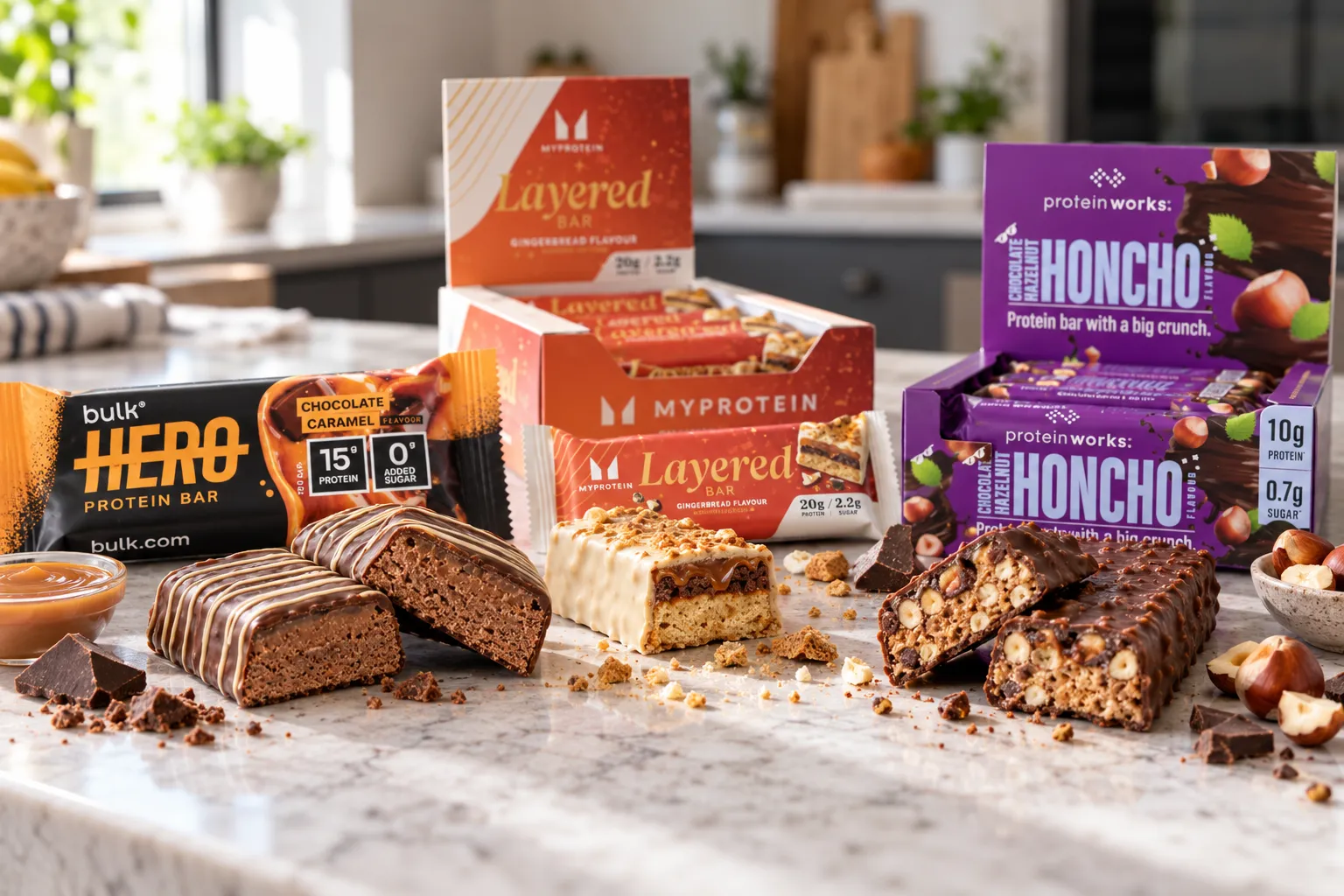
Sugar alcohols, also called polyols, sweeten a bar with fewer calories and less sugar on the label. Maltitol is the one most UK bars use, and the Protein Works Big Little Bar, both Myprotein Layered and Impact bars and the Bulk Hero bar all list it. Polyols are only partly absorbed, so the part that is not absorbed ferments in the gut, which is where wind and loose stools come from.
UK labelling leaves polyols out of the sugar figure, so a bar can show 1.4g of sugar and 13g of polyols on the same panel, as Bulk Hero does. The UK definition also counts glycerol, which many bars use to stay soft, so the polyols line can include an ingredient that is not sweetening anything. Check that line before you compare sugar figures.
Not every bar is built this way. The Myprotein Crispy Protein Wafer is sweetened with sugar and fructose, with no maltitol or intense sweetener, but it carries 5.5g of sugar and 6.0g of saturated fat per wafer. For someone who reacts to polyols, that trade may be worth making.
Do protein bars need a laxative warning?
Yes, once the polyols pass a threshold. UK food labelling rules carry over Annex III of Regulation (EU) 1169/2011, which requires the words “excessive consumption may produce laxative effects” on any food with more than 10% added polyols. The test is the share of the food rather than the brand, so a 50g bar with 13g of polyols is well over the line.
Myprotein prints the same warning on its Layered Triple Chocolate Fudge and Impact pages, and Bulk prints it on the Hero bar. Myprotein's Layered Gingerbread declares 5.0g of polyols in a 60g bar, which is under the 10% line, and we didn't see the warning on its page. The warning is a dose note rather than a ban, so read it as a prompt to check how many bars you are eating.
Are protein bars as good as whole food?
No. A bar is confectionery built to carry protein: according to the ingredient list on myprotein.com, the first four ingredients of the Layered Triple Chocolate Fudge are maltitol, glycerol, chicory root fibre and hydrolysed beef gelatin, before any milk or whey protein appears.
Meals built around meat, fish, eggs, dairy, beans or lentils bring protein together with fibre, water and a wider range of vitamins and minerals. A bar brings the protein in a different package. That is why a bar works best as a top-up on a day that is otherwise built from food.
The bars in our guide give 10g to 20g of protein for 105 to 212 kcal, which makes a sensible snack and a poor substitute for a meal. If a bar is standing in for lunch most days, a meal replacement product designed for that job is the better tool.
How do you fit a bar into a day without overdoing it?
Pick one bar, check its polyols line, and count it as a snack rather than extra food on top of your meals. Write the bar into the day the way you would a biscuit, so the total stays visible.
As an example, three meals with 30g to 40g of protein each, plus one 20g bar after training, gives 110g to 140g. That sits close to the 112g to 160g range for an 80kg gym-goer, so one bar can complete the day without a second.
If you notice wind, bloating or loose stools, drop to one bar a day, or switch to a bar with a lower polyol load or to a plain whey shake. Our guide to why protein bars taste artificial sorts the bars by sweetener, so you can see which ones use maltitol before you buy.
Keep the rest of the day built on food: protein from meals, vegetables and fruit, and water through the day. Try a bar on a rest day for a week before you make it a routine, and add a second only if you feel fine on one.
If you're deciding how often a bar fits, a protein bar or protein shake comparison shows the cost of each, and when to eat a protein bar covers the timing. For the label figures behind every claim here, read how to read a protein bar label. Once you know how many bars suit you, our best protein bars in the UK guide shows which bar to buy.
Frequently asked questions
Can you eat a protein bar every day?
Most gym-goers can eat one a day without problems, as long as the rest of their diet is mainly whole food. The main risk is the sweetener: bars that use maltitol are more likely to cause wind or loose stools in larger amounts. Speak to your GP if you have a digestive condition or are unsure.
How many protein bars is too many in one day?
There is no official daily limit for bars, but polyols add up. The Bulk Hero Protein Bar lists 13g of polyols, so two bars is 26g and three is 39g, a load many people will notice.
Do protein bars cause diarrhoea?
They can, in larger amounts, because polyols are only partly absorbed and ferment in the gut. One trial cited in our ingredient guide found 40g of maltitol in chocolate caused mild rumbling and wind, while 30g caused no significant symptoms.
Is a protein bar a healthy snack?
It can be, if you pick a bar with 15g to 20g of protein and check the polyols line, but it is still a confectionery product rather than a whole food. Treat it as a snack that fills a protein gap.
Should I eat a protein bar if I have IBS?
Speak to your GP before changing your diet for a digestive condition. As a general guide, bars with maltitol are the ones most likely to need avoiding, and the Myprotein Crispy Protein Wafer has no maltitol or intense sweetener.