Meets the weight-control band
Protein Works
Diet Meal 360 Platinum
1kg bag
Buy Diet Meal 360 Platinum →Direct from Protein WorksGet 12% off your order
Yes, for most healthy adults, a meal replacement shake is a sound tool when it is formulated for the job and one ordinary meal stays in the day. A UK weight-control shake should meet set limits on calories, protein and added vitamins and minerals, and it still gives less fibre and variety than real food.
Kevin, founder of WheyWise
Meets the weight-control band
Protein Works
1kg bag
Buy Diet Meal 360 Platinum →Direct from Protein WorksQuick answer
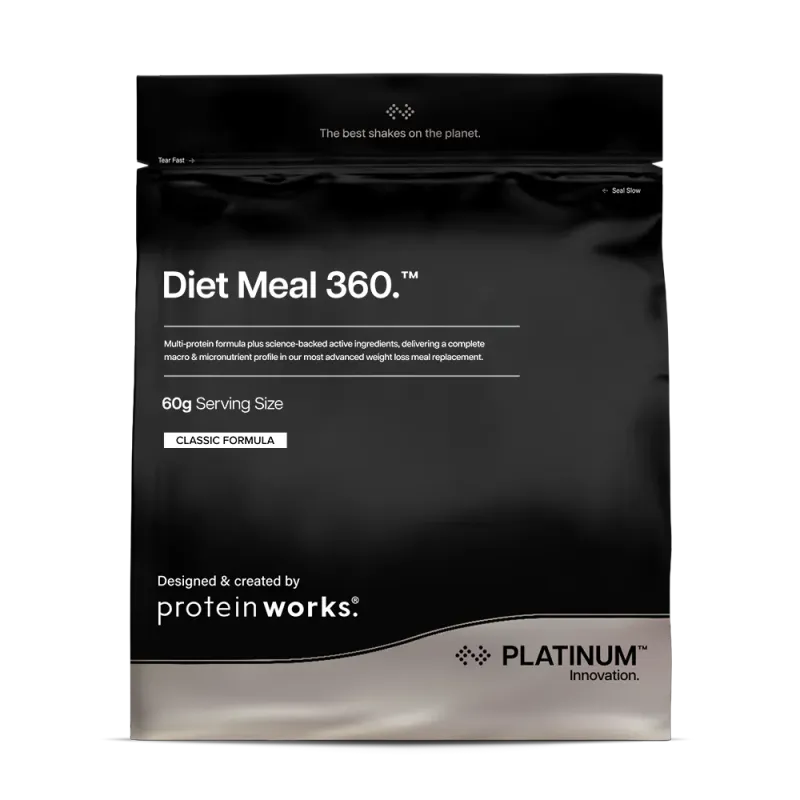
Yes, a meal replacement shake is a healthy choice for a planned calorie cut, provided it is formulated for that job and one ordinary meal stays in your day. The UK rules for a weight-control shake ask for roughly 200 to 250 kcal per serving, with protein making up a set share of its energy, so check the label before you buy. Protein Works Diet Meal 360 PLATINUM meets that band on its label, with 216 kcal and 25g of protein per 60g serving. A shake still gives you less fibre and variety than real food, so treat it as a tool rather than a permanent diet.
Meal replacement shakes are healthy for most adults when they are used as a planned part of a calorie-controlled day, and the reason lies in the rules behind them. If you want a product recommendation rather than the safety case, the best meal replacement shake in the UK guide compares prices and labels. This page covers what makes a shake nutritionally complete, what it lacks against food, and who should check with a GP first.
A shake counts as a complete meal replacement when its label shows the energy, protein and vitamins and minerals the rules set, not when the packaging says complete. The word complete on a tub does not mean much on its own. The label is where the test is, and it is the first thing to read.
The rules for a total diet replacement are in Annex I of Regulation (EU) 2017/1798, which remains in UK law. They set the whole day's energy at 600 to 1,200 kcal and protein at 75g to 105g, and they set minimum amounts of vitamins and minerals for the daily ration. That is why a total diet replacement is never a single shake.
For a shake meant to stand in for one meal for weight control, the conditions attached to the authorised weight-loss claim in Regulation (EU) No 432/2012 are about 200 to 250 kcal per serving, 25% to 50% of energy from protein, no more than 30% from fat, and at least 30% of the NRV for added vitamins and minerals. Check each figure on the label, because flavours of the same range can differ. A shake that meets the band in one flavour may not meet it in another.
Meets the weight-control band on its label
1kg bag
The shake that meets the weight-control band on its label: 25g of protein in 216 kcal, with the vitamins and minerals the rules ask for. Check the label of the flavour you buy.
or compare all UK prices →Meets the weight-control band on its label
Pros
Cons
Protein makes up 41%
of this 60g scoop · 209 kcal total
Protein does most of the work in a meal replacement, because it makes a calorie-controlled meal more filling and it is the reason most people reach for a shake. On a weight-control shake the rules put protein at 25% to 50% of energy, and Protein Works Diet Meal 360 PLATINUM sits at 46%, with 25g of protein in 216 kcal. Fibre is where shakes usually fall short of food, and the spread across the brands is wide.
| Shake (per serving) | kcal | Protein | Fibre | Sugar |
|---|---|---|---|---|
| Protein Works Diet Meal 360 PLATINUM (60g) | 216 | 25g | 5.0g | 1.1g |
| Protein Works Diet Meal 360 BLACK (65g) | 239 | 16g | n/a | n/a |
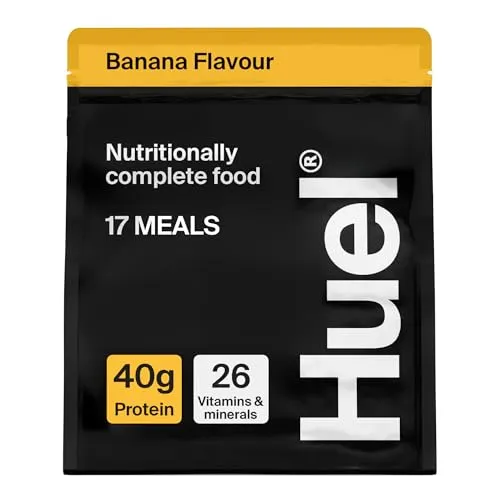
| Huel Powder (100g) | 400 | 30g | 8.0g | 1.2g |
| Protein Works Complete Meal 360 Gold (100g) | 400 | 30g | 7.8g | 9.0g |
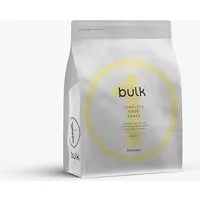
| Bulk 1 Complete Food Shake (100g, vegan) | 400 | 30g | 9.6g | 2.3g |
Figures from the labels checked for each brand. n/a means the figure was not on the label we checked.
Fibre runs from 5.0g per serving in Diet Meal 360 PLATINUM to 9.6g per 100g meal in Bulk 1 Complete Food Shake. Huel Powder has 1.2g of sugar per meal, against 9.0g in Protein Works Complete Meal 360 Gold, which is one reason the two full meals suit different people. We compare the Huel range in our Protein Works vs Huel guide.
A low-calorie shake with 5g of fibre is not a fibre source on its own, so the rest of the day needs to supply it. If you only need protein and not a meal, a protein powder is a different tool, covered in our best protein powder for weight loss UK guide.
A shake is a measured, fortified meal, so it beats food on some numbers and trails it on others. It gives you a known calorie count, a set amount of protein and added vitamins and minerals, which is useful when you want the day to be predictable. It does not give you chewing, the range of plant foods, or the variety of a normal plate.
A label only lists what the maker chose to add, so a shake can meet the rules and still make a narrower diet than a mixed plate. Food also brings things a label does not show, and no shake replaces the habit of eating a range of foods across the week. That is the real gap, and it is why the shake should be one meal and not the whole day.
The research on meal replacements is encouraging for weight loss. The Astbury et al. 2019 meta-analysis found that programmes using meal replacements led to more weight loss than food-only diets, which is the strongest reason they are used at all. Read it as evidence that the shakes help, not as proof that they are the safest way to eat every day.
Most protein per full meal
1.53kg bag
A full 400 kcal meal with the most protein per serving in this guide, 40g. It replaces a normal-sized meal rather than a calorie-controlled one.
Buy Black Edition 100% Nutritionally Complete Meal →See the price on AmazonMost protein per full meal
Pros
Cons
Protein makes up 44%
of this 90g scoop · 158 kcal total
Speak to your GP first if you are pregnant or breastfeeding, have a medical condition, or have a history of disordered eating. Medication matters too, so ask before you start if you take drugs for diabetes or blood pressure, because a change in calorie intake can change what those medicines need. Under-18s should also start only with medical advice.
A meal replacement is not a substitute for a clinical plan when a condition is involved. Your GP can tell you whether a shake plan suits you and how to monitor it. Do not stop prescribed medication on your own because a shake plan has started.
For general guidance on weight, the NHS page on managing your weight is a sensible first read, and it is a better starting point than any product page.
Healthy use comes down to the label and the plan: pick a shake that meets the composition figures, keep one ordinary meal in the day, and use the best meal replacement shake in the UK guide to choose between products. For the cost side, see meal replacement vs protein shake, and for the daily routine, see how to use meal replacement shakes.
For most healthy adults, a meal replacement shake is a reasonable tool when it replaces one meal in a planned diet and the label meets the composition rules. It is a planned tool, not a complete diet, so keep at least one ordinary meal in the day and eat a varied range of foods around it.
Not as a normal diet. Replacing every meal is a total diet replacement, which sits under separate rules: the retained UK framework sets 600 to 1,200 kcal and 75g to 105g of protein for the whole day. Doing that safely needs professional support, so speak to your GP before you try it.
A weight-control shake built to the rules carries added vitamins and minerals. Protein Works Diet Meal 360 PLATINUM lists 24, each at 30% or more of the NRV per serving, but a shake covers the nutrients on its label, not everything a varied diet provides, so check the label and keep vegetables and fruit in the rest of your day.
One or two a day alongside ordinary meals is the usual pattern. Using shakes as your only food is a different plan with its own rules, so speak to your GP first.
Anyone who is pregnant or breastfeeding, has a medical condition, takes medication for diabetes or blood pressure, or has a history of disordered eating should speak to their GP first. Under-18s should only start with medical advice too.
Why Does My Protein Bar Taste Artificial? Ingredients to Avoid
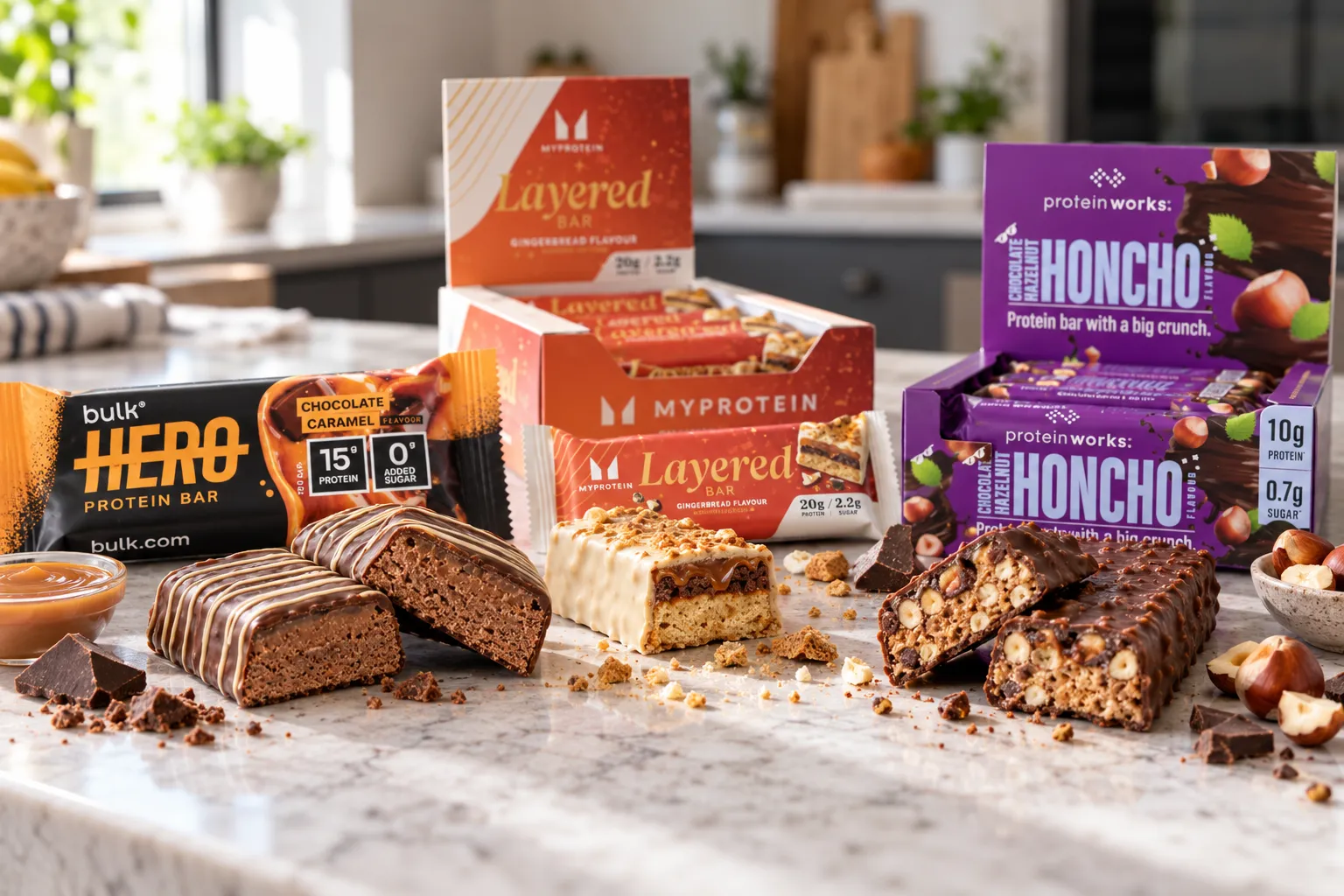
Protein bars taste artificial mostly because of what replaces the sugar: polyols such as maltitol, usually paired with an intense sweetener such as sucralose. Polyols are also the usual reason bars cause wind and bloating. The Myprotein Layered Bar in Hotel Chocolat Salted Caramel has no maltitol and no intense sweetener.
8 min read
When to Eat a Protein Bar: Around Training, Snacks and Long Days
A protein bar works before training, after it or as a snack if it fills a real gap in your protein. Timing matters less than total daily protein, which the ISSN puts at 1.4 to 2.0g per kg of body weight for people who train. This guide covers each use, from training to long days.
6 min read
Can You Eat Protein Bars Every Day? How Many and What to Watch
One protein bar a day is a reasonable habit for most gym-goers if the rest of the diet is mainly whole food. The sweetener decides how a bar sits, because polyols such as maltitol can cause wind and loose stools in larger amounts. Here is how many bars make sense and what the UK warning means.
7 min readFind your cheapest protein
783 products compared from 181 brands
Sorted by best value per 25g of protein.
Compare all products