Why Does Protein Powder Make Me Bloated? Best Options for Sensitive Stomachs (UK)
Protein powder usually bloats you because of lactose, and the milk you mix it with often carries more lactose than the powder itself. A 30g scoop of whey concentrate holds about 1.2g to 3.0g of lactose, while a 250ml glass of whole milk holds about 12g.
Kevin, founder of WheyWise
Quick answer
Most protein bloating comes from lactose, and the bigger dose is often the milk you mix it with, not the powder. Whey concentrate carries roughly 1.2g to 3.1g of lactose per 25g of protein and whey isolate about 0.1g to 0.3g, while a 250ml glass of whole milk carries about 12g. So switch to an isolate and mix it with water. Myprotein Impact Whey Isolate is the one to start with, at £1.10 per 25g of protein in the 2.5kg bag on Amazon UK. If you would rather avoid dairy altogether, Bulk Vegan Protein Powder costs 58p per 25g of protein. WheyWise worked out every lactose figure from published dairy-industry specifications and checked every price against live UK retailer listings.
Protein powder usually bloats you because of lactose, and the milk you mix it with often carries more lactose than the powder itself. A 30g scoop of whey concentrate holds about 1.2g to 3.0g of lactose, while a 250ml glass of whole milk holds about 12g. The other common causes are sugar alcohols, added prebiotic fibre and, less often, a milk allergy or an underlying gut condition. This guide works through each cause with the numbers, then lists the UK powders to switch to with.
Why does protein powder upset my stomach?
Protein powder upsets the stomach for one of five reasons, and lactose is the most common one in whey. Whey concentrate contains 4.0% to 10.0% lactose, according to the American Dairy Products Institute (ADPI) WPC standard. The NHS lists tummy pain, bloating, farting, tummy rumbling and diarrhoea among the symptoms of lactose intolerance, starting anywhere from a few minutes to a few hours after the food or drink.
- Lactose. Found in whey concentrate, in smaller amounts in isolate, and in the milk you might mix it with.
- Sugar alcohols (polyols). Sorbitol, xylitol, maltitol, mannitol and isomalt are poorly absorbed and cause dose-dependent wind, discomfort and laxative effects, according to a Lenhart and Chey, 2017 systematic review of 79 studies.
- Prebiotic fibre. Inulin, chicory root and Jerusalem artichoke are added to “gut health” powders and can trigger symptoms in people with IBS, according to Monash University's FODMAP team.
- FODMAPs in plant protein. The same Monash team notes that plant proteins are hard to purify and often contain some GOS and fructans, so going vegan does not guarantee a calmer gut.
- Allergy or an underlying condition. A milk allergy is a different thing from lactose intolerance, and the NHS lists coeliac disease and inflammatory bowel disease among the causes of lactose intolerance itself.
Why does whey protein make me bloated?
Whey bloats people mainly through lactose, but the powder alone rarely carries enough to explain it. EFSA concluded in its 2010 opinion on lactose thresholds that the vast majority of people with lactose maldigestion tolerate up to 12g of lactose as a single dose with no or minor symptoms, and that higher doses may be tolerated if spread through the day. A 25g serving of protein from whey concentrate carries about 1.2g to 3.1g of lactose, which is at most about a quarter of that 12g.
The milk is the bigger load. Whole milk contains 4.9g of lactose per 100g, according to a Facioni et al., 2020 review, so a 250ml glass adds roughly 12g on its own. The same review gives a more cautious figure: most people with lactose intolerance tolerate up to 5g in one go, about 100ml of milk. So a whey concentrate shake made with milk, plus milk in your tea and a yoghurt, can tip a sensitive person over when the scoop alone would not. WheyWise's founder mixes every protein powder with water and has never needed milk, which is the simplest fix to try first.
If whey still bloats you when you mix it with water, lactose is probably not the whole story. Look at the sweeteners and added fibre on the label, covered below, or consider that dairy protein itself may not suit you.
How much lactose is in each type of protein powder?
Whey concentrate carries about ten times the lactose of whey isolate: roughly 1.2g to 3.1g per 25g of protein, against 0.1g to 0.3g. Plant protein carries none. The figures below are worked out from the ADPI and U.S. Dairy Export Council typical values for each raw ingredient, not from individual products, because very few brands publish their lactose content.
| Protein type | Lactose in the ingredient | Lactose per 25g of protein | Typical bloating causes | Who it suits |
|---|---|---|---|---|
| Whey concentrate (WPC 80) | 4.0% to 10.0% | about 1.2g to 3.1g | Lactose, especially when mixed with milk; sweeteners | Anyone who digests dairy without trouble |
| Whey isolate (WPI) | 0.5% to 1.0% | about 0.1g to 0.3g | Sweeteners or polyols; milk added to the shake | Mild lactose intolerance; concentrate bloats you |
| Clear whey (usually made from isolate) | As isolate | about 0.1g to 0.3g | Sweeteners and flavourings | People who prefer a juice-style drink to a milkshake |
| Hydrolysed whey isolate | As isolate | about 0.1g to 0.3g | As isolate; no evidence hydrolysis itself is gentler | Isolate users happy to pay a premium |
| Micellar casein (MCC 80 to MCC 90 grades) | Up to 10.0% (MCC 80) or 1.0% (MCC 90) | up to about 3.1g (MCC 80) or 0.3g (MCC 90) | Lactose varies with the grade used, so check the label | People who tolerate dairy and want a slow protein |
| Plant blend (pea, soy, rice) | None | 0g | GOS and fructans left in plant protein; added fibre; soy allergy | Lactose intolerance, milk allergy, vegans |
| For comparison: 250ml whole milk | 4.9g per 100g | about 12g in the glass | Lactose | Swap for water if you bloat |
Sources: ADPI WPC Standard (WPC 80: 80.0% to 82.0% protein, 4.0% to 10.0% lactose), U.S. Dairy Export Council WPI (90.0% to 92.0% protein, 0.5% to 1.0% lactose, matching the ADPI WPI standard), U.S. Dairy Export Council micellar casein (maximum lactose by grade) and Facioni et al., 2020 for milk. Per-25g figures are our arithmetic on those typical values and are approximate, because a finished powder also contains flavourings and sweeteners.
Is whey isolate better than concentrate if I am lactose intolerant?
Yes. Whey isolate carries about a tenth of the lactose of concentrate, roughly 0.1g to 0.3g per 25g of protein against 1.2g to 3.1g, so it is the simplest switch if concentrate bloats you. It is low rather than zero: Myprotein says of its own Impact Whey Isolate that it is “not completely lactose-free” and that highly sensitive people may want an alternative. Peak Supps Whey Protein Isolate 90% lists under 0.5g of lactose per 30g serving on its label.
Isolate does not help with a milk allergy, because the allergy is to milk protein and isolate is milk protein. It also costs more: on the same brand and flavour, isolate costs about 30% more per 25g of protein than ordinary whey. For the full side-by-side on protein, fat and price, see whey isolate vs concentrate and the best whey isolate UK guide.
What is the best lactose-free protein powder in the UK?
For truly zero lactose, choose a plant protein: Bulk Vegan Protein Powder costs 58p per 25g of protein in the 2.5kg bag on Amazon UK. Whey isolates are low-lactose rather than lactose-free. Of the wheys in this guide, only BioTech USA publishes a figure: Iso Whey Zero Chocolate contains 0.80g of lactose per 100g, or 0.20g per 25g serving, according to BioTech USA's product page. BioTech calls it reduced-lactose, made by cross-flow microfiltration without enzyme treatment, not lactose-free.
That leaves three practical routes if you want whey without the lactose worry: pick an isolate with a published figure, take a lactase supplement with a normal whey, or mix any isolate with water or lactose-free milk. For every dairy-free and lactose-free powder we track, ranked by price, see dairy-free protein powder UK.
Which type of protein powder is easiest to digest?
For lactose, the easiest are whey isolate, at about 0.1g to 0.3g of lactose per 25g of protein, and plant protein, at 0g. For IBS there is no single answer, because plant proteins can carry FODMAPs of their own, so some people with IBS sit better on an isolate than on a pea blend. The easiest powder is the one without your particular trigger.
Hydrolysed whey is often sold as the most digestible option, because it is broken into smaller peptides. The evidence that this makes it gentler on the stomach is weak. In Calbet and Holst, 2004, intact milk proteins and their hydrolysates left the stomach at similar rates, and the rate was independent of how far the protein had been broken down. In Power et al., 2009, hydrolysing whey did not change the estimated rate of gastric emptying, though it did raise the insulin response. Hydrolysed whey is usually made from isolate, so it is low in lactose for that reason, not because of the hydrolysis.
Clear whey is also usually made from isolate, so it is just as low in lactose and mixes into a thin, juice-style drink rather than a milkshake. WheyWise's founder rates clear whey as his favourite type of protein, because it feels like a drink rather than another milkshake. Compare every option on the clear whey comparison, or read clear whey protein UK.
Which protein powders should you buy for a sensitive stomach?
Start with Myprotein Impact Whey Isolate, which costs £1.10 per 25g of protein in the 2.5kg bag on Amazon UK. If dairy is the problem, Bulk Vegan Protein Powder is the cheapest dairy-free pick at 58p per 25g of protein. Every price below was checked when this guide was last updated, unless marked, and Protein Works prices are one-off prices with no code.
| Product | Type | Pack and price | Per 25g of protein | Published lactose |
|---|---|---|---|---|
| Myprotein Impact Whey Isolate | Whey isolate | 2.5kg, £89.99 (Amazon UK) | £1.10 | Not published; “not completely lactose-free” |
| Bulk Pure Whey Isolate | Whey isolate | 2.5kg Chocolate, £100.79 (Amazon UK) | £1.24 | Not published |
| BioTech USA Iso Whey Zero | Whey isolate | 1816g Chocolate, £78.90 (Amazon UK) | £1.29 | 0.20g per 25g serving (Chocolate) |
| Optimum Nutrition Platinum Hydrowhey | Hydrolysed whey isolate | 1.6kg, from £80.00 (Amazon UK) | £1.67 | Not published |
| Bulk Vegan Protein Powder | Pea and soy blend | 2.5kg Vanilla, £39.99 (Amazon UK) | 58p | None (no dairy) |
| Protein Works Vegan Protein 360 PLATINUM | Plant blend | 4kg Chocolate Silk, £82.49 (theproteinworks.com, 23 Sep) | 62p | None (no dairy) |
| Vivo Life Perform | Plant blend | 936g Madagascan Vanilla, £25.99 (Healf) | £1.00 | None (no dairy) |
Cost per 25g of protein uses each manufacturer's protein per 100g: 82g (Myprotein), 81g (Bulk Pure Whey Isolate), 84g (BioTech, Chocolate), 69g (Bulk Vegan), 83g (Protein Works, Chocolate Silk), and 30g per serving with 40 servings for Optimum Nutrition and 25g per serving with 26 servings for Vivo Life. Retailer prices on the product cards update separately and may differ.
1. Myprotein Impact Whey Isolate: best low-lactose whey
Myprotein Impact Whey Isolate contains 82g of protein per 100g, up to 26g in a 30g scoop, and its ingredients are 96% whey protein isolate with soya and sunflower lecithin, flavouring and sucralose, according to myprotein.com. It costs £1.10 per 25g of protein in the 2.5kg bag at £89.99 on Amazon UK, or £1.42 in the 900g bag at £41.99 on myprotein.com in Salted Caramel Milkshake. It is the cheapest mainstream way to cut most of the lactose out of your shake.
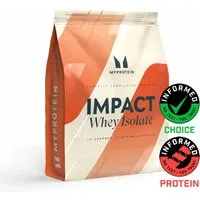
Best low-lactose whey
MyProtein Impact Whey Isolate Powder
780g bag
The first switch to make if whey concentrate bloats you: most of the lactose gone for £1.10 per 25g of protein in the big bag.
or compare all UK prices →Best low-lactose whey
Pros
- + Whey isolate, so about 0.1g to 0.3g of lactose per 25g of protein by ingredient type
- + 82g of protein per 100g, up to 26g per 30g scoop
- + £1.10 per 25g of protein in the 2.5kg bag on Amazon UK
Cons
- – Myprotein says it is not completely lactose-free
- – Sweetened with sucralose and contains soya lecithin
- – £1.42 per 25g of protein in the 900g bag on myprotein.com
●Nutrition per scoop · 24.6g protein in 30g▼
Protein makes up 82%
of this 30g scoop · 108 kcal total
2. Bulk Pure Whey Isolate: a close second on price
Bulk Pure Whey Isolate contains 81g of protein per 100g, 24g per 30g serving, and the Chocolate flavour uses sunflower lecithin, xanthan gum and sucralose, according to bulk.com. It costs £1.24 per 25g of protein in the 2.5kg Chocolate bag at £100.79 on Amazon UK, 13% more than Myprotein Impact Whey Isolate in the same bag size. On bulk.com the 450g bag cost £22.99, which is £1.58 per 25g of protein.
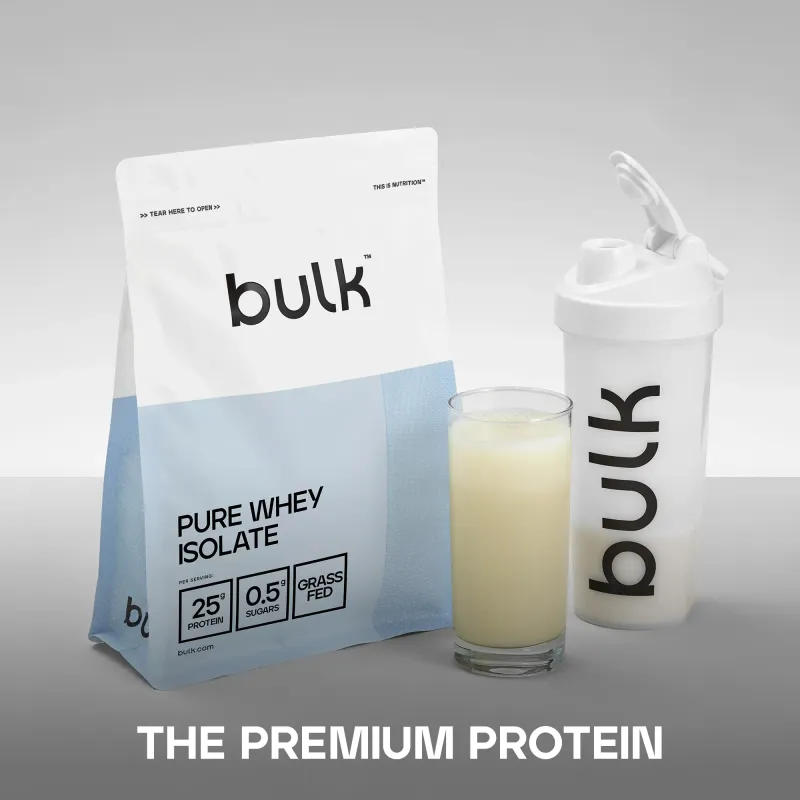
Isolate from a major UK brand
Bulk Pure Whey Isolate
2kg bag
A solid isolate alternative if you prefer Bulk's flavours, at £1.24 per 25g of protein in the 2.5kg bag.
or compare all UK prices →Isolate from a major UK brand
Bulk Pure Whey Isolate
2kg bagPros
- + 81g of protein per 100g, 24g per 30g serving
- + £1.24 per 25g of protein in the 2.5kg bag on Amazon UK
- + Chocolate uses sunflower lecithin rather than soya
Cons
- – No lactose figure published on bulk.com
- – 13% dearer per gram of protein than Myprotein Impact Whey Isolate at 2.5kg
●Nutrition per scoop · 24.3g protein in 30g▼
Protein makes up 81%
of this 30g scoop · 101 kcal total
3. BioTech USA Iso Whey Zero: the one that publishes its lactose
BioTech USA Iso Whey Zero Chocolate contains 0.80g of lactose per 100g, or 0.20g per 25g serving, with 84g of protein per 100g and 21g per serving, according to BioTech USA. That is the only per-product lactose figure among the wheys in this guide. It costs £1.29 per 25g of protein in the 1816g Chocolate bag at £78.90 on Amazon UK, or £1.47 in the 908g bag at £44.90.

Publishes its lactose figure
BioTech USA Iso Whey Zero
908g bag
The isolate to pick if you want an actual lactose number on the label rather than a promise.
Buy Iso Whey Zero →See the price on AmazonPublishes its lactose figure
BioTech USA Iso Whey Zero
908g bagPros
- + 0.20g of lactose per 25g serving in Chocolate, published by BioTech USA
- + 84g of protein per 100g, 21g per 25g serving
- + £1.29 per 25g of protein in the 1816g bag
Cons
- – BioTech calls it reduced-lactose, not lactose-free
- – Sweetened with sucralose in most flavours
- – £1.47 per 25g of protein in the smaller 908g bag
●Nutrition per scoop · 20.8g protein in 25g▼
Protein makes up 83%
of this 25g scoop · 93 kcal total
4. Optimum Nutrition Platinum Hydrowhey: only if isolate is not enough
Optimum Nutrition Platinum Hydrowhey gives 30g of protein per serving from 100% hydrolysed whey protein isolate, with 40 servings in the 1.6kg tub, according to Optimum Nutrition. It costs from £80.00 for 1.6kg on Amazon UK, which is £1.67 per 25g of protein, 52% more than Myprotein Impact Whey Isolate. Because the studies above found hydrolysis did not change gastric emptying, treat it as a premium isolate rather than a stomach fix.
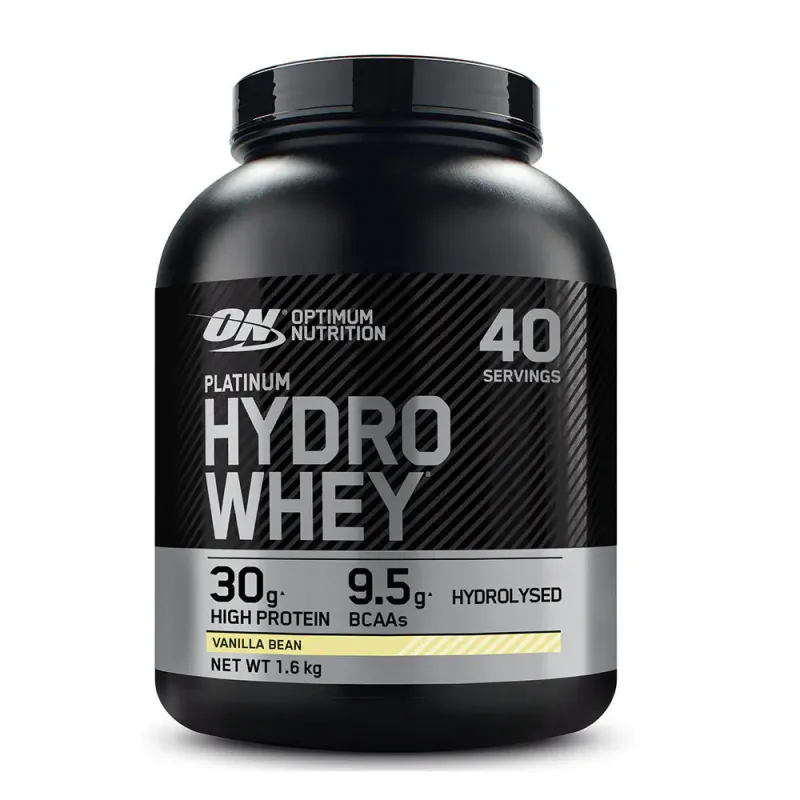
Hydrolysed isolate
Optimum Nutrition Platinum Hydro Whey
1.6kg bag
A premium isolate. Try a standard isolate first, because the hydrolysis is not what keeps lactose low.
Buy Platinum Hydro Whey →See the price on AmazonHydrolysed isolate
Pros
- + Made from 100% hydrolysed whey protein isolate, so low in lactose
- + 30g of protein per serving, 40 servings per 1.6kg tub
- + A long-established brand
Cons
- – £1.67 per 25g of protein, the dearest powder in this guide
- – Two human studies found hydrolysis did not change how fast whey leaves the stomach
●Nutrition per scoop · 30g protein in 40g▼
Protein makes up 75%
of this 40g scoop · 129 kcal total
5. Bulk Vegan Protein Powder: cheapest dairy-free
Bulk Vegan Protein Powder contains 69g of protein per 100g, 24g per 35g serving, from pea protein isolate, soya protein isolate, pumpkin seed protein, quinoa flour and flaxseed, sweetened with stevia and with a DigeZyme enzyme complex added, according to bulk.com. It costs 58p per 25g of protein in the 2.5kg Vanilla bag at £39.99 on Amazon UK, or 65p in the 1kg bag at £17.99 on bulk.com. It contains no dairy, so no lactose.
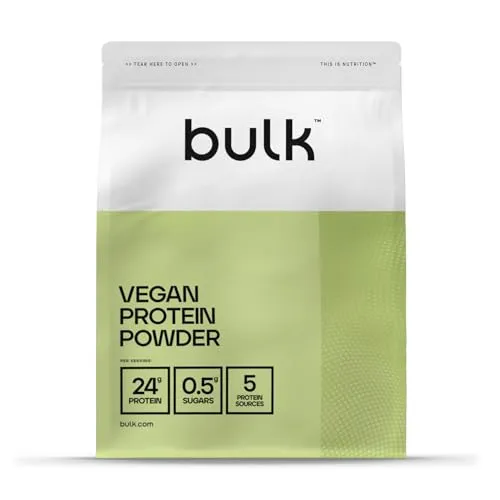
Cheapest dairy-free
Bulk Vegan Protein Powder
1kg bag
The cheapest way to take lactose out of the picture entirely, at 58p per 25g of protein.
or compare all UK prices →Cheapest dairy-free
Bulk Vegan Protein Powder
1kg bagPros
- + No dairy, so no lactose at all
- + 58p per 25g of protein in the 2.5kg bag on Amazon UK
- + Sweetened with stevia rather than sucralose
Cons
- – Contains soya, so not for anyone with a soy allergy
- – 69g of protein per 100g, less than the whey isolates
- – Plant proteins can carry FODMAPs such as GOS and fructans
●Nutrition per scoop · 24.1g protein in 35g▼
Protein makes up 69%
of this 35g scoop · 115 kcal total
6. Protein Works Vegan Protein 360 PLATINUM: the founder's dairy-free shake
Protein Works Vegan Protein 360 PLATINUM contains 83g of protein per 100g in Chocolate Silk, 29g in each 35g serving, and costs 62p per 25g of protein in the 4kg bag at £82.49 on theproteinworks.com. WheyWise's founder drinks it himself in Chocolate Bueno. Code WW12 takes 12% off most one-off orders at Protein Works.
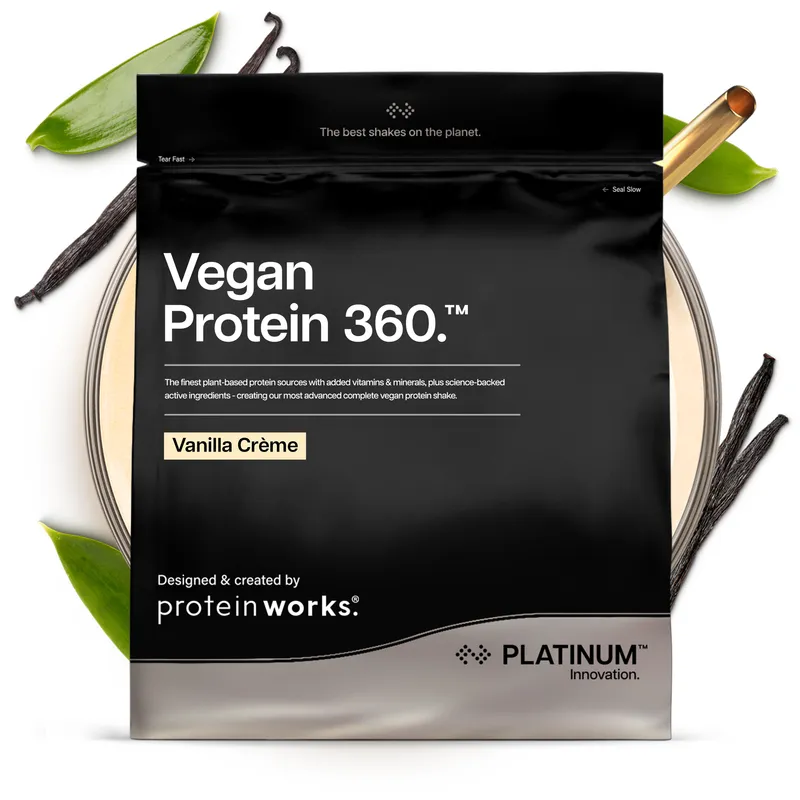
Founder's dairy-free pick
Protein Works Vegan Protein 360 Platinum
1kg bag
A dairy-free shake with more protein per scoop than most plant blends, at 62p per 25g of protein.
or compare all UK prices →Founder's dairy-free pick
Pros
- + 83g of protein per 100g in Chocolate Silk, 29g per 35g serving
- + 62p per 25g of protein in the 4kg bag
- + No dairy, so no lactose
- + WW12 takes 12% off most one-off orders
Cons
- – Plant protein has a thicker, earthier texture than whey
- – The lowest price needs the 4kg bag
●Nutrition per scoop · 29.1g protein in 35g▼
Protein makes up 83%
of this 35g scoop · 133 kcal total
7. Vivo Life Perform: no artificial sweeteners
Vivo Life Perform gives 25g of protein and 139 calories per serving, sweetened with stevia, from fermented pea, brown rice and pumpkin seed protein, but its ingredient list runs to at least 12 items, including turmeric, konjac, papain, ginger and peppermint, according to vivolife.co.uk. It costs £1.00 per 25g of protein in the 936g bag at £25.99 at Healf, against £44.99 for the same 26-serving bag on vivolife.co.uk.
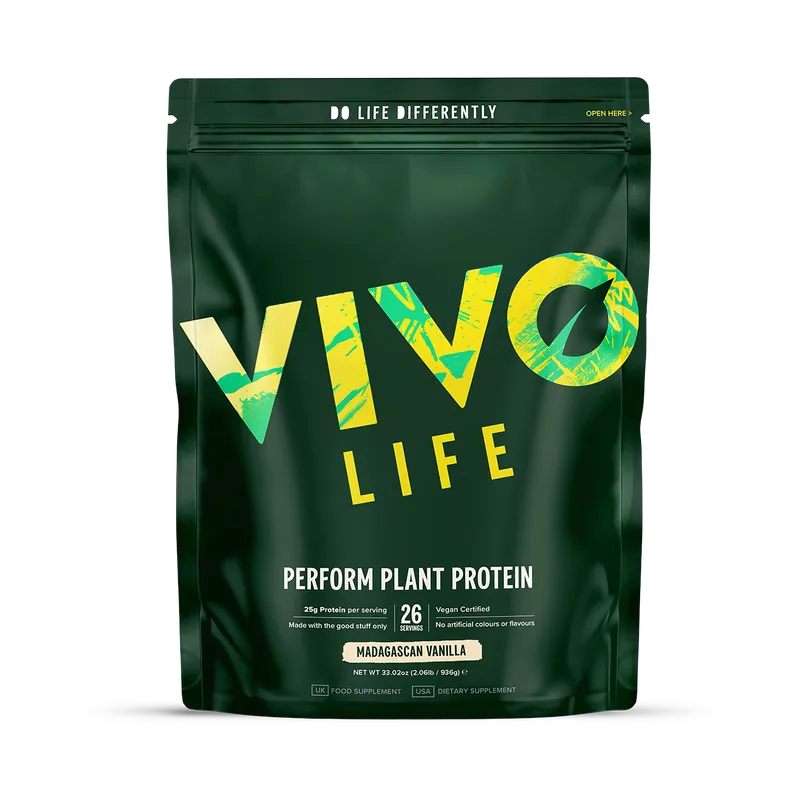
No artificial sweeteners
Vivo Life Perform Plant Protein
936g bag
The plant pick if sucralose is the thing you want to avoid, best bought on offer.
or compare all UK prices →No artificial sweeteners
Vivo Life Perform Plant Protein
936g bagPros
- + No dairy and no artificial sweeteners: it uses stevia
- + 25g of protein per serving
- + £1.00 per 25g of protein at Healf
Cons
- – At least 12 ingredients, which makes a trigger harder to pin down
- – £1.73 per 25g of protein at full price on vivolife.co.uk
●Nutrition per scoop · 25g protein in 36g▼
Protein makes up 69%
of this 36g scoop · 135 kcal total
Do sweeteners and sugar alcohols in protein powder cause gas?
Sugar alcohols can, in a dose-dependent way. In Storey et al., 2007, a single 50g dose of xylitol in a drink significantly increased bloating, nausea, rumbling and watery faeces compared with sugar, and 35g of xylitol also brought on watery faeces, while 20g and 35g of erythritol were tolerated without symptoms. Monash University's FODMAP team reports that a 10g dose of sorbitol or mannitol significantly increased gut symptoms in people with IBS compared with healthy controls, and the NHS IBS advice for bloating and wind includes avoiding products containing sorbitol.
The label tells you when there is a lot. Under the UK's retained food information rules, a food with more than 10% added polyols must carry the warning “excessive consumption may produce laxative effects” (Regulation 1169/2011, Annex III). If you see that line, or sorbitol, xylitol, maltitol, mannitol or isomalt high up the ingredients, that is a likely culprit.
Sucralose and stevia are different. They are high-intensity sweeteners, not sugar alcohols, and they do not fall under the polyol warning rule. All four whey isolates in this guide use sucralose in at least some flavours. If you suspect it anyway, the cleanest test is to swap to a stevia-sweetened or unflavoured powder for a while, and our guide to protein powder without artificial sweeteners lists the options. If the symptom is a headache rather than your stomach, see can protein shakes cause headaches.
Do digestive enzymes help with protein bloating?
Lactase can, if lactose is your trigger: the NHS says taking a lactase supplement before food or drink containing lactose may reduce or prevent symptoms for some people. Broad “digestive enzyme” blends are a different product. Oxford Origins Digestive Enzymes, for example, lists lactase among eight enzymes, with probiotics and peppermint oil, at £12.95 for 60 capsules on oxford-origins.com, but its page did not show the lactase dose as text.
We did not find good trials showing that broad enzyme blends stop protein-shake bloating in healthy people. Removing the lactose, by switching to isolate or plant protein and mixing with water, is the more reliable first step, and it costs nothing extra if you were going to buy protein anyway. If you still want to compare enzyme supplements, the gut and digestion supplement comparison lists the ones we track.
My protein powder is affecting my digestion: what should I change?
Change one thing at a time, starting with the cheapest. Swapping milk for water removes about 12g of lactose per 250ml glass, more than any whey powder contains, so do that first. Then work down this list:
- Mix with water or lactose-free milk. It costs nothing and removes the biggest lactose source.
- Swap concentrate for isolate. That cuts the lactose in the powder by about nine-tenths, to roughly 0.1g to 0.3g per 25g of protein.
- Spread your protein across the day. EFSA found higher lactose doses may be tolerated when distributed through the day, so two smaller shakes may sit better than one big one.
- Read the label for polyols and prebiotic fibre. Look for sorbitol, xylitol, maltitol, mannitol, isomalt, inulin and chicory root, and for the “laxative effects” warning.
- Try plant protein if isolate and water still bloat you. The problem may be dairy protein itself, not lactose. For how plant and whey compare on quality, see vegan protein vs whey.
- See a GP if nothing helps, or sooner if symptoms are severe or keep coming back.
Changing one thing at a time matters because it tells you what the trigger was. If you swap powder, sweetener and milk in the same week, you will not know which change helped.
When should you see a GP about bloating?
See a GP if your symptoms keep coming back and often happen after eating, if your bowel habits change for 3 weeks or more, or if you lose weight without trying, which is the NHS advice for suspected lactose intolerance. A protein powder swap is a sensible experiment, but it is not a diagnosis.
Two conditions are worth knowing about. The NHS lists bloating, farting and diarrhoea among the symptoms of coeliac disease, and lists coeliac disease as one cause of lactose intolerance, so lactose trouble that appears from nowhere can be a sign of something else. If you have coeliac disease, check every protein powder label for gluten-containing ingredients and “may contain” warnings. With IBS, the NHS suggests keeping a diary of what you eat and any symptoms, and seeing a GP if diet changes and pharmacy medicines are not helping. A GP can refer you to a dietitian.
Who should switch to isolate, and who can skip it?
Switch to isolate if whey concentrate bloats you, especially if you mix it with milk or know you are mildly lactose intolerant. Myprotein Impact Whey Isolate at £1.10 per 25g of protein in the 2.5kg bag, cuts the lactose in your powder by about nine-tenths for the least money in this guide.
Go straight to plant protein if you have a milk allergy, or if isolate mixed with water still bothers you. Bulk Vegan Protein Powder at 58p per 25g of protein is the cheapest way to do it, and Protein Works Vegan Protein 360 PLATINUM at 62p gives more protein per scoop.
Skip isolate if concentrate has never troubled you. Isolate costs about 30% more per 25g of protein than ordinary whey on the same brand, and the extra filtering buys you nothing if lactose is not your problem. Compare live prices on the whey isolate comparison, or answer a few questions in the protein finder.
Frequently asked questions
Can lactose intolerant people drink whey protein?
Many can, if they choose isolate and mix it with water. Whey protein isolate carries about 0.1g to 0.3g of lactose per 25g of protein, based on the American Dairy Products Institute's typical values, and EFSA concluded that most people with lactose maldigestion tolerate up to 12g of lactose in one go with no or minor symptoms. Tolerance varies a lot from person to person, so if even isolate causes symptoms, try a plant protein. Anyone with a milk allergy should avoid whey completely.
Is whey isolate completely lactose free?
No. Whey protein isolate typically contains 0.5% to 1.0% lactose, according to the American Dairy Products Institute, and Myprotein says of its own Impact Whey Isolate that it is not completely lactose-free. BioTech USA publishes 0.20g of lactose per 25g serving for Iso Whey Zero Chocolate, and describes it as reduced-lactose rather than lactose-free. For no lactose at all, choose a plant protein.
Does hydrolysed whey cause less bloating than isolate?
There is no good evidence that it does. Hydrolysed whey is usually made from isolate, so its lactose is just as low, but two human studies found that hydrolysing whey did not change how quickly it left the stomach (Calbet and Holst, 2004; Power and colleagues, 2009). Optimum Nutrition Platinum Hydrowhey costs £1.67 per 25g of protein, against £1.10 for Myprotein Impact Whey Isolate, so try a plain isolate first.
Is plant protein better for IBS?
Not automatically. Plant protein removes lactose, but Monash University's FODMAP team notes that plant proteins are hard to purify and often contain some FODMAPs such as GOS and fructans, and it advises avoiding powders labelled prebiotic or listing inulin, chicory root or Jerusalem artichoke. Some people with IBS do better on a whey isolate than on a plant blend. A GP or dietitian can help you work out your own triggers.
Do digestive enzymes like Oxford Origins help with protein bloating?
Lactase is the one enzyme with a clear job here: the NHS says taking a lactase supplement before food or drink containing lactose may reduce or prevent symptoms for some people. Oxford Origins Digestive Enzymes lists lactase among eight enzymes, alongside probiotics and peppermint oil. We did not find good trials showing that broad enzyme blends stop protein-shake bloating in healthy people, so switching to isolate or plant protein is the more reliable first step.
Should I mix protein powder with water or milk if it bloats me?
Water, or lactose-free milk. Whole milk contains about 4.9g of lactose per 100g, so a 250ml glass adds roughly 12g, which is more than the lactose in a scoop of any whey powder. A 30g scoop of whey concentrate carries about 1.2g to 3.0g of lactose, based on the American Dairy Products Institute's typical values. Swapping milk for water is the cheapest fix to try first.
Related reading
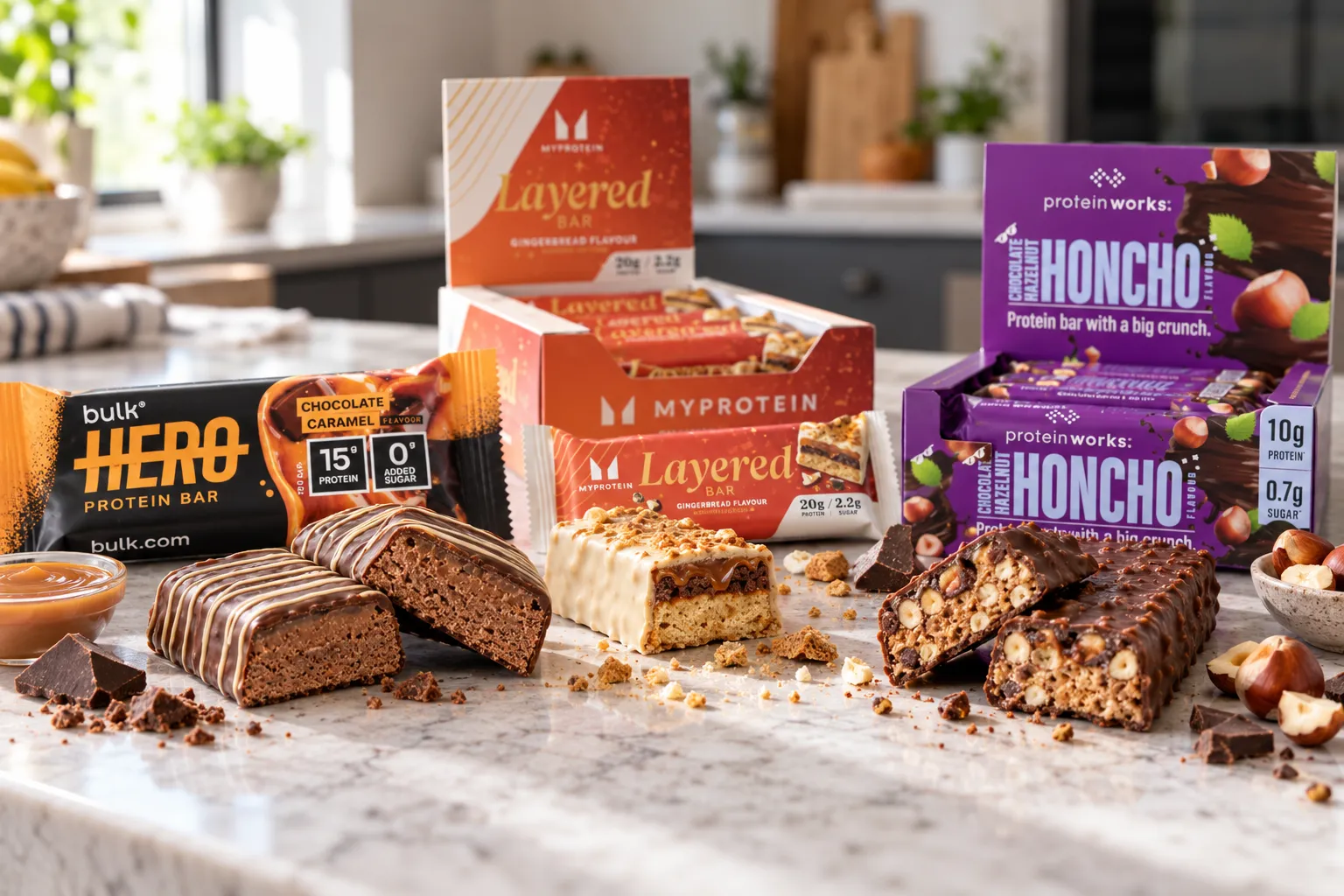
Why Does My Protein Bar Taste Artificial? Ingredients to Avoid
Protein bars taste artificial mostly because of what replaces the sugar: polyols such as maltitol, usually paired with an intense sweetener such as sucralose. Polyols are also the usual reason bars cause wind and bloating. The Myprotein Layered Bar in Hotel Chocolat Salted Caramel has no maltitol and no intense sweetener.
8 min read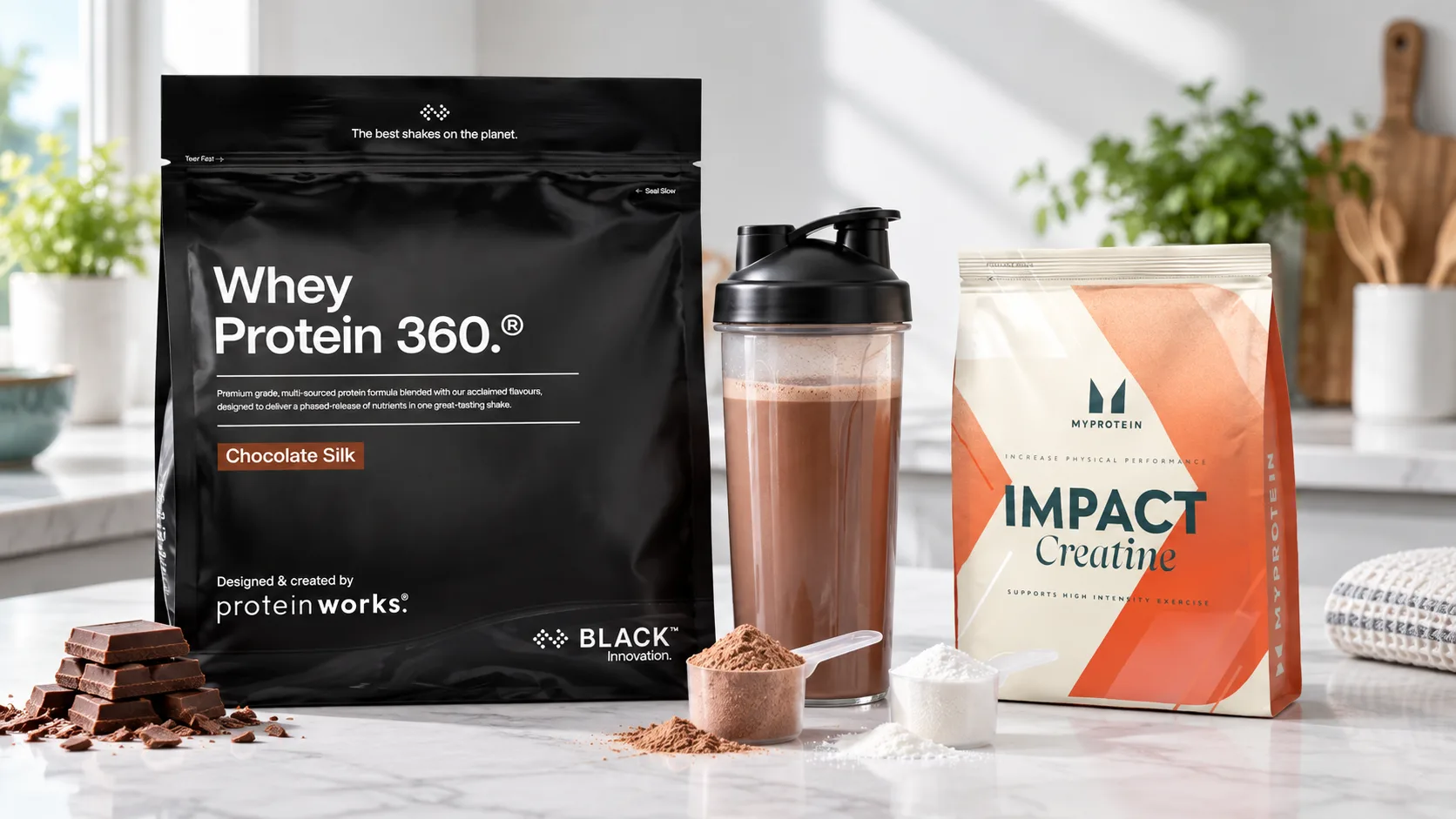
Can You Mix Creatine With Protein Powder? Cost Per Day
Yes, you can mix creatine with protein powder in the same shaker. It is safe, and taking creatine with protein and carbohydrate may even help your muscles hold on to more of it. Use 3g to 5g of plain creatine monohydrate a day and drink the shake soon after mixing.
6 min read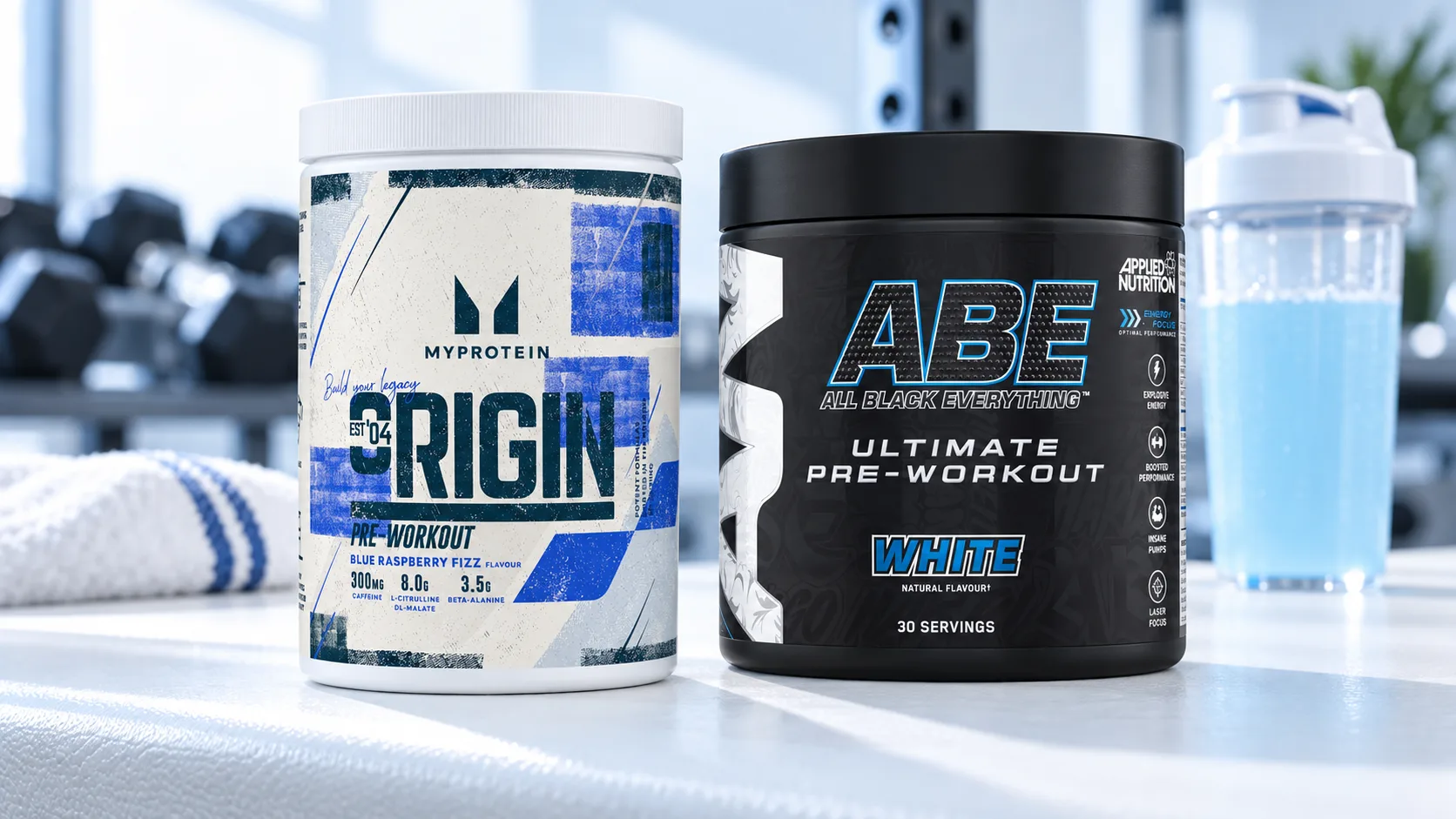
What Is in Pre-Workout, and What Does It Cost?
Pre-workout is mostly caffeine plus citrulline, beta-alanine and sometimes creatine, and caffeine does most of the work. A serving costs 53p to 93p on the brands' own sites. Applied Nutrition ABE has 200mg of caffeine per scoop and costs 93p direct or 80p on Amazon UK; Myprotein Origin Pump, without caffeine, is cheapest at 53p.
7 min readFind your cheapest protein
782 products compared from 181 brands
Sorted by best value per 25g of protein.
Compare all products