Quick answer
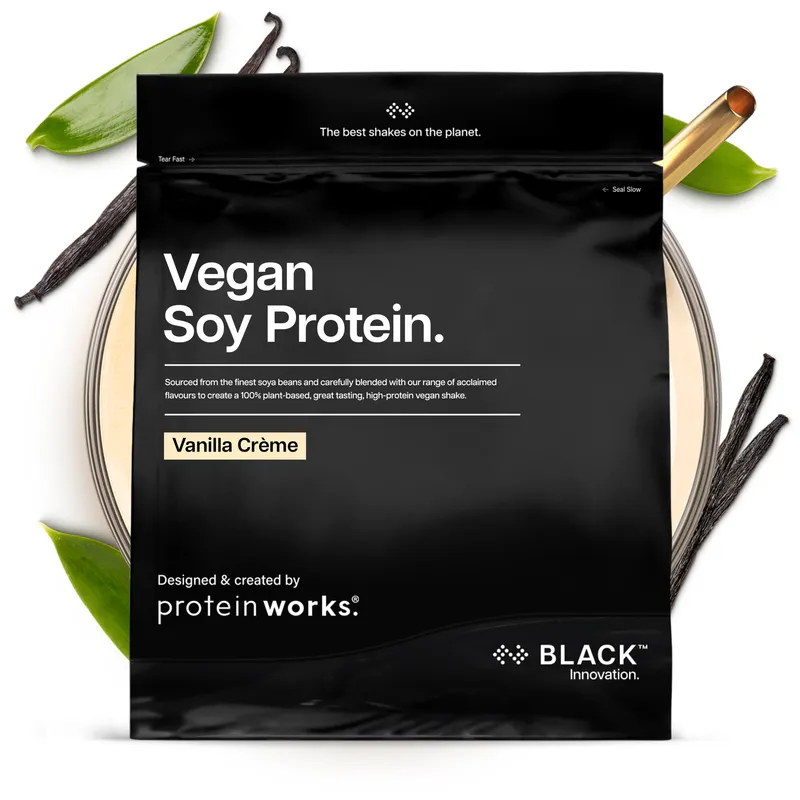
A complete protein supplies all nine essential amino acids, the ones your body can't make, and the best measure of how well it does that is its DIAAS score. In a 2020 analysis, casein scored 117, egg 101, soy 91 and whey 85, while pea (70) and rice (47) each ran short of one amino acid. If you're plant-based, Protein Works Vegan Soy Protein Black is the simple complete pick, with 84g of protein per 100g at 36p per 25g of protein, a price WheyWise checked on theproteinworks.com on 23 September 2026.
“Complete protein” is one of the most repeated claims on protein tubs, and it has a precise meaning. This explainer covers the nine amino acids involved, how protein quality is scored and how plant proteins measure up.
What is a complete protein?
A complete protein supplies all nine essential amino acids, the ones your body cannot make: histidine, isoleucine, leucine, lysine, methionine, phenylalanine, threonine, tryptophan and valine. The British Nutrition Foundation notes that animal proteins contain the full range and are sometimes called complete proteins, while most plant foods don't provide all nine in significant quantities. Most proteins contain some of every essential amino acid; what separates them is whether one runs low.
How is protein quality measured: PDCAAS or DIAAS?
By DIAAS, which the FAO recommended in 2013 to replace PDCAAS: it scores a protein by its most limiting essential amino acid after digestion, with 100 or more counting as excellent, 75 or more as high quality and below 75 as no quality claim (Herreman et al., 2020). PDCAAS truncates its scores, so the best proteins all look alike; DIAAS doesn't, which is why it can rank casein above whey.
The table shows how wide the spread is. Casein, egg and potato have no limiting amino acid at all against the strictest reference pattern, soy and whey are high quality, and pea and rice fall below the line for a quality claim. Gelatin scores 2 because it has almost no tryptophan, which makes gelatin, and the collagen it is made from, the clearest example of an incomplete protein.
| Protein | DIAAS | Limiting amino acid | Quality class |
|---|---|---|---|
| Casein | 117 | None | Excellent |
| Egg | 101 | None | Excellent |
| Potato | 100 | None | Excellent |
| Soy | 91 | Methionine and cysteine | High |
| Whey | 85 | Histidine | High |
| Pea | 70 | Methionine and cysteine | No quality claim |
| Rice | 47 | Lysine | No quality claim |
| Gelatin | 2 | Tryptophan | No quality claim |
Herreman et al. (2020), Table 2: FAO reference pattern for children aged 6 months to 3 years, digestibility from growing pigs. The authors work for the ingredients company Avebe.
How do plant proteins become complete?
By blending sources whose weak spots differ: pea is short of methionine and cysteine but not lysine, wheat is the reverse, and Herreman's model puts a 60:40 pea and wheat blend at DIAAS 85, level with whey, and a 90:10 soy and oat blend at 92. You don't need to combine them in one meal, either: the British Nutrition Foundation says protein from a variety of plant foods eaten during a day supplies enough essential amino acids when calorie needs are met. Soy is the shortcut, because at 91 it is a high-quality protein on its own.
Soy: DIAAS 91 on its own
Protein Works Vegan Soy Protein Black
1kg bag
A single-source plant protein that already scores as high quality, so there is no blend to get right.
or compare all UK prices →Soy: DIAAS 91 on its own
Pros
- + 84g of protein per 100g
- + 36p per 25g of protein in the 4kg bag, checked 23 September 2026
- + Soy scores DIAAS 91, above whey at 85, in Herreman et al. (2020)
Cons
- – Soy is a major allergen, so it is out if you avoid soy
- – Methionine and cysteine are soy's limiting amino acids, though only just
●Nutrition per scoop · 25.2g protein in 30g▼
Protein makes up 84%
of this 30g scoop · 110 kcal total
For the full whey versus plant comparison, read vegan protein vs whey protein, and for the plant powders worth buying, see the best vegan protein powder in the UK.
Frequently asked questions
Is whey a complete protein?
Yes. Whey contains all nine essential amino acids and scores DIAAS 85 in Herreman et al. (2020), which counts as a high-quality protein. Histidine is its limiting amino acid against the strict reference pattern for young children used in that analysis.
Is pea protein a complete protein?
Pea contains all nine essential amino acids but runs short of methionine and cysteine, which gives it a DIAAS of 70, below the 75 needed for a quality claim. Blended 60:40 with wheat protein, it reaches 85 in Herreman's model, level with whey.
Do vegans need to combine proteins at every meal?
No. The British Nutrition Foundation says it is now understood that protein from a variety of plant foods, eaten during a day, supplies enough of the essential amino acids when calorie needs are met. Combining sources within each meal is not necessary.