Quick answer
Sucralose (E955) is an intense sweetener made from sugar, and all six flavoured protein powders in our calorie check list it, because it tastes close to sugar in tiny amounts. EFSA re-evaluated it in February 2026 and kept the safe limit at 15mg per kg of bodyweight a day, which is 1,050mg for a 70kg adult. If you'd rather avoid it, Myprotein Impact Whey Unflavoured has no sweetener at all and costs £32.99 for 900g on myprotein.com, checked by WheyWise on 3 October 2026.
What is sucralose?
Sucralose (E955) is an intense sweetener made from ordinary sugar: EFSA describes a three-step chemical process that replaces three hydroxyl groups on the sucrose molecule with chlorine. It is used in very small amounts, and all six flavoured powders in our calorie check list it, from Myprotein Impact Whey and Myprotein Impact Plant Protein to PhD Diet Whey and Bulk Micellar Casein, checked 3 October 2026.
Is sucralose safe, and what about the recent studies?
Yes, at permitted levels: EFSA re-evaluated sucralose in February 2026, found no genotoxicity concern for sucralose or its impurities and breakdown products, and kept the acceptable daily intake at 15mg per kg of bodyweight a day (EFSA, 2026), the same figure the WHO and FAO expert committee JECFA set in 1990. For a 70kg adult that is 1,050mg a day, and EFSA found the highest estimated intakes in Europe stayed below the limit in every age group.
The headlines you may have seen came from a 2023 laboratory study on sucralose-6-acetate, the intermediate made during manufacture, which turns up as an impurity. EFSA's panel had that study among its data and still found no genotoxicity concern. The open question is heat: EFSA could not conclude on sucralose in baked goods, because of uncertainty about chlorinated compounds forming during prolonged high-temperature baking. That is a gap in the data rather than a finding of harm, but if you bake with protein powder often, unflavoured powder sidesteps it.
Why do brands put sucralose in protein powder?
Because buyers who choose on flavour like it. In a study of vanilla whey shakes with 25g of protein, consumers who chose on taste preferred the sucralose version, while label-conscious consumers preferred natural sweetener blends (Parker et al., 2018). Stevia, the usual swap, has an aftertaste of its own: in a sensory study of a fruit drink, stevia brought more bitterness and a sweet-and-bitter aftertaste, while sucralose's taste over time was closer to sugar (Bolini et al., 2023). If sucralose's sweetness puts you off, know that trade-off before you switch.
How can you avoid sucralose in protein powder?
Buy the unflavoured or naturally sweetened version of a powder you already like: Myprotein Impact Whey Unflavoured has no sweetener and costs £1.22 per 25g of protein in the 900g bag, 5p less than the sucralose-sweetened Vanilla, checked 3 October 2026. The stevia and monk fruit version costs 6p more.
| Myprotein Impact Whey | Sweetener | Per scoop | 900g bag | Per 25g protein |
|---|---|---|---|---|
| Vanilla | Sucralose | 30g: 114 kcal, 22g protein | £32.99 | £1.27 |
| Vanilla Honey (Naturally Derived Sweeteners) | Steviol glycosides, monk fruit extract | 28g: 105 kcal, 20g protein | £34.49 | £1.33 |
| Unflavoured | None | 30g: 114 kcal, 23g protein | £32.99 | £1.22 |
Ingredients, labels and prices on myprotein.com, checked 3 October 2026. Per-25g figures use each version's own protein per 100g: 72g, 72g and 75g.
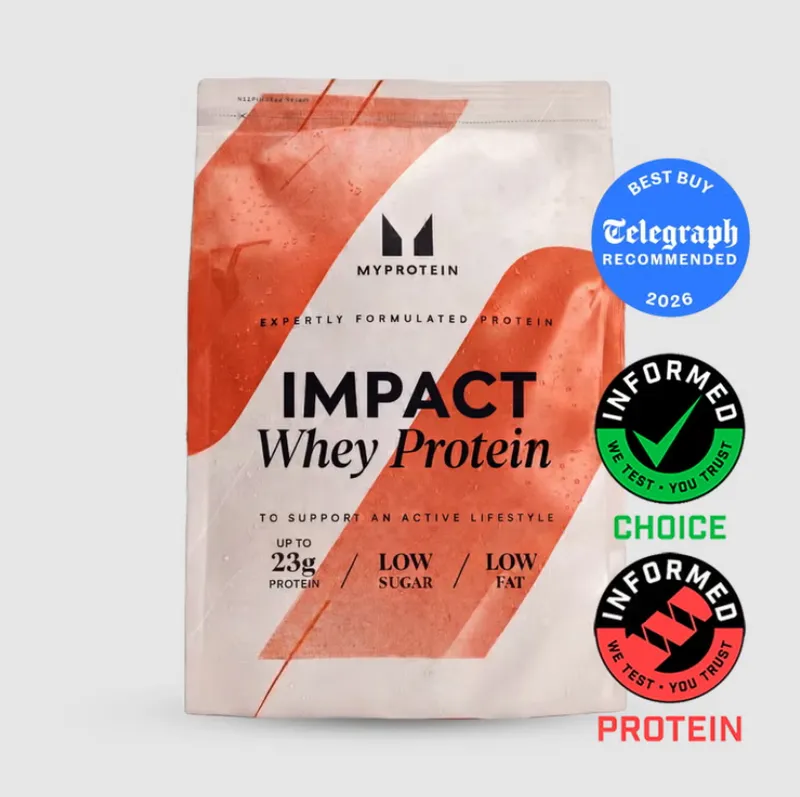
Three ways round sucralose in one range
MyProtein Impact Whey Protein Powder
960g bag
One whey, three choices: keep the standard flavour, switch to the stevia version or go unflavoured.
or compare all UK prices →Three ways round sucralose in one range
Pros
- + Unflavoured version is 100% whey concentrate with no sweetener, 23g of protein per 30g
- + Vanilla Honey version uses stevia and monk fruit extract instead of sucralose
- + Unflavoured costs £1.22 per 25g of protein in the 900g bag, checked 3 October 2026
Cons
- – The standard flavours, including Vanilla, use sucralose
- – Unflavoured is unsweetened, so you add your own flavour
●Nutrition per scoop · 21.6g protein in 30g▼
Protein makes up 72%
of this 30g scoop · 113 kcal total
For more powders without artificial sweeteners, including plant options, read protein powder without artificial sweeteners. Protein bars are the other big source of sucralose, and our best protein bars guide checks which bars use it.
Frequently asked questions
Is sucralose bad for you?
Not at permitted levels, according to EFSA's 2026 re-evaluation, which kept the acceptable daily intake at 15mg per kg of bodyweight and found no genotoxicity concern. That is 1,050mg a day for a 70kg adult. Most people who avoid it do so for taste or preference.
Is stevia better than sucralose?
Neither is a safety problem at permitted levels, so it comes down to taste. In a 2023 sensory study, stevia brought more bitterness and a sweet-and-bitter aftertaste, while sucralose tasted closer to sugar. Myprotein Impact Whey Vanilla Honey uses steviol glycosides and monk fruit extract if you want to try the switch.
Which protein powders don't contain sucralose?
Unflavoured powders are the simplest: Myprotein Impact Whey Unflavoured is 100% whey concentrate with no sweetener. Naturally sweetened versions such as Myprotein Impact Whey Vanilla Honey use steviol glycosides and monk fruit extract instead, both checked on myprotein.com on 3 October 2026.