Quick answer
If caffeine is all you want, coffee is the better value, because a mug brewed at home gives you the same stimulant for far less money. A pre-workout earns its price only through its other ingredients, citrulline, beta-alanine and sometimes creatine, which coffee does not supply. On caffeine alone, a 200mg scoop of Applied Nutrition ABE is about one and a half to two mugs, so count the cups you have already had before you add a scoop.
Coffee and pre-workout both deliver caffeine before training, so the real question is what the extra money buys you. The honest answer depends on whether you want caffeine or the other ingredients in the tub. Our best pre-workout in the UK guide covers the formulas themselves, and this page focuses on the comparison.
How much caffeine is in a pre-workout compared with coffee?
A typical mug of coffee holds roughly 100mg to 140mg of caffeine. A full 200mg scoop of Applied Nutrition ABE therefore equals about one and a half to two mugs, and Myprotein Origin Pre-Workout, at 300mg per 20g serving, comes to two to three mugs in one drink.
| Option | Caffeine per serving | Other ingredients | Cost per serving |
|---|---|---|---|
| Mug of coffee | Roughly 100mg to 140mg | None | Brewed at home, not priced here |
| Applied Nutrition ABE (12.5g scoop) | 200mg | 4g citrulline malate, 3g creatine, 2g beta-alanine | See the comparison table |
| Myprotein Origin Pre-Workout (20g serving) | 300mg | 3.5g beta-alanine, plus citrulline and arginine AKG | See the comparison table |
| Myprotein Origin Pump (25g serving) | None | 8g citrulline malate, 3.5g beta-alanine | 53p at one-off prices on myprotein.com |
The caffeine column matters most. A 200mg serving sits at the EFSA single-dose figure, while a 300mg serving goes above it, and the EFSA daily figure of 400mg covers coffee and pre-workout together.
A full Origin serving is two scoops, so one scoop brings the figure down to 150mg, which sits inside the single-dose figure. Stacking a full serving on top of a coffee is where the total climbs fastest.
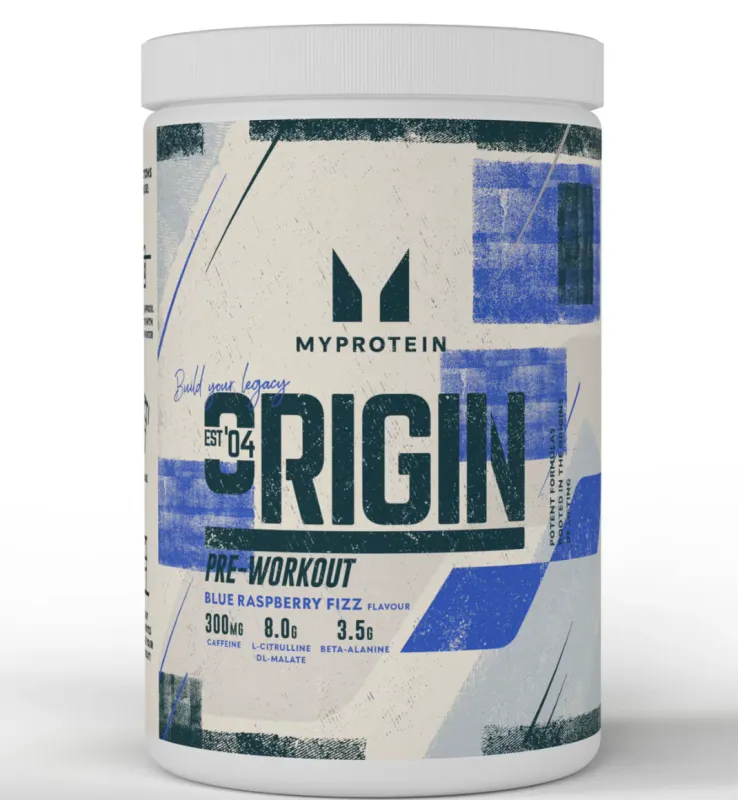
The stimulant option with the most caffeine
MyProtein Origin Pre - Workout
600g bag
The stimulant option if you want more caffeine than coffee gives you in one go, with the beta-alanine dose included.
or compare all UK prices →The stimulant option with the most caffeine
MyProtein Origin Pre - Workout
600g bagPros
- + 300mg caffeine per 20g serving, about two to three mugs of coffee
- + 3.5g beta-alanine per serving, the ingredient behind the tingle
- + One scoop halves the caffeine to 150mg, which is easier to manage
Cons
- – A full serving goes above the 200mg single-dose figure, so one scoop is the safer start
- – Dearer per serving than a mug brewed at home
What does a pre-workout add beyond caffeine?
Citrulline, beta-alanine and sometimes creatine. Citrulline supports blood flow to working muscle, beta-alanine builds carnosine in the muscle over weeks of daily use, and creatine is a separate supplement with its own evidence base.
Those are the parts a pre-workout charges you for, and a mug of coffee cannot provide them. One pre-workout on one training day adds little from beta-alanine, which is why the value depends on how often you train and how long you have been using the product. If you only want the buzz before a session, the extra ingredients are a cost you do not need.
If creatine is your main goal, a plain creatine monohydrate tub is a separate purchase, so do not expect a pre-workout to replace it. The 3g of creatine in ABE is a bonus dose rather than a full loading plan.
Which is cheaper per serving, coffee or pre-workout?
Brewing your own coffee is almost always the cheapest route to caffeine, and a mug brewed at home costs a fraction of a pre-workout serving. Price per serving is the number to compare, so check it on the comparison table rather than on the front of the tub.
Myprotein Origin Pump costs 53p a serving at one-off prices on myprotein.com, and Applied Nutrition ABE Pump costs £1.62 a serving on Amazon UK. Neither is a caffeine product, so you are paying for citrulline, beta-alanine and, in ABE Pump, creatine rather than a stimulant.
Thirty servings of Myprotein Origin Pump come to about £16 at the one-off price, so a daily habit costs roughly that much a month. Over a year that adds up, which is why it is worth comparing the per-serving figure before you commit to a tub.
When is coffee the better choice?
Coffee wins if caffeine is the only thing you want before training. It also wins if you want to control the dose, since you can make a weaker cup or skip it on a light day. A pre-workout tub makes it easy to take two scoops without thinking, which is the opposite of what most lifters need.
Coffee also keeps your total easier to track, because you can see the cups you have had. That makes it the simpler habit for anyone who is trying to stay inside the daily limit. If the routine is working, there is no need to change it for the sake of a tub.
When does a pre-workout make more sense?
A pre-workout makes more sense when you want the citrulline and beta-alanine doses in one drink, and you do not want to buy them separately. It also suits people who find the pre-workout routine useful, which our guide to why the best workouts happen when you take pre-workout covers in more depth.
For evening sessions, a stim-free pre-workout is the real alternative to coffee, since it gives you the pump ingredients without the caffeine. Our stim-free pre-workout UK guide compares the caffeine-free options on dose and cost.
The value is clearest for people who already take creatine and beta-alanine separately and want one routine to cover the pre-session doses. If that is not you, the coffee comparison usually decides it.
Can you have coffee and pre-workout together?
You can, but count the caffeine. A cup of coffee before a 200mg scoop puts you at roughly 300mg to 340mg in a short window, and the 400mg daily figure includes both. Add any afternoon tea or cola and the total can climb quickly.
Our pre-workout side effects guide sets out the daily limits and the signs that you have had too much. If you are only topping up with a pre-workout on top of coffee, a stim-free formula avoids the stacking problem altogether.
Is the extra money worth it?
For most lifters the answer is no, if caffeine is the only goal. The extra money is worth spending only if you want citrulline, beta-alanine or creatine in a single drink and you are happy with the cost per serving.
If you are unsure, keep your usual coffee for a month, then add a stimulant pre-workout on your heaviest sessions only. Compare how those sessions feel and how your working weights move before you decide whether the tub earns its place.
If you have decided a pre-workout is worth the money, the best pre-workout in the UK guide picks the formulas that hit the doses, and best pre-workout for weight training covers heavy lifting specifically. For the ingredient list in full, read what is in pre-workout.
Frequently asked questions
Is pre-workout better than coffee?
For caffeine alone, no. Coffee gives you the same stimulant for less money. A pre-workout is better only when you want its citrulline, beta-alanine or creatine in the same drink.
Does pre-workout have more caffeine than coffee?
It depends on the serving. A 200mg scoop of Applied Nutrition ABE is about one and a half to two mugs of coffee, and a 300mg serving of Myprotein Origin Pre-Workout is two to three mugs.
Can I drink coffee and then take pre-workout?
Yes, but count the total. A mug before a 200mg scoop adds up quickly, and the EFSA guideline of 400mg a day covers every source.
Which is cheaper, coffee or pre-workout?
Coffee, if you only want caffeine. A mug brewed at home costs a fraction of a pre-workout serving, and the gap is larger once you count the other ingredients you are not getting from coffee.
Should I switch from coffee to pre-workout?
Only if you want the extra ingredients and are happy with the price per serving. If coffee already works for you, keep it, and use a stim-free pre-workout on evenings when coffee is not an option.