Should I Have My Protein Shake Before or After the Gym?
It barely matters whether you have your protein shake before or after the gym: the ISSN says protein and resistance exercise work together either way, and total daily protein is the strongest predictor of results. The one time to drink it promptly is after a fasted morning session.
Kevin, founder of WheyWise
Quick answer
Have your protein shake before or after the gym, whichever suits you: what matters is your daily total, spread as 20g to 40g servings every three to four hours. A meta-analysis of 23 studies found the muscle-growth benefit of timing disappeared once other factors were controlled, and total protein intake was the strongest predictor of results. The one time to drink it promptly is after a fasted morning session, within about two hours. Before bed, a 30g to 40g casein shake is backed by research, and Bulk Micellar Casein costs 68p per 24g-protein scoop in the 2.5kg bag on Amazon. WheyWise checked every price in this guide at UK retailers.
“Should I drink my shake before or after the gym?” is one of the first questions people ask when they start training, and for most people the honest answer is that it barely matters. This guide sets out what the research says on timing, when it does make a difference, and why a shake might be affecting your sleep. Prices were checked at UK retailers.
Should I have my protein shake before or after the gym?
Either works: the International Society of Sports Nutrition protein position stand says protein and resistance exercise work together whether the protein comes before or after training, and that the best time is “likely a matter of individual tolerance” (Jäger et al., 2017). The same position stand says the anabolic effect of exercise lasts at least 24 hours, though it likely fades as time passes.
After is the better choice if you train fasted, first thing in the morning with nothing to eat beforehand. The ISSN nutrient timing position stand says the size and timing of a pre-exercise meal affects how much you need protein afterwards, and that high-quality protein taken from immediately to 2 hours after exercise stimulates robust increases in muscle protein synthesis (Kerksick et al., 2017). If a shake before training sits badly in your stomach, have it after: that is what “individual tolerance” means in practice.
Does the anabolic window matter?
Not as a 30-minute deadline: a 2013 meta-analysis of 23 studies and 525 people found no significant difference in muscle growth from protein timing once other factors were controlled, and total protein intake was the strongest predictor of results (Schoenfeld, Aragon and Krieger, 2013). For strength, across 20 studies and 478 people, timing made no significant difference either.
The authors concluded that consuming adequate protein alongside resistance training is the key factor, not drinking it in and around a session. Think of the window as several hours long, and of your daily total as the thing that actually decides your results.
| Source | What it looked at | What it found |
|---|---|---|
| Schoenfeld et al., 2013 | Timing and muscle growth, 23 studies, 525 people | No significant effect once other factors were controlled |
| Schoenfeld et al., 2013 | Timing and strength, 20 studies, 478 people | No significant effect |
| ISSN protein stand, 2017 | How long training keeps muscle responsive | At least 24 hours, fading with time |
| ISSN nutrient timing stand, 2017 | Protein after exercise | Immediately to 2 hours after gives robust increases in muscle protein synthesis |
When should you take protein powder? A timing table
Take 20g to 40g of protein every three to four hours across the day, the pattern both ISSN position stands recommend, and time one serving around training only if you trained fasted. By bodyweight, the ISSN suggests about 0.25g per kg per serving, and Schoenfeld and Aragon suggest 0.4g per kg per meal across at least four meals (Schoenfeld and Aragon, 2018). For a 70kg person that is 17.5g to 28g a serving.
| Scenario | When | How much | Why |
|---|---|---|---|
| You trained a few hours after a meal | Whenever suits you, or at your next meal | 20g to 40g | Training keeps muscle responsive for at least 24 hours |
| You trained fasted in the morning | Within about 2 hours after | 20g to 40g | No recent protein, and 0 to 2 hours after gives robust muscle protein synthesis |
| Rest day | With the meal lowest in protein | 20g to 40g | Your daily target is the same on rest days |
| Before bed | About 30 minutes before sleep | 30g to 40g of casein | Casein is digested and absorbed overnight |
| You train in the evening and sleep badly | Keep the shake, drop late caffeine | Check the label for caffeine | A standard pre-workout serve should be taken 13.2 hours before bed |
Doses from the ISSN protein and nutrient timing position stands (2017). Before-bed figure from Res et al. (2012); caffeine figure from Gardiner et al. (2023). Work out your own daily total with the protein calculator.
Should I still take protein powder on rest days?
Yes, if your meals would leave you short, because your daily protein target is the same on rest days: the ISSN nutrient timing position stand says meeting your total daily protein, preferably in evenly spaced feedings about every 3 hours, should be the primary emphasis for anyone who exercises (Kerksick et al., 2017). There is nothing to time it around on a day off.
Have the shake with whichever meal is lightest on protein. For many people that is breakfast, because toast or cereal on its own carries little protein. For how many scoops that adds up to, see how much protein powder to take per day.
Is it OK to have a protein shake before bed?
Yes, and it is one of the better-researched timing strategies: in a 2012 study, 16 young men who drank 40g of casein 30 minutes before sleep, after an evening workout, digested and absorbed it overnight, with higher whole-body protein synthesis and better protein balance than with a placebo (Res et al., 2012). Muscle protein synthesis was about 22% higher too, though that result was only borderline significant.
A longer trial gave 44 young men 27.5g of protein every night before sleep through 12 weeks of resistance training, and they gained more strength and more quadriceps size than men given a calorie-free placebo (Snijders et al., 2015). Because the placebo contained no protein, the trial cannot separate the timing from simply eating more protein in total. The ISSN suggests about 30g to 40g of casein before sleep.
Bulk Micellar Casein contains 80g of protein per 100g, 24g in a 30g scoop, according to bulk.com. In the 2.5kg bag at £56.99 on Amazon it costs 68p a scoop and 71p per 25g of protein.
| Bulk Micellar Casein | Price | Per 30g scoop (24g protein) | Per 25g of protein |
|---|---|---|---|
| 2.5kg, Amazon UK | £56.99 | 68p | 71p |
| 500g, bulk.com | £12.99 | 78p | 81p |
Label read on bulk.com. A 40g-protein dose, as used by Res et al., takes 50g of powder and costs £1.14 from the 2.5kg bag.

For a shake before bed
Bulk Micellar Casein
1kg bag
A slow-digesting casein for the one timing slot with good evidence behind it, at 68p a scoop in the big bag.
or compare all UK prices →For a shake before bed
Bulk Micellar Casein
1kg bagPros
- + 80g of protein per 100g, 24g in a 30g scoop, per bulk.com
- + 82p a scoop in the 2.5kg bag at £67.99 on Amazon
- + A 500g bag at £12.99 on bulk.com to try it first
Cons
- – Dearer per gram of protein than basic whey: 85p per 25g against 64p for Bulk Basic Whey Protein
- – Only worth buying for the pre-bed slot; whey covers every other time of day
●Nutrition per scoop · 24g protein in 30g▼
Protein makes up 80%
of this 30g scoop · 106 kcal total
For more casein options, see the best casein protein UK guide or the casein price comparison.
Why might my protein powder be affecting my sleep?
Caffeine is the most likely cause, because some coffee-flavoured protein powders contain it: MaxiNutrition Protein Coffee Maxpresso lists 80mg of caffeine per 30g serving (maxinutrition.com), ESN Flexpresso Protein Coffee lists 80mg per serving (esn.com), and The Organic Protein Company Real Coffee Organic Whey lists about 37mg per 25g serving (theorganicproteincompany.co.uk). EFSA says a single 100mg dose of caffeine may affect sleep duration and patterns in some adults, particularly close to bedtime (EFSA).
Pre-workout is the bigger dose. A 2023 meta-analysis of 24 studies found caffeine cut total sleep time by 45 minutes, and calculated that a standard pre-workout serve of 217.5mg should be taken at least 13.2 hours before bed, and a coffee of 107mg at least 8.8 hours before (Gardiner et al., 2023). A 6pm pre-workout before an 11pm bedtime is well inside that. If your shake and your pre-workout go down together after an evening session, the pre-workout is the more likely culprit.
A big shake late at night can also play a part. The NHS says eating large meals close to bedtime may make it harder to fall asleep (NHS Every Mind Matters), and a mass gainer such as Optimum Nutrition Serious Mass, at 1,260 kcal per serving, is a large meal by any measure. If whey leaves you bloated, that discomfort can keep you awake too: see the best protein powder for sensitive stomachs. We did not find any trial showing that the sweeteners used in protein powder, such as sucralose, disrupt sleep, so check caffeine, the size of the shake and your stomach first.
| Possible cause | What to check | What the evidence says |
|---|---|---|
| Caffeine in a coffee flavour | Coffee or caffeine in the ingredients | Some list 37mg to 80mg a serving; 100mg near bedtime may affect sleep (EFSA) |
| Pre-workout taken with the shake | Caffeine per scoop and the time you take it | 217.5mg should be taken 13.2 hours before bed (Gardiner et al., 2023) |
| A very large shake late at night | Calories per serving | Large meals near bedtime may make it harder to fall asleep (NHS) |
| Stomach discomfort or bloating | Whether whey concentrate disagrees with you | See our sensitive stomachs guide |
| Sweeteners | Nothing specific | We found no trial linking them to worse sleep |
Which protein powder works at any time of day?
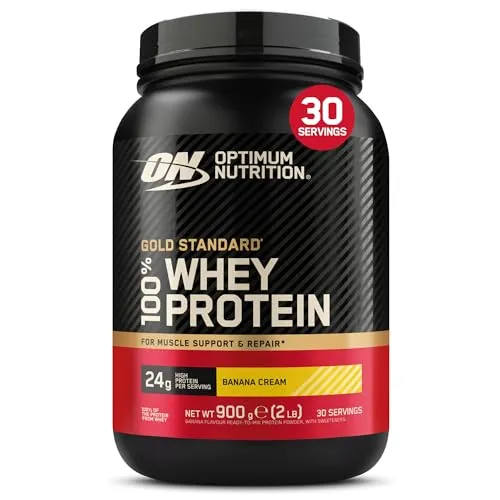
Any whey you will drink consistently works for every slot in the timing table except the casein one, so there is no need for a special pre- or post-workout formula. Optimum Nutrition Gold Standard 100% Whey Double Rich Chocolate contains 76g of protein per 100g, 24g in a 31g scoop, and costs £1.23 per 25g of protein in the 4.53kg tub at £170 on Amazon.
For any other time of day
Optimum Nutrition Gold Standard 100% Whey Protein
907g bag
A whey that suits every slot from breakfast to post-workout, at £1.23 per 25g of protein in the 4.53kg tub.
Buy Gold Standard 100% Whey Protein →See the price on AmazonFor any other time of day
Pros
- + 24g of protein in a 31g scoop of Double Rich Chocolate, 76g per 100g
- + £1.23 per 25g of protein in the 4.53kg tub at £170 on Amazon
- + Sold in sizes from 310g up, so you can try a small tub first
Cons
- – Nearly double the cost per gram of protein of Bulk Basic Whey Protein at 64p
- – The 2.27kg tub costs £1.39 per 25g of protein, so the lower price needs the biggest tub
●Nutrition per scoop · 23.6g protein in 31g▼
Protein makes up 76%
of this 31g scoop · 114 kcal total
To find the cheapest whey on any given week, rank everything by cost per 25g of protein on the whey concentrate comparison. If you are new to training and wondering what else to take alongside protein, read what to take when you start the gym.
Who needs to think about protein timing?
Timing is worth a thought if you train fasted in the morning, in which case have a shake within about two hours, or if you want a casein shake before bed, or if you train in the evening and sleep badly, in which case look at your caffeine before you look at your protein.
Everyone else can stop watching the clock. Hit your daily protein total in servings of 20g to 40g spread through the day, on training days and rest days alike, and drink your shake whenever it fits.
Frequently asked questions
Is it better to drink a protein shake before or after a workout?
Neither is clearly better for most people. The International Society of Sports Nutrition says protein helps whether it is taken before or after training, and that the best time is likely a matter of individual tolerance. Hit your daily total first. If you trained fasted, have it after.
How long after a workout should I have a protein shake?
Within about two hours if you trained on an empty stomach. The ISSN nutrient timing position stand says high-quality protein taken from immediately to 2 hours after exercise stimulates robust increases in muscle protein synthesis. If you ate a meal with protein a few hours before training, there is no rush: your next meal will do.
Should I drink protein shakes on rest days?
Yes, if your meals would leave you short of your daily protein target, because the target does not drop on rest days. Have the shake with whichever meal is lowest in protein, and spread your protein across the day in servings of 20g to 40g.
Is it OK to drink a protein shake before bed?
Yes. In a 2012 study, 40g of casein taken 30 minutes before sleep after evening exercise was digested overnight and raised whole-body protein synthesis compared with a placebo. The ISSN suggests about 30g to 40g of casein before sleep. Bulk Micellar Casein costs 68p per 30g scoop in the 2.5kg bag on Amazon.
Can a protein shake keep you awake at night?
It can if it contains caffeine. Some coffee-flavoured protein powders do: MaxiNutrition Protein Coffee Maxpresso lists 80mg of caffeine per 30g serving. EFSA says 100mg of caffeine close to bedtime may affect sleep in some adults. A very large shake late in the evening can also make it harder to fall asleep, according to the NHS.
Does the anabolic window exist?
Not as a 30-minute deadline. A 2013 meta-analysis of 23 studies and 525 people found no significant effect of protein timing on muscle growth once other factors were controlled, and total protein intake was the strongest predictor. The ISSN says the anabolic effect of exercise lasts at least 24 hours, though it likely fades with time.
Related reading
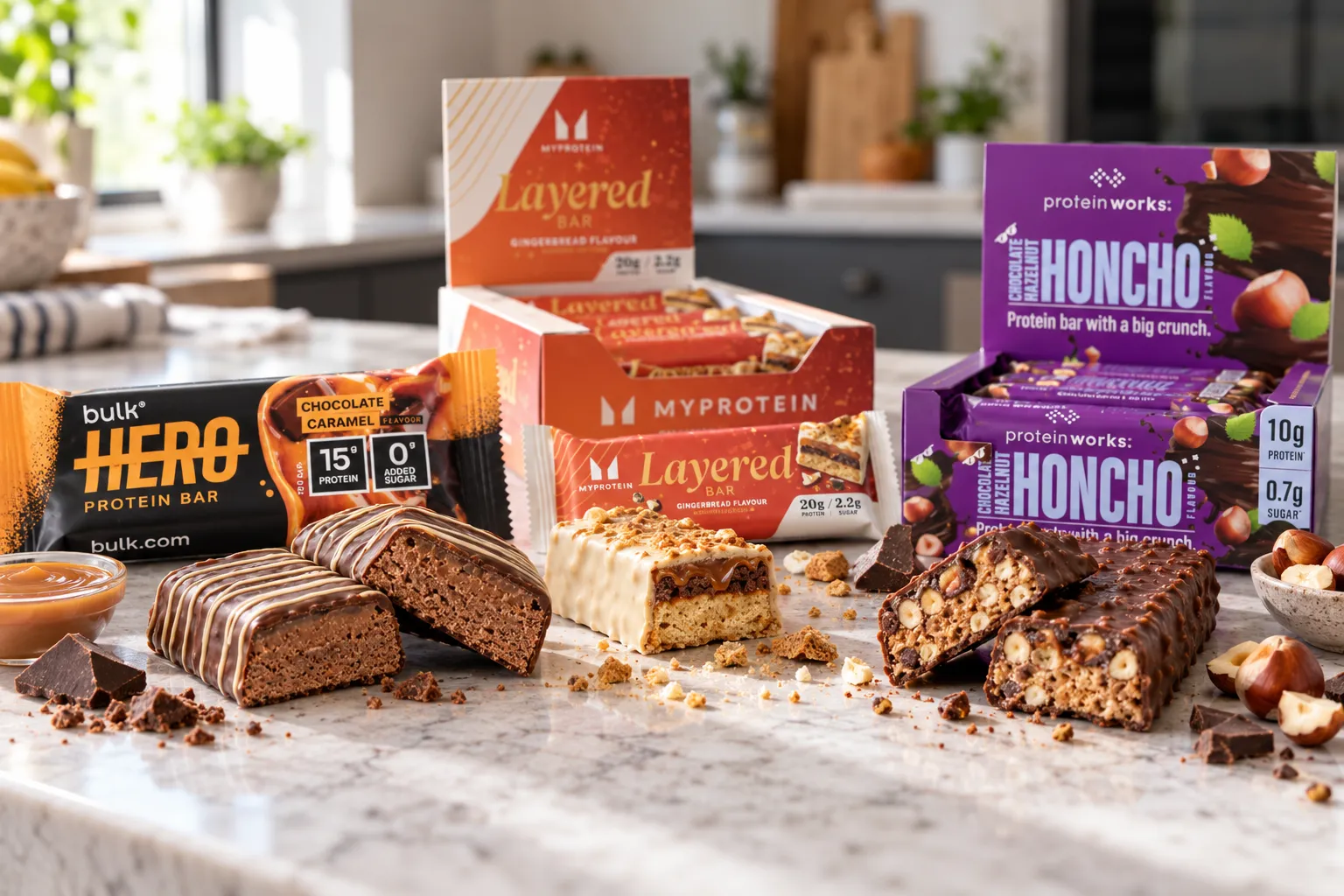
Why Does My Protein Bar Taste Artificial? Ingredients to Avoid
Protein bars taste artificial mostly because of what replaces the sugar: polyols such as maltitol, usually paired with an intense sweetener such as sucralose. Polyols are also the usual reason bars cause wind and bloating. The Myprotein Layered Bar in Hotel Chocolat Salted Caramel has no maltitol and no intense sweetener.
8 min read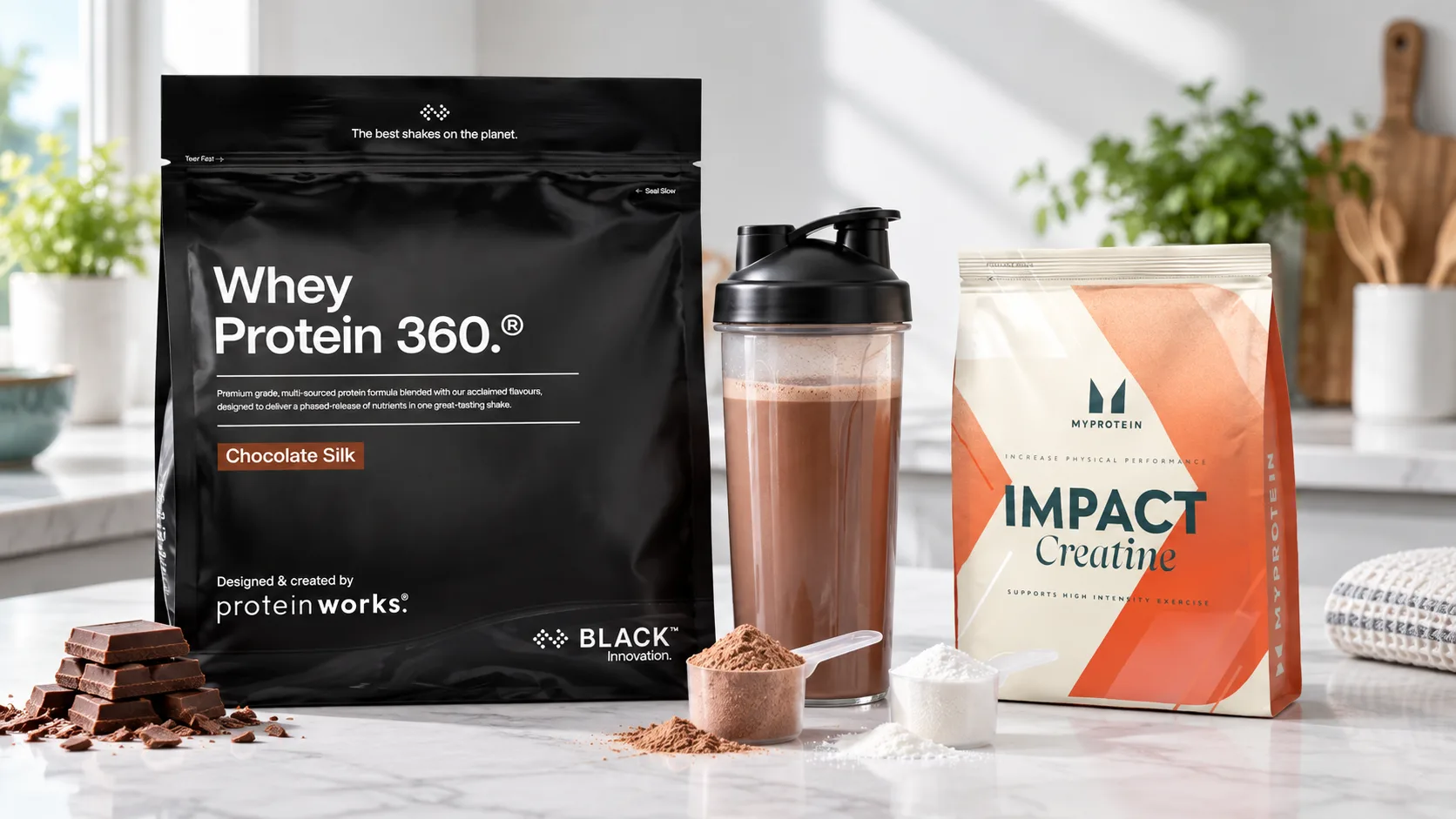
Can You Mix Creatine With Protein Powder? Cost Per Day
Yes, you can mix creatine with protein powder in the same shaker. It is safe, and taking creatine with protein and carbohydrate may even help your muscles hold on to more of it. Use 3g to 5g of plain creatine monohydrate a day and drink the shake soon after mixing.
6 min read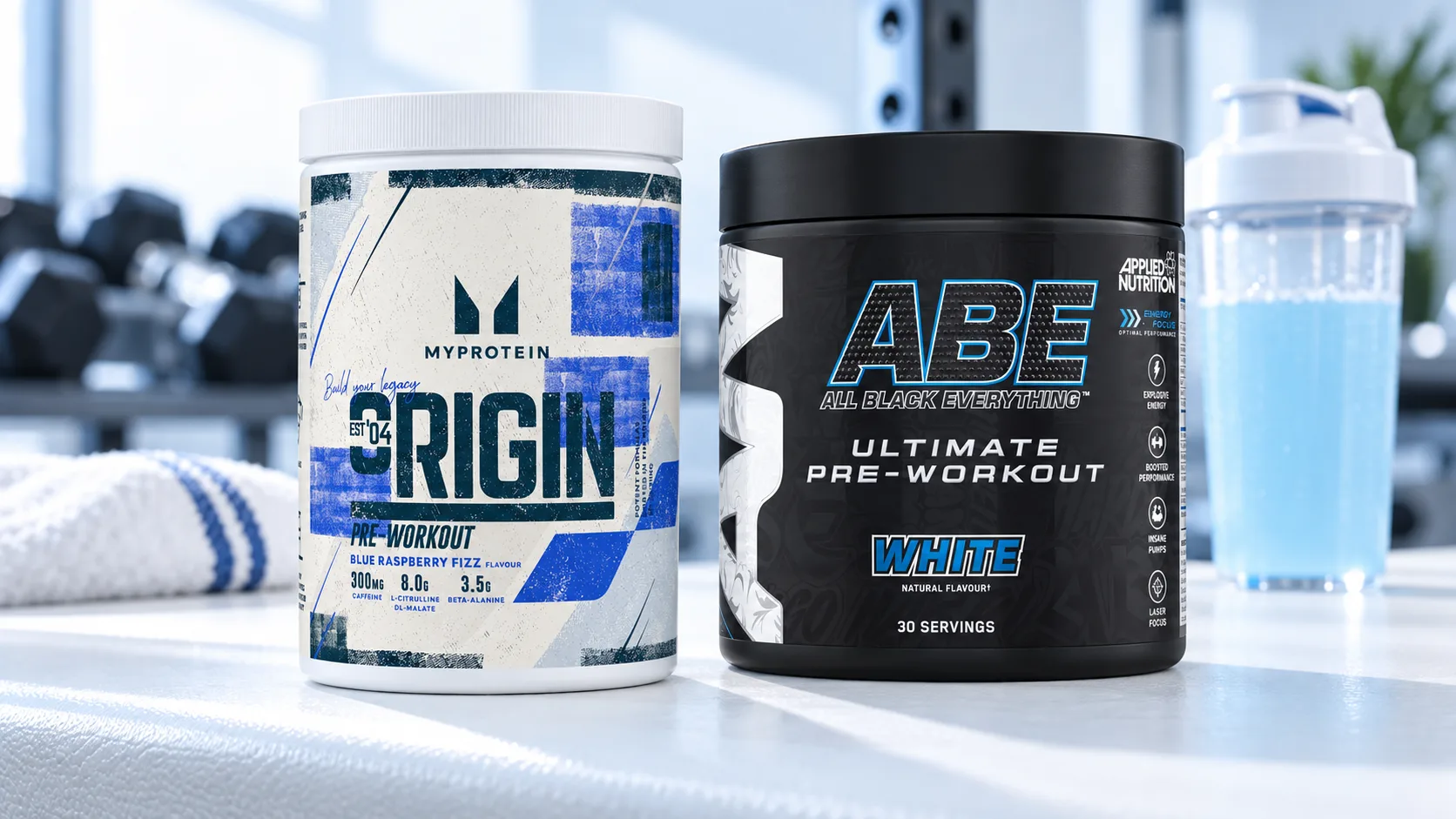
What Is in Pre-Workout, and What Does It Cost?
Pre-workout is mostly caffeine plus citrulline, beta-alanine and sometimes creatine, and caffeine does most of the work. A serving costs 53p to 93p on the brands' own sites. Applied Nutrition ABE has 200mg of caffeine per scoop and costs 93p direct or 80p on Amazon UK; Myprotein Origin Pump, without caffeine, is cheapest at 53p.
7 min readFind your cheapest protein
782 products compared from 181 brands
Sorted by best value per 25g of protein.
Compare all products