Quick answer
The anabolic window is the idea that you must have protein soon after training or lose muscle growth, but a 2013 meta-analysis of 23 studies and 525 people found no significant effect of protein timing once other factors were controlled. The practical rule is to keep your pre- and post-workout meals no more than 3 to 4 hours apart. If you train fasted, a 30g scoop of Myprotein Impact Whey Isolate gives the 25g of protein researchers suggest soon after, on a label WheyWise checked on 3 October 2026.
The anabolic window is one of the oldest rules in the gym: drink your shake straight after training or the session is wasted. The research has moved on, and the window turns out to be measured in hours. This explainer covers what the idea is, what the studies found and what to do instead.
What is the anabolic window?
The anabolic window is the claim that there is a short period after training when protein, often with carbohydrate, must be eaten to get the most muscle growth. Aragon and Schoenfeld's 2013 review in the Journal of the International Society of Sports Nutrition, titled “Nutrient timing revisited”, describes it as a “window of opportunity” and concludes that its importance, and even its existence, varies with a number of factors, including when you last ate.
One reason is that protein eaten before training is still arriving afterwards. The review cites work in which a 45g dose of whey protein isolate took about 50 minutes to bring blood amino acids to their peak, so a pre-workout meal is still feeding muscle when you finish.
Is the anabolic window real?
Not as a deadline: a meta-analysis of 23 studies and 525 people found no significant difference in muscle growth from protein timing once other factors were controlled, and total protein intake was the strongest predictor of results (Schoenfeld, Aragon and Krieger, 2013). Across 20 studies and 478 people, timing made no significant difference to strength either. The International Society of Sports Nutrition adds that the anabolic effect of exercise lasts at least 24 hours, though it likely fades as time passes (Jäger et al., 2017).
How long do you have to eat protein after training?
Usually several hours. For a typical 45 to 90 minute weights session, Aragon and Schoenfeld suggest your pre- and post-workout meals should be no more than about 3 to 4 hours apart, stretching to 5 to 6 hours if both are large mixed meals. Speed only matters when you start training more than 3 to 4 hours after your last meal, when they suggest at least 25g of protein as soon as possible afterwards.
| Your situation | What the 2013 review suggests |
|---|---|
| Protein meal before training | Next protein meal within about 3 to 4 hours of it |
| Large mixed meal before training | The gap can stretch to 5 to 6 hours |
| Fasted, or more than 3 to 4 hours since you ate | At least 25g of protein as soon as possible after |
| How much in each meal around training | 0.4g to 0.5g per kg of lean body mass: 28g to 35g at 70kg of lean mass |
From Aragon and Schoenfeld (2013), for a resistance training session of 45 to 90 minutes.
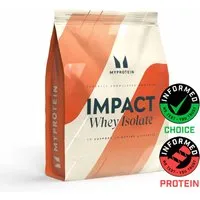
25g of protein in one 30g scoop
MyProtein Impact Whey Isolate Powder
900g bag
A simple post-workout shake if you train fasted; for everyone else, your next meal does the same job.
or compare all UK prices →25g of protein in one 30g scoop
Pros
- + 25g of protein per 30g Vanilla scoop, the amount the review suggests after fasted training
- + 108 kcal per scoop
- + £1.53 per 25g of protein in the 2.7kg bag, checked 3 October 2026
Cons
- – Dearer per gram of protein than Myprotein Impact Whey
- – The flavoured versions use sucralose
●Nutrition per scoop · 24.6g protein in 30g▼
Protein makes up 82%
of this 30g scoop · 108 kcal total
For when to take a shake on rest days, before bed and around fasted training, read when to take protein powder.
Frequently asked questions
Do I need a protein shake straight after the gym?
Only if you trained fasted or haven't eaten for 3 to 4 hours. In that case Aragon and Schoenfeld's 2013 review suggests at least 25g of protein as soon as possible. If you had a protein meal before training, your next meal within about 3 to 4 hours of it covers you.
How long is the anabolic window?
Hours, not minutes. The ISSN says the anabolic effect of exercise lasts at least 24 hours, though it likely fades with time, and Aragon and Schoenfeld suggest keeping pre- and post-workout meals within about 3 to 4 hours of each other, or 5 to 6 hours around large mixed meals.
Does protein timing matter at all?
Much less than your daily total. A 2013 meta-analysis of 23 studies and 525 people found total protein intake, not timing, was the strongest predictor of muscle growth. Hit your daily target first, then spread it across the day.