Quick answer
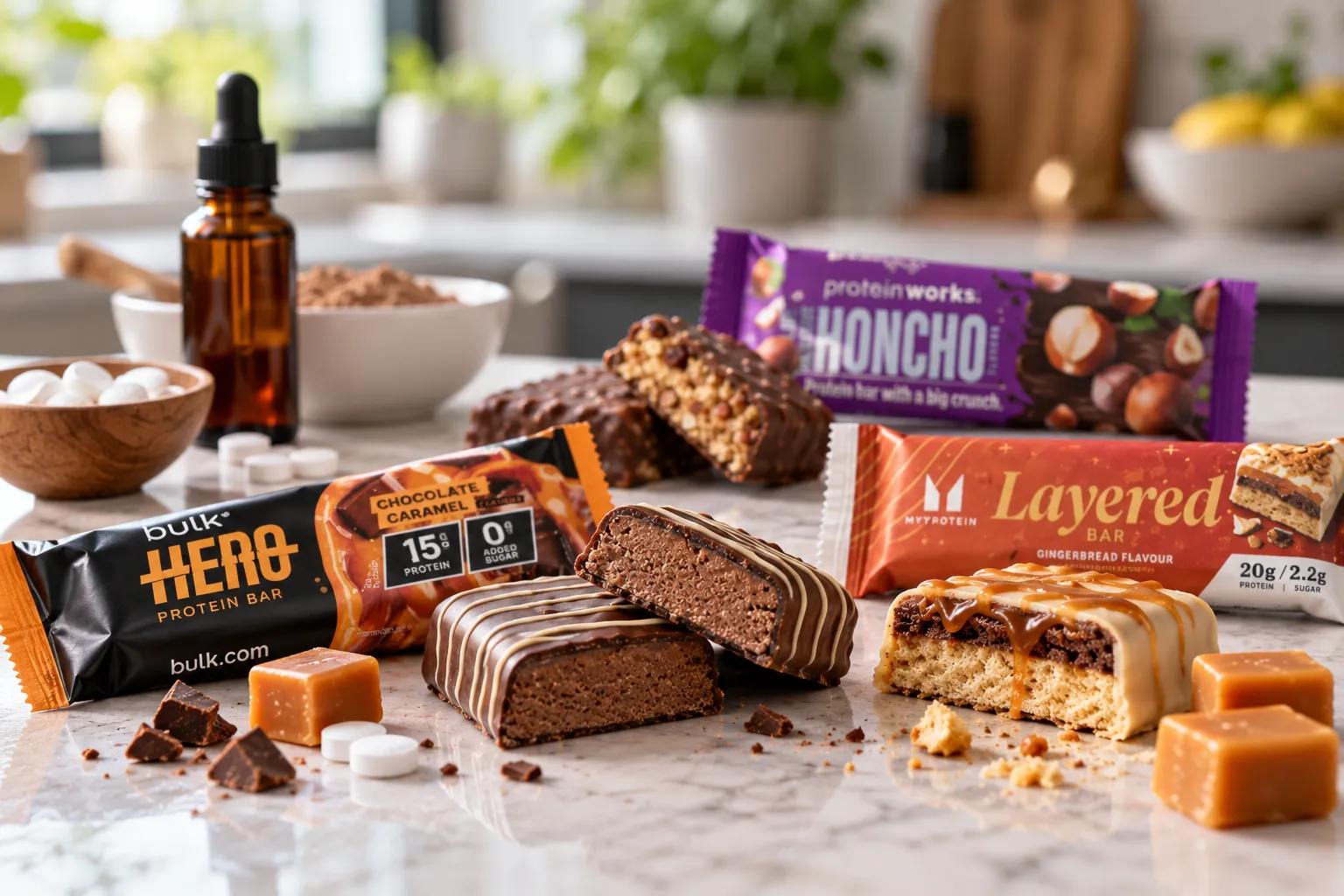
Check protein per calorie first, because it tells you more than protein per bar: the Protein Works Big Little Bar and the Myprotein Layered Bar in Triple Chocolate Fudge give 9.5g and 9.4g of protein per 100 kcal. Under UK rules a bar can only say “high protein” if at least 20% of its energy comes from protein, and it can only say “low sugar” at 5g or less per 100g. Then read the polyols line, because a bar can show low sugar and still carry a lot of sugar alcohol, and use our best protein bars in the UK guide to choose between the bars that pass.
A protein bar label has more to check than the front of the pack suggests, and the figures that matter most are protein per calorie, sugar, polyols, fibre and the bar's weight. This guide shows how to work those out from the nutrition panel, and when a high protein claim is actually allowed. It applies the same method to the bars in our best protein bars in the UK guide, which ranks eight bars from Myprotein, Protein Works and Bulk.
What should you check first on a protein bar label?
Start with four lines: protein per bar, kcal per bar, sugar and the polyols line. Then check the ingredient list for maltitol, sucralose and palm oil, which our guide on why protein bars taste artificial covers ingredient by ingredient.
Check the serving line too. UK panels give figures per 100g and often per bar, and the per-bar figure is the one you eat, so do the sum on the bar when you buy a single one.
Then check the bar weight, because a 33g bar and a 64g bar are not comparable until you put them on the same basis. The table below sets out the panels we read for four bars, with sugar per 100g and fibre per bar.
| Bar | Weight | Protein | kcal | Sugar per 100g | Polyols declared | Fibre per bar |
|---|---|---|---|---|---|---|
| Protein Works The Big Little Bar | 33g | 10g | 105 | 2.8g | Not declared | 3.4g |
| Myprotein Layered Bar, Triple Chocolate Fudge | 60g | 20g | 212 | 3.2g | Not declared | 6.6g |
| Myprotein Impact Bar, Fudge Brownie | 64g | 20g | 233 | 3.0g | Not declared | 8.6g |
| Bulk Hero Protein Bar | 50g | 15g | 175 | 2.8g | 13g | Not in our data |
Read from the nutrition panels on theproteinworks.com (Big Little Bar), myprotein.com and bulk.com. Sugar per 100g is the figure in our best protein bars in the UK guide. The Myprotein panels we read for these three bars don't declare a polyols figure.
How much protein per calorie should a bar have?
Divide the protein by the kcal. The Big Little Bar gives about 9.5g of protein per 100 kcal and the Layered Triple Chocolate Fudge 9.4g, while the Impact Fudge Brownie and the Bulk Hero both give 8.6g. A bar that gives more protein for each calorie is doing more of the job of a snack.
Protein per bar matters too, because it sets the serving. Going by the ISSN's 20g to 40g per serving, a 20g bar is one serving, a 15g bar is most of one, and a 10g bar such as the Big Little Bar is about half. Protein per 100g helps when the bars weigh different amounts, and it is 30g to 33g for every bar in the table above.
What does the high protein claim mean in the UK?
Under Regulation (EC) 1924/2006, a food can say “high protein” only if at least 20% of its energy comes from protein, and “source of protein” needs at least 12%. To check a bar, multiply the grams of protein by 4 and divide by the kcal on the panel. The Big Little Bar gets 38.1%, the Layered Triple Chocolate Fudge 37.7%, and the Impact Fudge Brownie and Bulk Hero 34.3%.
The claim is a test on the panel, not a judgement on the marketing, so a bar that looks packed with protein can still fail it. Do the sum for every bar you compare, including the ones with the bigger number on the front.
Names can mislead.Myprotein's Peanut Butter Protein Bar gets 16.6% of its energy from protein, so it can only claim to be a source of protein, not a high protein bar. Always do the sum on the panel rather than trusting the name on the wrapper.
Why does the sugar figure miss the polyols?
UK labelling counts sugars without polyols, so a bar can show low sugar and still carry a lot of sugar alcohol. Bulk Hero shows 1.4g of sugar and 13g of polyols on the same panel, which is why the sugar line alone can mislead.
When the panel doesn't show a polyols figure, read the ingredient list for maltitol, isomalt or glycerol, because the number can be missing even when the sweetener is there. Myprotein's Layered Triple Chocolate Fudge and Impact Fudge Brownie panels are examples of this.
Low sugar means something specific:under the same regulation, a food can say low sugar at 5g or less per 100g, and every bar in the table above sits under that line. The polyols line tells you how much of the sweetness comes from sugar alcohol, and the ingredient list tells you which one, usually maltitol.
The polyols line shows the sweetener load
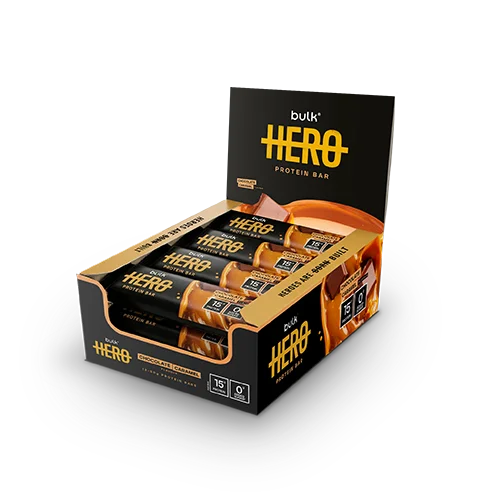
Bulk Hero Protein Bar
Bulk's Hero bar: 15g of protein in 175 kcal, with 1.4g of sugar and 13g of polyols on the same label, per the panel on bulk.com.
Bulk's Hero bar: 15g of protein in 175 kcal, with 1.4g of sugar and 13g of polyols on the same label, per the panel on bulk.com.
Pros
- + 15g of protein in 175 kcal
- + 1.4g of sugar per bar, with the polyols shown separately
- + Six flavours on bulk.com
Cons
- – 13g of polyols per bar, and Bulk prints a laxative warning
- – Uses sucralose as well as maltitol, plus palm oil
- – Not in our price data, so check the box price on bulk.com
How much fibre should a protein bar have?
Fibre per bar is a useful number on the label, but it is not automatically a plus. The Impact Fudge Brownie gives 8.6g and the Layered Triple Chocolate Fudge 6.6g, while the Big Little Bar gives 3.4g, so the two 20g bars differ by 2g of fibre.
Added fibres such as oligofructose can cause wind and bloating in some people, and our ingredient guide covers which bars use them. Check the fibre line alongside the polyols line, not on its own.
Does bar weight change the comparison?
Yes, because the weight decides how much of the bar is protein. Per 100g, the Layered Triple Chocolate Fudge gives 33g of protein, the Impact Fudge Brownie 31g, and the Big Little Bar and Bulk Hero 30g each, so the spread across these bars is narrow.
For a snack, compare per bar, since a 33g bar and a 64g bar are different portions. For a like-for-like choice between recipes, compare per 100g and per 100 kcal.
| Bar | Protein per 100 kcal | Share of energy from protein | Protein per 100g |
|---|---|---|---|
| Protein Works The Big Little Bar (33g) | 9.5g | 38.1% | 30g |
| Myprotein Layered Bar, Triple Chocolate Fudge (60g) | 9.4g | 37.7% | 33g |
| Myprotein Impact Bar, Fudge Brownie (64g) | 8.6g | 34.3% | 31g |
| Bulk Hero Protein Bar (50g) | 8.6g | 34.3% | 30g |
Calculated from the protein, kcal and weight on each panel. Share of energy from protein is grams of protein times 4, divided by kcal.
The choice of which bar to buy is the one the pillar answers. Our best protein bars in the UK guide ranks the bars on protein, sugar, sweeteners and price, so use the label method here to check any bar you find elsewhere. For how many of these bars suit a day, see can you eat protein bars every day, and for timing, read when to eat a protein bar.
If you are weighing a bar against a shake, our protein bar or protein shake comparison converts the cost per 10g of protein, and the label method above works on a shake panel too.
Frequently asked questions
How do you work out the protein percentage on a bar?
Multiply the grams of protein by 4, then divide by the kcal on the label. The Myprotein Layered Bar in Triple Chocolate Fudge has 20g of protein, 80 out of its 212 kcal, or 37.7%, which clears the 20% high protein line.
What does low sugar mean on a protein bar?
Under UK rules a food can say low sugar only at 5g or less of sugar per 100g. The Protein Works Big Little Bar has 2.8g per 100g on its panel, well under that line.
Why does a bar say 1.4g of sugar but still taste sweet?
Sweeteners such as sugar alcohols are not counted in the sugar figure, so a bar can be sweet with little sugar on the label. Check the polyols line on the panel and the ingredient list for maltitol to see what is sweetening it.
Is more fibre better in a protein bar?
Not automatically. Fibre adds to the figure on the label, but added fibres such as oligofructose can cause wind and bloating in some people. The Impact Fudge Brownie has 8.6g per bar and the Big Little Bar 3.4g.
Should I compare bars per bar or per 100g?
Use per 100g when you want to compare bars of different weights, and per bar when you are buying a snack. A 33g bar and a 64g bar look very different until you put them on the same basis.