Carbohydrate on long runs
Prozis
Energy Crunch Bar
Buy Energy Crunch Bar →Direct from ProzisGet 10% off your order
How many carbs to eat in marathon training, how to carb load, how much to take per hour during the race, how much to drink without risking low sodium, whether caffeine helps, and how much protein runners need.
Kevin, founder of WheyWise
Carbohydrate on long runs
Prozis
Fluid and carbs in one
Prozis
800g bag
Buy Energy IsoCarb - Isotonic Drink →Direct from Prozis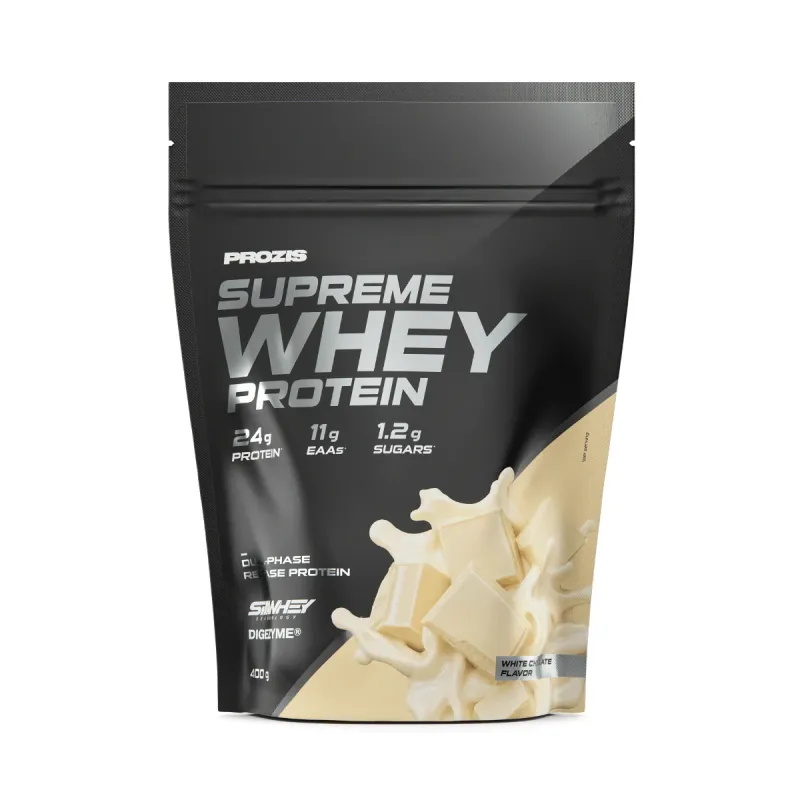
Protein after long runs
Prozis
907g bag
Buy Supreme Whey Protein →Direct from ProzisQuick answer
For a marathon, carbohydrate is the fuel that matters. Load up with 10 to 12g of carbohydrate per kg of body weight a day for the 36 to 48 hours before the race, then take in 30 to 60g of carbohydrate an hour while you run, up to 90g an hour from a glucose and fructose mix if you will be out for more than two and a half hours. Drink to thirst rather than to a schedule: gaining weight during a marathon is the main risk factor for low blood sodium. A simple, cheap fuel to practise with is the Prozis Energy Crunch Bar, with 24g of carbohydrate in a 40g bar at 91p a bar in the 4-pack. After long runs, have 20 to 40g of protein.
Marathon nutrition comes down to three things: enough carbohydrate in training and on race day, sensible drinking with some sodium, and enough protein to recover from the training load. This guide gives the numbers the research supports, worked through for a 70kg runner, and shows which Prozis products fit around them.
Marathon runners need 5 to 8g of carbohydrate per kg of body weight a day when they train for two to three hours a day, according to the British Dietetic Association. Lighter weeks of one to two hours need 3 to 5g per kg, and very heavy training of three to six hours a day needs 8 to 10g per kg.
| Training load | Carbohydrate per kg a day | For a 70kg runner |
|---|---|---|
| 1 to 2 hours, 3 to 5 times a week | 3 to 5g | 210 to 350g |
| 2 to 3 hours a day | 5 to 8g | 350 to 560g |
| 3 to 6 hours a day | 8 to 10g | 560 to 700g |
| Carb loading, last 36 to 48 hours | 10 to 12g | 700 to 840g |
Training bands from the British Dietetic Association's sport and exercise food fact sheet; carb loading from Podlogar and Wallis, 2022.
Carb load by eating 10 to 12g of carbohydrate per kg of body weight a day for the 36 to 48 hours before the race, which is recommended for events lasting more than 90 minutes (Podlogar and Wallis, 2022, PMID 36173597). For a 70kg runner, that is 700 to 840g of carbohydrate a day. Most runners find it easier to swap some fat and fibre for low-fibre carbohydrate, such as white rice, pasta, bread, potatoes and juice, than to simply eat more.
Eat a familiar high-carbohydrate, low-fat meal or snack 2 to 3 hours before the start, as the British Dietetic Association advises. Porridge, toast with honey or jam, a bagel or a banana are common choices. Race morning is not the time to try anything new: eat what you have eaten before long training runs.
Take 30 to 60g of carbohydrate an hour during a marathon, and up to 90g an hour if you will be running for more than two and a half hours (Burke et al., 2011, PMID 21660838). Above about 60g an hour, use a mix of glucose and fructose: the gut absorbs the two through different routes, and the combination raised how much of the drink's carbohydrate the body burned by up to 65% compared with glucose alone (Jeukendrup, 2010, PMID 20574242).
Train your gut before race day. Runners who practised taking carbohydrate during two weeks of runs cut their stomach symptoms by about 60% and ran further in a performance test (Costa et al., 2017, PMID 28177715). Start with 30g an hour on long runs and build up.
| Finish time | Carbohydrate an hour | Total for the race |
|---|---|---|
| Under 2 hours 30 | 30 to 60g | 75 to 150g |
| 3 hours 30 | 60 to 90g, glucose and fructose | 210 to 315g |
| 4 hours 30 | 60 to 90g, glucose and fructose | 270 to 405g |
Drink to thirst, and do not finish heavier than you started. Overdrinking is the main cause of exercise-associated hyponatraemia, dangerously low blood sodium, and the international consensus on it calls thirst-guided drinking the safest approach (Hew-Butler et al., 2015, PMID 26102445). In the 2002 Boston Marathon, 13% of 488 runners studied had low blood sodium at the finish; runners who gained weight were at about four times the risk, and those finishing in more than four hours at about seven times the risk of those under three and a half (Almond et al., 2005, PMID 15829535). At the London Marathon, 11 of 88 runners sampled had it (Kipps et al., 2011, PMID 19622524).
Sodium helps you hold on to what you drink, but it does not make overdrinking safe. Endurance athletes sweat about 1.3 litres an hour and lose about 52 mmol of sodium an hour on average, roughly 1.2g, with large differences between people (Barnes et al., 2019, PMID 31230518). A sports drink, gels with sodium or salty food cover that for most runners.
Yes. Caffeine at 3 to 6mg per kg of body weight, taken about 60 minutes before, improves endurance performance, according to the International Society of Sports Nutrition (Guest et al., 2021, PMID 33388079). A meta-analysis of 46 studies found time trials about 2% faster on average (Southward et al., 2018, PMID 29876876). For a 70kg runner, 3mg per kg is 210mg. Higher doses bring more side effects without more benefit, so test your dose on a long run first.
Marathon runners need about 1.4 to 2.0g of protein per kg of body weight a day, which is the range both the International Society of Sports Nutrition and the British Dietetic Association give for endurance athletes. For a 70kg runner, that is about 98 to 140g a day. After long runs, have 20 to 40g of protein with carbohydrate, the same amount the research supports after resistance training (Jäger et al., 2017, PMID 28642676).
Protein after long runs
907g bag
Prozis Supreme Whey Protein gives 24g of protein per 30g scoop, enough for the 20 to 40g runners need after a long run, at £1.22 per 25g of protein with code WHEYWISE.
or compare all UK prices →Protein after long runs
Pros
Cons
Protein makes up 80%
of this 30g scoop · 112 kcal total
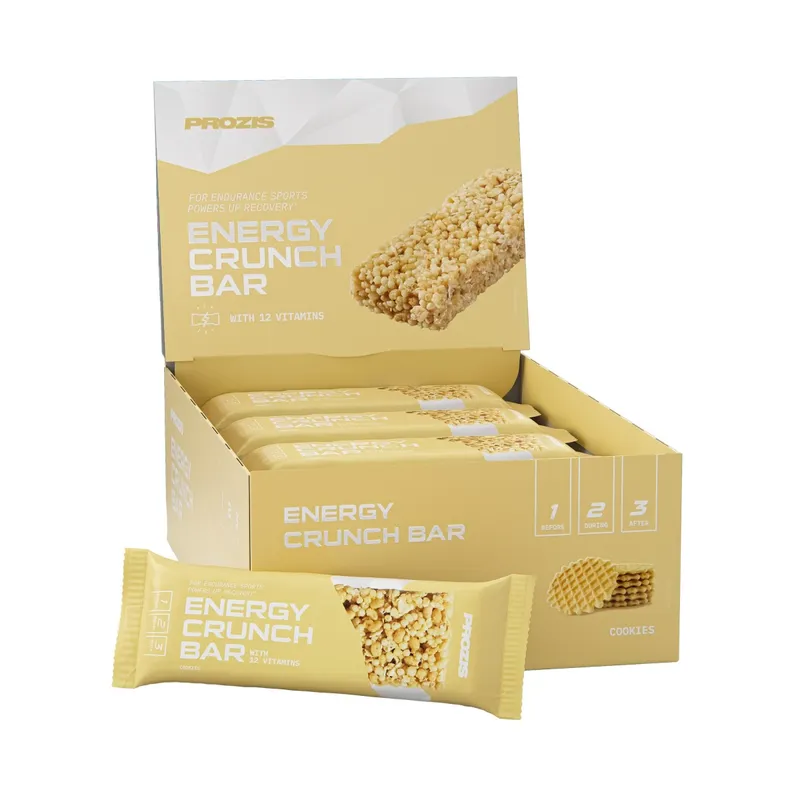
Three Prozis products fit around marathon training: a carbohydrate bar for long runs, an isotonic drink for fluid and carbohydrate together, and whey for protein afterwards. The Prozis Energy Crunch Bar has 24g of carbohydrate in a 40g bar, so two or three bars an hour cover the 30 to 60g range on a long run. It costs 91p a bar in the 4-pack at £3.63; the 12-pack works out dearer per bar, at £1.14.
Carbohydrate on long runs
The Prozis Energy Crunch Bar gives 24g of carbohydrate in a 40g bar for 91p in the 4-pack, a cheap way to practise fuelling on long runs.
The Prozis Energy Crunch Bar gives 24g of carbohydrate in a 40g bar for 91p in the 4-pack, a cheap way to practise fuelling on long runs.
Pros
Cons
Fluid and carbs in one
800g bag
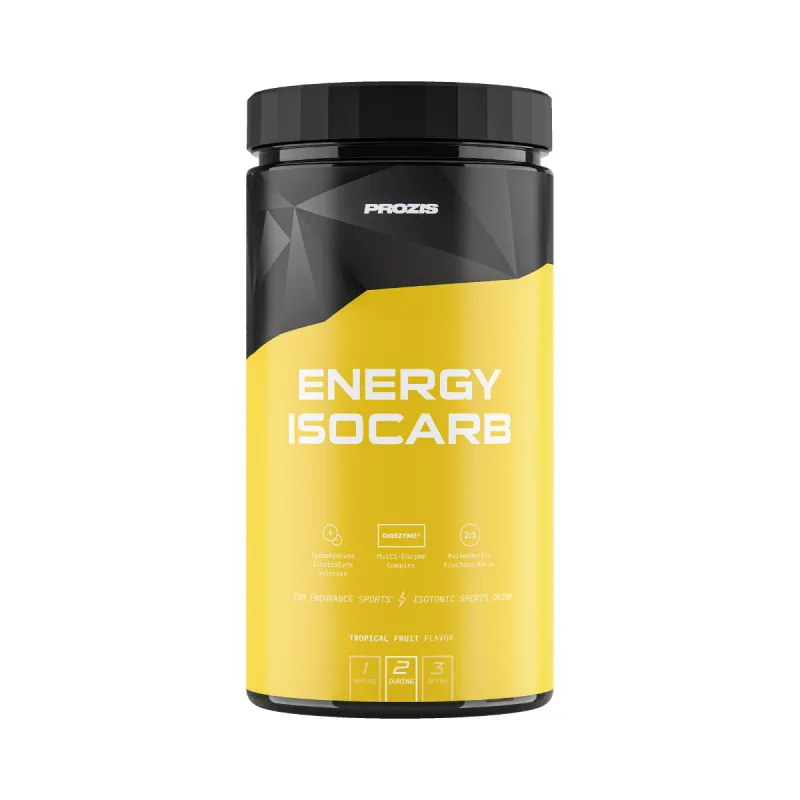
Prozis Energy Isocarb is an isotonic carbohydrate drink for long runs and race day, at £12.72 for 800g. Use it to practise fuelling and drinking together in training.
or compare all UK prices →Fluid and carbs in one
Pros
Cons
For more bars compared by carbohydrate, sugar and protein per bar, see the protein bar comparison.
A marathon fuelling plan for a 70kg runner aiming for about four hours puts most of the work into the two days before and the race itself.
| When | What | For a 70kg runner |
|---|---|---|
| Training weeks | 5 to 8g carbs per kg, 1.4 to 2.0g protein per kg | 350 to 560g carbs, 98 to 140g protein a day |
| Last 36 to 48 hours | 10 to 12g carbs per kg, low fibre | 700 to 840g carbs a day |
| 2 to 3 hours before | Familiar high-carb, low-fat meal | Porridge, toast, bagel or banana |
| 60 minutes before | Optional caffeine, 3 to 6mg per kg | 210 to 420mg, tested in training |
| During the race | 60 to 90g carbs an hour, drink to thirst | 240 to 360g carbs over 4 hours |
| After the race | 20 to 40g protein with carbohydrate | A whey shake with milk and a meal |
The same principles apply to recovery from any hard session; see our post-workout recovery stack for protein, creatine and rehydration in more detail.
Carb load with 10 to 12g of carbohydrate per kg of body weight a day for the 36 to 48 hours before the race. For a 70kg runner, that is 700 to 840g of carbohydrate a day. On race morning, eat a familiar high-carbohydrate, low-fat meal or snack 2 to 3 hours before the start.
Aim for 30 to 60g of carbohydrate an hour. If you will run for more than two and a half hours, you can go up to 90g an hour using a mix of glucose and fructose, which the gut absorbs faster than glucose alone. Practise the amount in training first: two weeks of gut training cut stomach problems by about 60% in one study.
Drink to thirst. Overdrinking is the main cause of exercise-associated hyponatraemia, low blood sodium: in the 2002 Boston Marathon, 13% of 488 runners studied had it, and runners who gained weight during the race were at four times the risk. Slower runners are more exposed because they have more time to overdrink.
Sodium helps, but it does not replace sensible drinking. Endurance athletes lose about 52 mmol of sodium an hour on average in sweat, roughly 1.2g, with wide variation. Sports drinks, gels with sodium and salty food all help, but sodium cannot prevent hyponatraemia if you drink far more than you sweat.
Caffeine at 3 to 6mg per kg of body weight, taken about an hour before, improves endurance performance: a meta-analysis of 46 studies found time trials about 2% faster on average. For a 70kg runner, 3mg per kg is 210mg. Test it in training, because higher doses bring more side effects and no extra benefit.
Endurance athletes need about 1.4 to 2.0g of protein per kg of body weight a day, according to the International Society of Sports Nutrition and the British Dietetic Association. For a 70kg runner, that is about 98 to 140g a day. Have 20 to 40g after long runs.
Why Does My Protein Bar Taste Artificial? Ingredients to Avoid
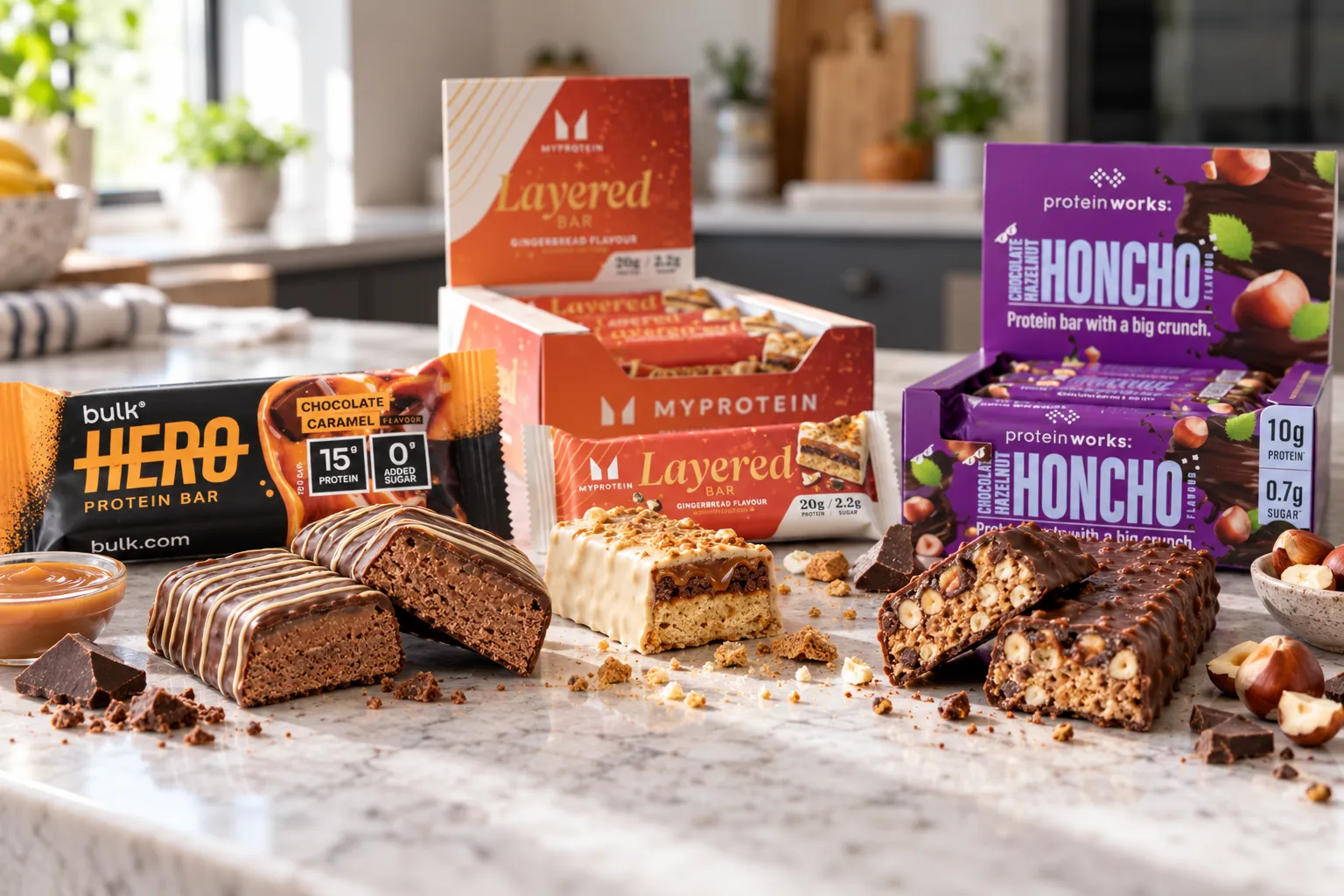
Why protein bars taste artificial and cause bloating: maltitol, sucralose, polydextrose, chicory fibre, IMO and collagen explained, plus which Myprotein, Protein Works and Bulk bars skip sweeteners, palm oil and seed oils. Ingredient lists.
8 min read
Can You Mix Creatine With Protein Powder? Cost Per Day
Whether creatine and protein powder can go in the same shake, what the research says about taking them together, when to drink it, and what the combination costs per day, checked September 2026.
6 min read
What Is in Pre-Workout, and What Does It Cost?
The ingredients in a typical UK pre-workout, what the evidence says caffeine, citrulline and beta-alanine do, when to take it, and the price per serving of Applied Nutrition ABE and Myprotein Origin, checked September 2026.
7 min readFind your cheapest protein
774 products compared from 182 brands
Sorted by best value per 25g of protein.
Compare all products