What Actually Drives UK Protein Powder Prices
European whey protein concentrate rose about 120% between October 2025 and July 2026 while whole milk powder fell 30%. The mechanism is not a whey shortage, it is a processing bottleneck. What sets the price of a tub, with sources and dates.
Kevin, founder of WheyWise
Quick answer
One thing dominates: the wholesale price of whey protein concentrate itself. European WPC80, the grade most whey powder is made from, rose from about €12,500 a tonne in October 2025 to about €27,500 by July 2026, a rise of roughly 120% in nine months. The counterintuitive part is that this is not a whey shortage. Rabobank's analysis is that the bottleneck is the capacity to convert liquid whey into concentrate, not the supply of whey itself. Meanwhile other dairy commodities fell hard over the same period, with whole milk powder down about 30%, so this is a whey-specific squeeze rather than general dairy inflation. WheyWise tracks what that does to UK shelf prices by cost per 25g of protein.
What actually sets the price of a tub of protein?
Five things, in descending order of how much they matter: the wholesale price of whey protein concentrate, demand for protein across the whole food industry rather than just supplements, milk supply, freight and packaging, and the retailer's own pricing strategy.
In 2026 the first of those has dwarfed the other four. Everything else in this article is context around a single number that roughly doubled.
How far has the whey commodity price moved?
European whey protein concentrate at 80% protein, the grade most standard whey powder is made from, went from about €12,500 a tonne in October 2025 to about €27,500 by July 2026. That is a rise of roughly 120% in nine months.
| Ingredient | Oct 2025 | Jul 2026 | Change | What it becomes |
|---|---|---|---|---|
| WPC80 (Europe) | €12,500/t | €27,500/t | +120% | Standard whey concentrate |
| WPI90 (Europe) | €20,500/t | €32,500/t | +59% | Whey isolate, clear whey |
| Acid casein (Europe) | €6,350/t | €8,200/t | +29% | Casein, micellar blends |
| Sweet whey powder (~12%) | €900/t | €1,320/t | +47% | Food ingredient, mass gainers |
European quotations, October 2025 to July 2026. Food-grade whey powder in north-west Europe reached a record of about €1,700 a tonne in late April 2026, more than 50% above the start of that year.
Notice the pattern down the table. The more processing an ingredient needs, the more its price rose. Concentrate more than doubled; the barely-processed sweet whey powder rose 47%. That gradient is the clue to what is actually going on.
Why this is not a whey shortage
The intuitive explanation is that there is not enough whey. The evidence says otherwise. Rabobank's dairy analysis attributes the squeeze to the capacity to convert liquid whey into protein powder rather than to the availability of the liquid whey itself.
This is why the price gradient in the table above runs the way it does. If raw whey were scarce, sweet whey powder would have risen as fast as concentrate. Instead the products that need the most ultrafiltration rose the most, which points at the filtration step as the bottleneck.
The stock data supports it. US whey protein concentrate stocks were down nearly 25% year on year in December 2025, with a similar decline in January 2026, while US whey isolate moved from a record $11 a pound in late November 2025 to about $12.30 a pound by early 2026.
The practical consequence for buyers: this does not resolve with one good milk season. Adding ultrafiltration capacity is a multi-year capital project, not a seasonal adjustment.
The demand side: protein went mainstream
Supplements are no longer the main buyer of protein ingredients. The global protein market was worth about $133bn in 2026, of which supplements accounted for $33.5bn growing at 13.2% a year, high-protein packaged food and drink $70.2bn growing at 8.1%, and protein ingredients $30.1bn at 11.6%.
Read those numbers again in proportion. High-protein mainstream food is more than double the supplement category. Every protein-fortified yoghurt, cereal bar and ready-to-drink coffee is bidding for the same ingredient your tub is made from, and there are far more of them than there were three years ago.
In the US, where the consumer research is most detailed, 70% of adults now actively try to consume protein, up from 59% in 2022, 40% of households buy protein powder or ready-to-drink protein, and protein powder sales rose 13.5% in 2025 with a repurchase rate of 76.7%. Those are US retail figures rather than UK ones, but they describe the demand shift that is repricing the ingredient globally.
Infant formula and clinical nutrition also draw on the same whey streams through demineralised whey, adding another competing bidder, though Rabobank assesses the impact on infant formula specifically as low to moderate.
Why other dairy got cheaper while whey got dearer
This is the detail that separates a real explanation from a lazy one. If UK protein prices were simply following dairy inflation, everything made from milk would have risen together. It did not.
Between September 2025 and February 2026, whole milk powder fell about 30%, dairy fats about 40%, and skimmed milk powder, cheese and whey powder about 15%. Over a broadly overlapping period, whey protein concentrate rose sharply. The AHDB has described whey as the dairy commodity that bucked the trend with continuous price growth.
So anyone telling you protein is expensive because dairy is expensive has it backwards for this period. Most dairy got cheaper. Whey protein specifically got dearer, because the demand for it is coming from outside traditional dairy markets.
Milk supply is tightening at the margin, which will matter next: global milk supply growth slowed from 2.6% in 2025 to 0.2% by early 2026, and GB production is forecast to fall 0.6% in 2026/27 after rising 4.9% in 2025/26. Less milk means less cheese means less whey.
Where the cheap tier went
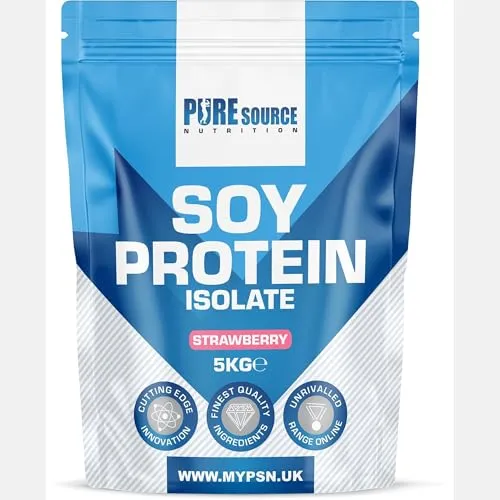
Pure Source Nutrition PSN Soy Protein Powder
2.5kg bag
Shown in place of PSN Whey Protein, which had no in-stock listing when we rechecked on 23 September 2026. PSN Soy Protein is the same budget brand's cheapest protein; check the live price on the card.
Buy PSN Soy Protein Powder →See the price on AmazonWhere the cheap tier went
Pros
- + From the same budget brand, Pure Source Nutrition, and the PSN protein we could price when we rechecked on 23 September 2026
- + Soy protein isolate, a complete plant protein
- + Sits at the budget end of the market: the live cost per 25g of protein is on this card
Cons
- – Soy rather than whey, so the taste and texture differ from the whey discussed above
- – No large public review record to check flavour against before you buy
●Nutrition per scoop · 27g protein in 30g▼
Protein makes up 90%
of this 30g scoop · 114 kcal total
Cheapest recognised brand
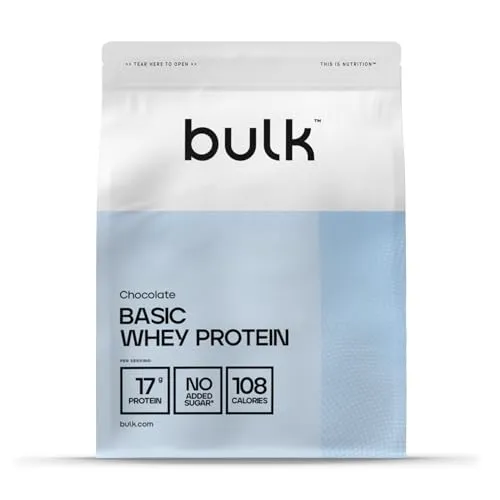
Bulk Basic Whey Protein
1.25kg bag
The reasonable compromise while the ingredient reprices. About 50p per 25g of protein, checked 21 August 2026, which is roughly half what the best-known brands charge for near-identical protein content.
or compare all UK prices →Cheapest recognised brand
Bulk Basic Whey Protein
1.25kg bagPros
- + About 50p per 25g of protein from a brand with a UK trading history and a customer service department
- + 72g of protein per 100g, unchanged while its stablemate Pure Whey sits at 71g for nearly double the price
- + 2.5kg bag is a realistic middle ground between price and commitment
Cons
- – Still roughly 2.4 times the cheapest whey on the market, so you are paying for the name
- – The commodity squeeze means today's price is not a reliable guide to next quarter's
●Nutrition per scoop · 16.8g protein in 30g▼
Protein makes up 56%
of this 30g scoop · 92 kcal total
Freight, and brands taking price because they can
Freight is a real but secondary input. The Drewry World Container Index stood at $4,526 per 40ft container on 20 August 2026, up 4% week on week and rising for a third consecutive week. That feeds into landed cost for imported ingredients and finished goods, but it is a small share of a tub's price next to a 120% ingredient move.
Brand pricing behaviour is the more interesting part. Glanbia, which owns Optimum Nutrition, reported first-half 2026 Performance Nutrition revenue of $917.2m, up 6.7% in constant currency, made up of 9.3% volume growth and 7.6% pricing. Optimum Nutrition like-for-like sales rose 25.2% and the group raised full-year earnings guidance.
That combination matters. Volume up and price up at the same time means the increases are being absorbed rather than resisted, which is the market signalling that it will bear more. Cost pass-through explains part of what you are paying. Demand that keeps growing through the increases explains the rest.
Will protein powder get cheaper?
Not quickly, on the current evidence, and it is worth being straight about that rather than offering false comfort.
The constraint is processing capacity, which is a multi-year build. Demand is still compounding at double digits in the supplement category and high single digits in mainstream high-protein food. Milk supply growth has slowed to near zero globally and GB output is forecast to dip in 2026/27.
One genuinely new development points to a market settling rather than spiking: DCA Market Intelligence launched European whey protein benchmarks on 8 April 2026, assessing WPC80 at €20,250 a tonne and WPI90 at €25,750. Independent price benchmarks tend to appear when a market becomes large and volatile enough to need them, which is a sign of maturation.
What you can control is which shelf you buy from, because the gap within the market is now much larger than the gap between years. The cheapest unambiguous whey we track is about 32p per 25g of protein and the dearest mainstream option is about £1.10, a threefold spread that no commodity move will close for you. Worth a warning while you shop the bottom of the market: several of the very cheapest products sold as protein are soy or wheat blends rather than whey, and the product name will not always tell you. Check the ingredients, not the price. See the current ranking on the cheapest protein powder comparison, watch movement on the protein price tracker, or read what rising whey prices mean for what you pay for the practical side. For the benchmark on what a fair price actually looks like now, see how much protein powder should cost. You can also line two products up in the protein comparison tool.
Frequently asked questions
Why does whey protein cost so much in 2026?
Because the wholesale ingredient repriced. European whey protein concentrate at 80% protein rose from about €12,500 a tonne in October 2025 to about €27,500 by July 2026, roughly 120%. Whey protein isolate rose about 59% over the same period and acid casein about 29%. Retail prices follow the ingredient with a lag, which is why UK shelf prices kept climbing through 2026.
Is there a whey shortage?
Not exactly. Rabobank's assessment is that the constraint is the capacity to convert liquid whey into concentrate and isolate, rather than the availability of liquid whey. Cheese production generates whey as a co-product; turning that into a protein powder requires ultrafiltration capacity, and that capacity has not expanded as fast as demand. US whey protein concentrate stocks were down nearly 25% year on year in December 2025.
Did all dairy get more expensive, or just whey?
Just whey, which is the clearest evidence that this is a specific squeeze rather than general dairy inflation. Between September 2025 and February 2026 whole milk powder fell about 30%, dairy fats about 40%, and skimmed milk powder, cheese and whey powder about 15%. Over a broadly similar period whey protein concentrate rose sharply. The AHDB has described whey as the dairy commodity that bucked the trend with continuous price growth.
Will protein powder prices come down?
The honest answer is that nothing in the current signals points to a quick unwind. The constraint is processing capacity, which takes years and capital to add rather than a season. GB milk production is forecast to fall 0.6% in 2026/27 after rising 4.9% in 2025/26. Demand is still growing. What has changed is transparency: DCA Market Intelligence launched European whey protein benchmarks in April 2026, which usually signals a market maturing rather than one about to collapse.
Are brands using the commodity story to raise prices further?
Some pricing is going beyond cost pass-through. Glanbia, which owns Optimum Nutrition, reported first-half 2026 Performance Nutrition growth of 6.7% in constant currency made up of 9.3% volume growth and 7.6% pricing, with Optimum Nutrition like-for-like sales up 25.2%, and raised its full-year earnings guidance. Volume and price are both rising, which tells you demand is absorbing the increases.
Related reading
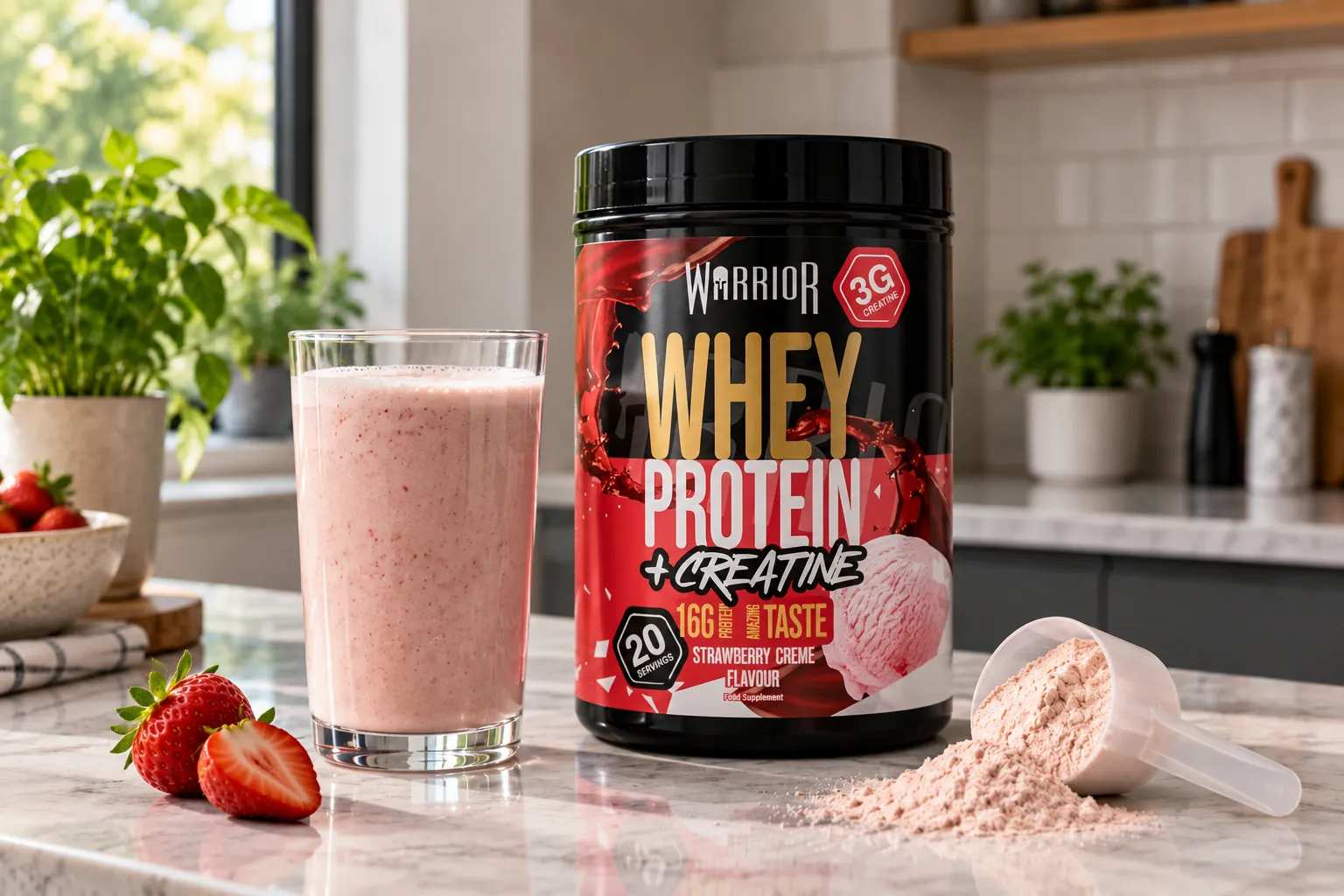
Is Warrior Protein Expensive? What Warrior Whey Costs Per 25g of Protein
Warrior Whey costs £1.16 per 25g of protein in its cheapest in-stock bag, and its cheap 1kg and 2kg sizes are sold out. What Warrior costs per scoop, how it compares with Myprotein, Bulk and Optimum Nutrition, and the cheaper Warrior protein most people miss.
8 min read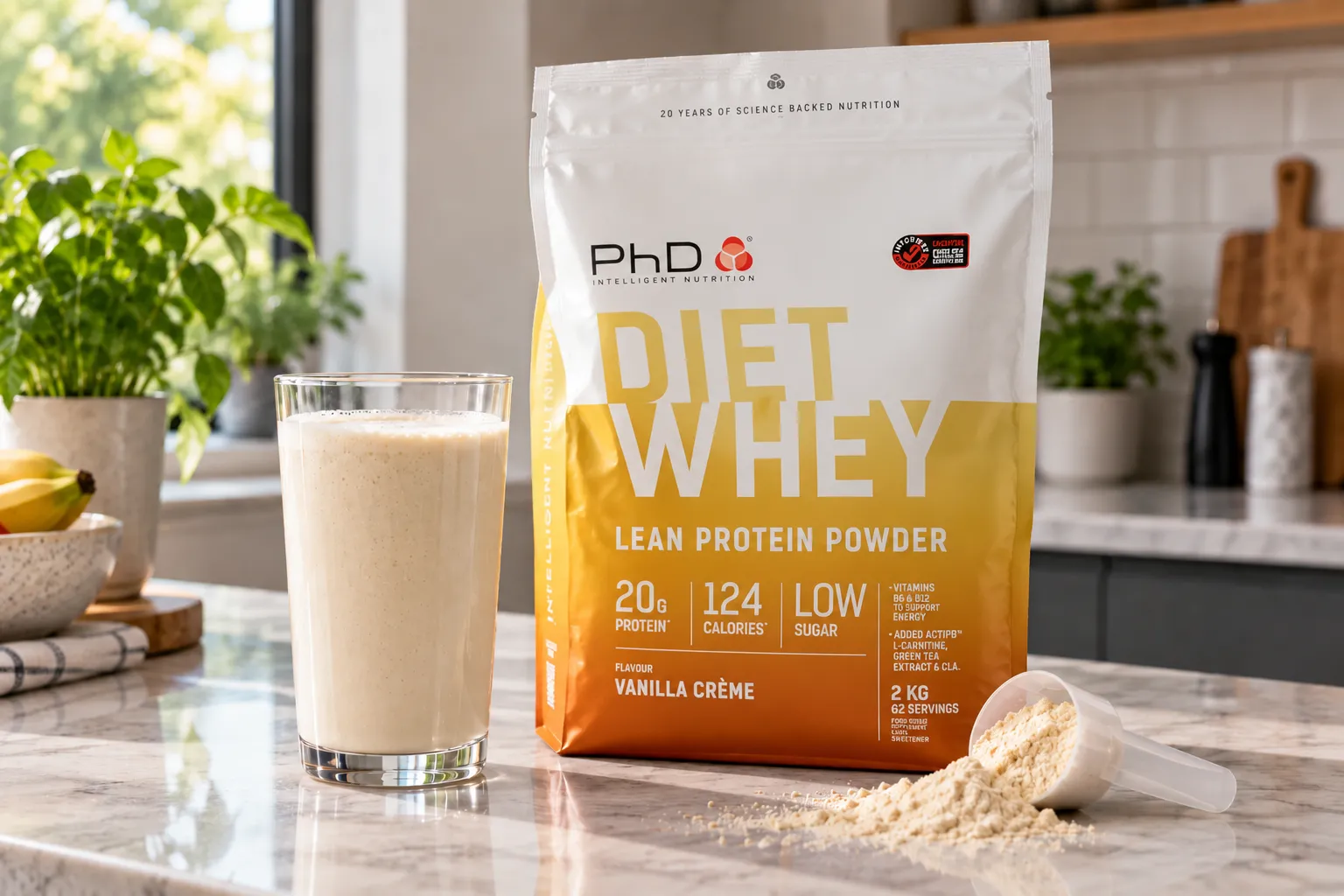
Is PhD Protein Expensive? What Diet Whey Really Costs Per 25g of Protein
PhD Diet Whey costs £1.13 per 25g of protein in its cheapest 2kg bag, and carries less protein per 100g than a plain whey. What the price buys you, what Smart Protein costs, and when PhD is worth it.
8 min read
Which Protein Brands Put Prices Up in 2026, and Which Did Not
Sixty-one UK protein products changed price by more than 3% between April and August on our own tracking, and two of the biggest brands moved in one direction only. Then we measured again: what has moved since August, and which brands reversed.
9 min readFind your cheapest protein
717 products compared from 180 brands
Sorted by best value per 25g of protein.
Compare all products