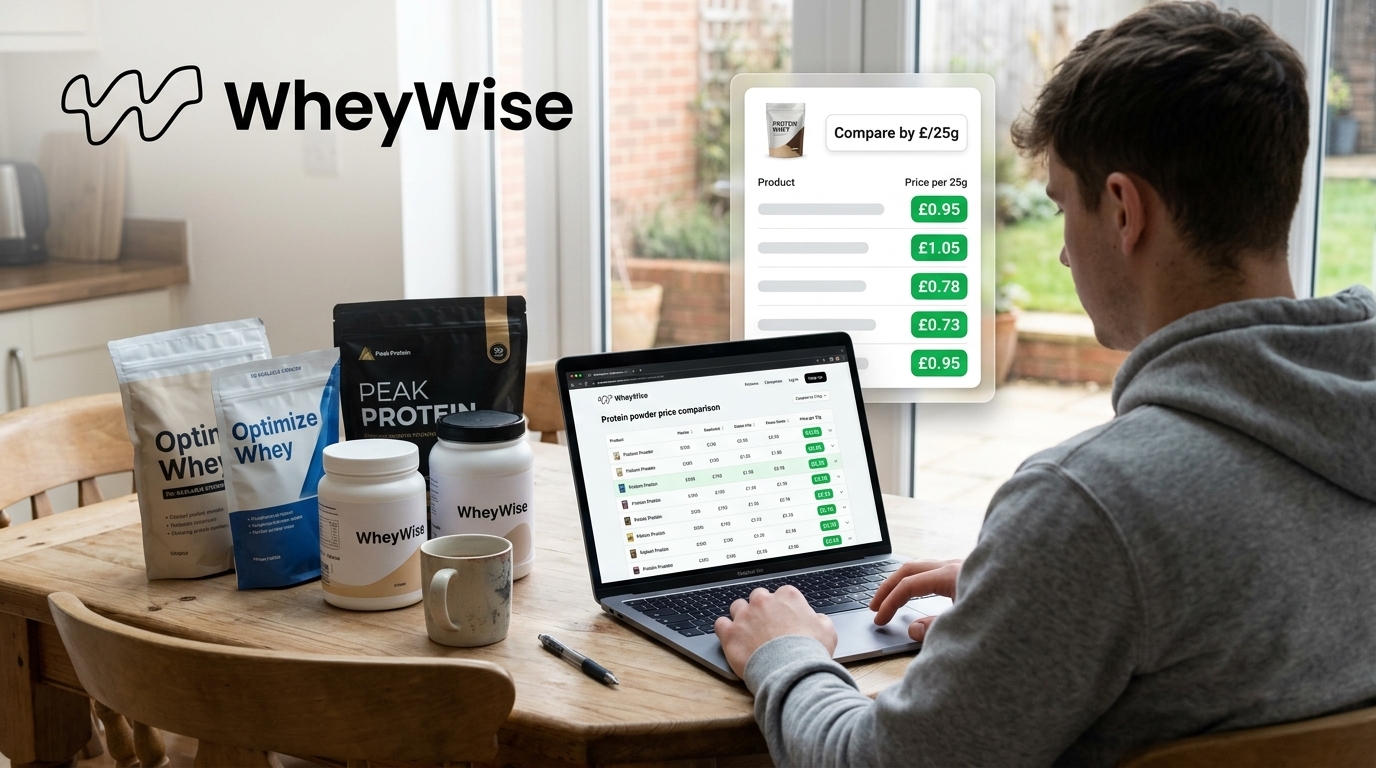
The phrase “best protein powder” means nothing on its own. The best powder for a budget student is not the best one for someone with a sensitive stomach, and neither is the one a brand spends the most on marketing. WheyWise exists to answer a more useful question: which protein is genuinely worth buying for your goal, your gut, and your budget. This page explains exactly how we assess products, the categories we score, and why we judge value by cost per 25g of protein rather than the price on the tub.
How does WheyWise rate protein powder?
WheyWise rates protein powder across a fixed set of categories and weights value most heavily. Every product is assessed on protein content, cost per 25g of protein, ingredient quality, sweetener type, digestibility, taste and mixability, third-party testing, and dietary suitability. We then separate “best overall” from “best for a specific need”, because a single ranking cannot serve a budget buyer, a sensitive stomach, and a competitive athlete at the same time. Prices are tracked live across every UK retailer we track so the value score reflects what you actually pay today.
Why our method is built around value, not hype
Protein powder is something most buyers use every day for months. That changes what matters. A powder that tastes amazing once but costs too much to keep buying is a bad long-term purchase. A famous brand that has quietly raised its price is not a good buy just because it is famous. Our method is built around three honest commitments:
- We show trade-offs, not just positives. Every product card lists cons as well as pros, because nothing is right for everyone.
- We compare value, not popularity. A lesser-known brand that delivers the same protein for less wins on the metric that matters.
- We separate quality from branding. When a product is expensive, we say whether you are paying for better protein and testing, or for the name on the tub.
This is the same thinking behind posts like cheap vs expensive protein powder and is cheap whey protein good.
The scoring categories we use
We assess every protein powder against the same categories so comparisons are like-for-like:
- Protein content: grams of protein per 100g and per serving. The headline number.
- Cost per 25g of protein: our primary value metric, normalised across pack sizes (see below).
- Ingredient quality: the length and cleanliness of the ingredient list, protein source, and any watchlist additives.
- Sweetener type: artificial, natural, or unflavoured, because this affects taste, digestion, and clean-label preference.
- Digestive comfort: lactose level and additives that commonly cause bloating.
- Taste and mixability: drawn from aggregated buyer reviews rather than a single opinion.
- Third-party testing: Informed Sport or equivalent certification, which matters for tested athletes.
- Dietary suitability: vegan, dairy-free, gluten-free, and similar fit for specific diets.
- Long-term affordability: whether the price is sustainable for daily use, not just a one-off bargain.
Why we measure cost per 25g of protein
We measure cost per 25g of protein because tub price hides the real value. Two tubs at the same price can deliver very different amounts of protein, because scoop sizes and protein density vary. A tub with a big 40g scoop at 60% protein gives you less protein per pound than a tub with a 30g scoop at 80% protein, even if the second tub looks pricier. Normalising everything to cost per 25g of protein, a standard serving, is the only fair way to rank value.
This also exposes a common trap: a large scoop with low protein density makes a tub last fewer servings than it appears. We explain the full calculation in how to calculate protein cost per serving, and every comparison table ranks by this metric automatically.
Why we separate best overall from best for a need
Buyers are not all looking for the same thing, so a single ranking would mislead most of them. We split recommendations by buyer need: best on a budget, best for muscle gain, best for a sensitive stomach, best vegan, best for taste, and so on. The right protein powder is the one that fits your goal, digests well, tastes good enough to stick with, and stays affordable long term. That is why the same product can top one list and sit mid-pack on another.
Where our data comes from
- Prices: scraped directly from every UK retailer we track on a regular cadence. The displayed price is the exact retailer price, with no assumed discounts or promo-code maths applied.
- Nutrition: protein, calories, carbs, and fat per 100g taken from product labels and manufacturer data.
- Reviews: taste and mixability signals aggregated from buyer reviews across retailers, not a single tester's opinion.
- Testing and certification: read from product labelling and brand certification listings.
You can see the tracking approach in more detail in how WheyWise tracks UK protein prices.
What the scoring looks like in practice
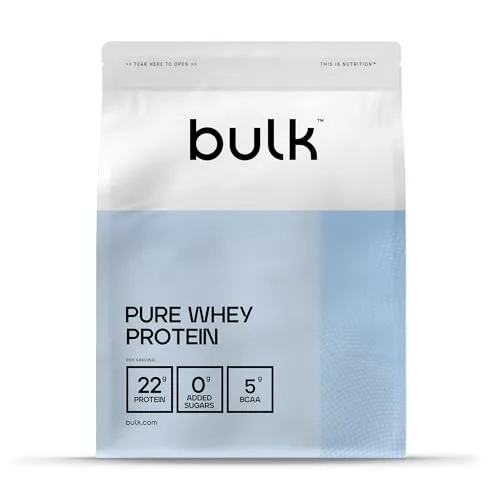
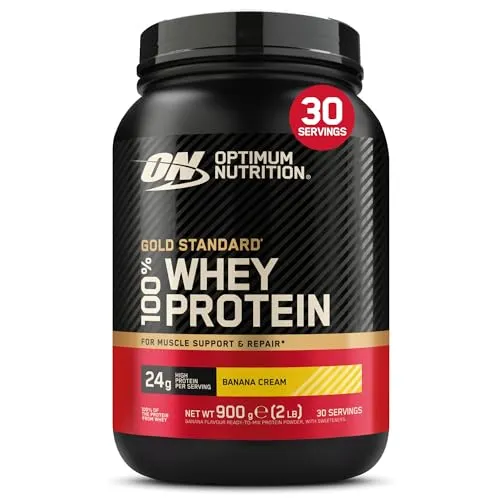
Two examples show how the method plays out. A value leader like Bulk Pure Whey scores high because it delivers a strong cost per 25g of protein with a clean enough profile for everyday use. A quality leader like Optimum Nutrition Gold Standard scores high on consistency, taste range, and mixability, and earns its slightly higher price on those grounds rather than on the brand name alone.
Example: value leader
Bulk Pure Whey Protein
1kg bag
Budget-friendly Informed Sport tested whey from Bulk with 50+ flavours. Consistently among the cheapest per serving in the UK.
or compare all UK prices →Example: value leader
Bulk Pure Whey Protein
1kg bagPros
- + Among cheapest UK whey options
- + Huge 50+ flavour range
- + 22g protein per 30g scoop
- + Informed Sport batch tested
Cons
- – 70-75% protein purity only
- – Some flavours overly artificial
- – Can cause bloating if lactose-sensitive
●Nutrition per scoop · 22.7g protein in 32g▼
Protein makes up 71%
of this 32g scoop · 120 kcal total
Example: quality leader
Optimum Nutrition Gold Standard 100% Whey Protein
907g bag
Optimum Nutrition Gold Standard delivers 24g protein per scoop and holds 4.6 stars across 55,000+ Amazon UK reviews. The default benchmark whey for buyers who want proven consistency over the lowest cost.
Buy Gold Standard 100% Whey Protein →See the price on AmazonExample: quality leader
Pros
- + 24g protein per scoop blended WPI WPC and hydrolysate
- + Most reviewed whey protein on Amazon UK with 55,000+ ratings
- + Instantised formulation mixes cleanly in cold water
- + 20+ flavour range with Double Rich Chocolate consistently 4.6 stars
Cons
- – Premium price tier above MyProtein and Bulk
- – Contains soy lecithin and artificial sweeteners
- – Smaller 450g tubs poor value vs 900g and 2.27kg sizes
●Nutrition per scoop · 23.6g protein in 31g▼
Protein makes up 76%
of this 31g scoop · 114 kcal total
Frequently asked questions
Does WheyWise test products in a lab?
No. WheyWise is a price and value comparison service. We aggregate label data, live prices, certifications, and buyer reviews rather than running our own lab assays. Where third-party testing matters, we surface whether a product carries certification such as Informed Sport.
Can brands pay to rank higher?
No. Rankings are driven by live price and the scoring categories. Affiliate commission does not move a product up a list, and it never changes the price you see.
How do I use the scoring to choose?
Start with the need that matters most to you, such as budget, digestion, or diet, then use the matching comparison or guide. Within that, the cost per 25g of protein ranking tells you which option gives you the most protein for your money.
How does WheyWise rate protein powder?
WheyWise rates protein powder across a fixed set of categories: protein content, cost per 25g of protein, ingredient quality, sweetener type, digestibility, taste and mixability, third-party testing, and dietary suitability. Value is weighted heavily because price per gram of protein, not tub price, is what determines whether a powder is worth buying. Prices are tracked live across every UK retailer we track.
Why does WheyWise use cost per 25g of protein instead of tub price?
Tub price is misleading because tubs vary in size and protein density. A cheap tub with a large scoop and low protein per scoop can cost more per gram of protein than a pricier tub. Cost per 25g of protein normalises every product to the same unit, which is the only fair way to compare value across brands and pack sizes.
Is WheyWise independent?
WheyWise earns affiliate commission when readers buy through some links, but this never changes the displayed price or the ranking. Products are ranked by the live cheapest price and the scoring categories, not by commission. The displayed price is always the exact retailer price scraped from the retailer, with no assumed discounts applied.
How often is the pricing data updated?
Prices are scraped on a regular cadence across every UK retailer we track and refreshed throughout the week, so comparison tables reflect current pricing rather than a one-off snapshot. Each comparison ranks products by the latest in-stock price per 25g of protein.