Cheap vs Expensive Protein Powder: What Are You Actually Paying For?
Premium UK whey costs roughly 2x cheap whey for under 10g per 100g more protein. Where the money actually goes, and when the premium is worth it in 2026.
Kevin, founder of WheyWise
Quick answer
For almost everyone, cheap wins. A budget whey like MyProtein Impact Whey builds muscle exactly as well as a premium tub, because once you match your total daily protein the extra few grams per 100g and the fancier processing make no real difference. Above roughly 70g of protein per 100g you are mostly paying for flavour, brand and marketing. Only pay the premium if you specifically want an isolate's leaner macros or a cleaner label; otherwise put the money toward a bigger bag.
A premium UK protein powder typically costs £35 to £50 per kilogram. A budget protein powder typically costs £18 to £25 per kilogram. The protein content gap between them is usually less than 10g per 100g of powder. So you are paying roughly double for a difference that, on the metric that matters most, is small.
That gap is not a scam, but it is not what most people assume it is either. A bigger price tag rarely buys meaningfully better muscle building outcomes. It buys flavour engineering, brand prestige, broader retail availability, and in a few cases more rigorous third party testing. This guide breaks down where the cash actually goes and when paying for the premium tub is genuinely the right call.
How much more does expensive protein actually cost?
A real UK price comparison, checked against the retailer on 3 August 2026:
Bulk Basic Whey, 2.5kg: around £32.99, or £1.32 per 100g and 46p per 25g of protein. Bulk's entry tier, 72g protein per 100g.
NutriSport 90+, 5kg: £58.99, or £1.18 per 100g and 39p per 25g of protein at 76g protein per 100g. The cheapest credible whey we track.
Bulk Pure Whey Protein, 2.5kg: £67.99, or £2.72 per 100g and 96p per 25g of protein.
MyProtein Impact Whey, 4.5kg: £134.49 direct, or £2.99 per 100g and £1.04 per 25g of protein. A full 50 percent Impact Week code takes it to about £1.49 per 100g.
Optimum Nutrition Gold Standard 100% Whey, 2kg: £63.29, or £3.16 per 100g and about £1.00 per 25g of protein at 79g protein per 100g.
Here is the finding that has changed since this guide was written. The cheap-versus-premium gap used to be about 2x when the cheapest whey on sale sat near £1.20 per 100g. It has not narrowed because premium got cheaper; it narrowed because the direct-to-consumer "cheap" brands rose fastest. Off-code, Impact Whey at £2.99 and Gold Standard at £3.16 are now within 6 percent of each other. The real 2x gap today is between the entry-level lines nobody advertises, such as Bulk Basic Whey at £1.32, and everything else.
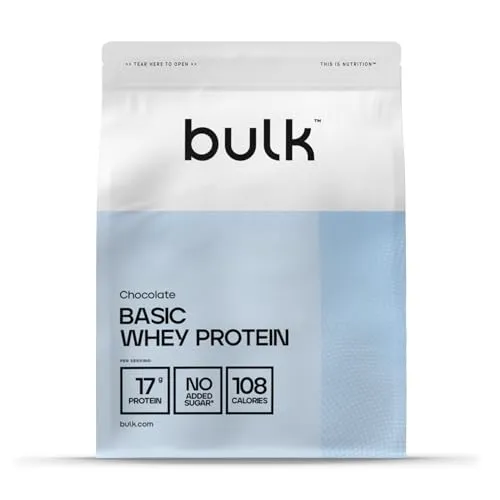
Cheapest big brand
Bulk Basic Whey Protein
1kg bag
Bulk Basic Whey is the entry tier most Bulk buyers walk past: 72g protein per 100g at around 46p per 25g, roughly a third cheaper per gram than Pure Whey from the same manufacturer. The budget pick if you want a name you recognise.
or compare all UK prices →Cheapest big brand
Bulk Basic Whey Protein
1kg bagPros
- + Around 46p per 25g, roughly a third cheaper per gram than Bulk Pure Whey
- + 72g protein per 100g from the same manufacturer and quality controls
- + Big-brand returns policy and customer service
- + 2.5kg bag is the value sweet spot
Cons
- – Shorter flavour list than Pure Whey
- – Plainer formula with no Informed Sport testing on this tier
- – Best prices are on marketplace listings rather than direct
●Nutrition per scoop · 21.6g protein in 30g▼
Protein makes up 72%
of this 30g scoop · 112 kcal total
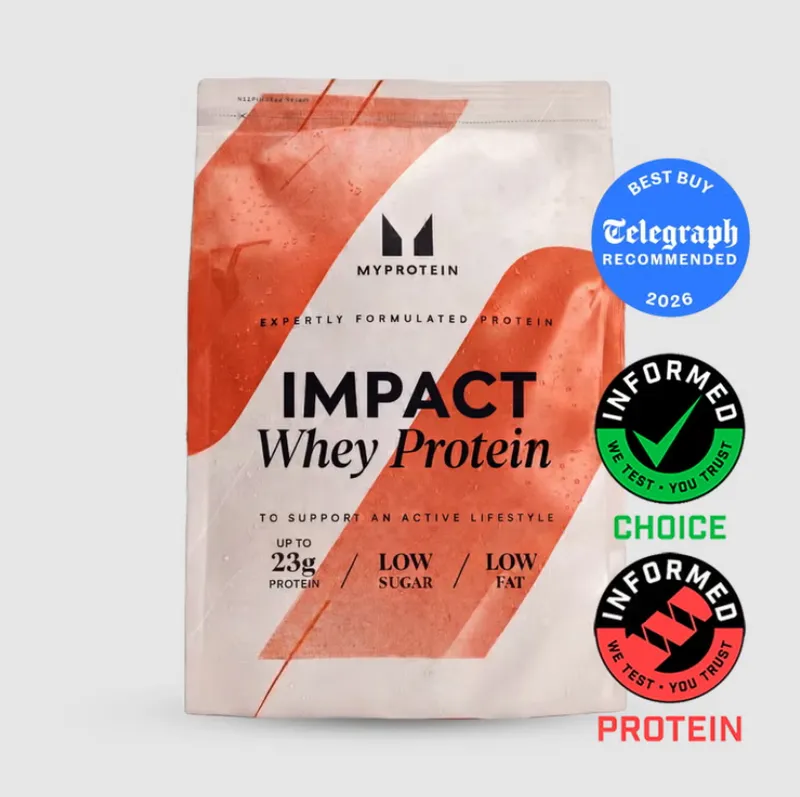
MyProtein Impact Whey Protein Powder
1.05kg bag
UK's bestselling whey concentrate with 82g protein per 100g. Regularly discounted 40-60% - never pay full price.
or compare all UK prices →MyProtein Impact Whey Protein Powder
1.05kg bagPros
- + 82g protein per 100g high purity
- + Cheapest per serving during sales
- + Huge 60+ flavour range
- + 5kg bags for long-term savings
Cons
- – Full price is poor value
- – Needs discount code to compete
- – Reformulations change taste occasionally
●Nutrition per scoop · 21.6g protein in 30g▼
Protein makes up 72%
of this 30g scoop · 113 kcal total
Where the price difference actually goes
The £20 to £25 per kilogram premium for an expensive whey protein breaks down roughly like this.
Brand and marketing. Premium brands like Optimum Nutrition, Grenade and MuscleTech run global marketing budgets, sponsorships, and retail partnerships. That is built into the price. Bulk and MyProtein spend relatively little on this and pass the saving on.
Retail markup. Premium whey is widely available in Holland and Barrett, Tesco, Asda, Boots and Amazon UK. Each step in the chain adds a margin. Direct to consumer brands cut that out entirely.
Flavour engineering. Optimum Nutrition Gold Standard Double Rich Chocolate has been refined over decades and has a real reputation for taste consistency. Premium brands invest meaningfully in flavour science. Some of the price premium pays for that, and for many buyers, taste consistency is genuinely worth it.
Whey blend type. Premium proteins often blend isolate, concentrate and hydrolysate, while budget proteins are usually pure concentrate. Isolate costs more per kilogram to produce, so a multi source blend will always be more expensive than a concentrate. Whether you need the blend is a different question.
Third party testing. Informed Sport and Informed Choice certification cost real money, and most certified products carry a small premium over uncertified equivalents. This is one of the few price premiums that maps cleanly to a tangible quality difference if you actually need certification.
Slightly cleaner ingredients. Some premium proteins use natural flavourings, no artificial sweeteners, no soy lecithin, etc. Whether this matters is a personal call. The protein performance outcome is unaffected.
Cheap vs expensive: side by side on the numbers
A direct comparison of a genuinely cheap UK whey (Bulk Basic Whey) and a typical expensive one (Optimum Nutrition Gold Standard), both at everyday prices in 2kg+ sizes, with MyProtein Impact Whey shown for reference because most people still assume it is the cheap option:
Protein per 100g: Basic Whey 72g vs Impact Whey 72g vs Gold Standard 79g. Functionally equivalent.
Cost per 100g of powder: Basic Whey £1.32 vs Impact Whey £2.99 vs Gold Standard £3.16. The genuinely cheap option is less than half the premium one; Impact Whey is not far off the premium one.
Cost per 25g of protein: Basic Whey 46p vs Impact Whey £1.04 vs Gold Standard £1.00. On a full 50 percent code Impact Whey reaches about 52p, still above Basic Whey's everyday price.
Flavour count: Impact Whey 40+ vs Gold Standard around 20. Both have strong vanilla and chocolate.
Third party testing: Impact Whey on selected lines, Gold Standard on every batch.
Whey type: Impact Whey concentrate, Gold Standard isolate concentrate hydrolysate blend.
Trustpilot score (early 2026): MyProtein around 4.4 with consistent volume. Optimum Nutrition outsourced via various retailers, varies, generally above 4.0.
For a fully live comparison across both products and 1,950+ others on the same metrics, the UK whey concentrate comparison and the dedicated MyProtein vs Gold Standard review break it down on real time price.
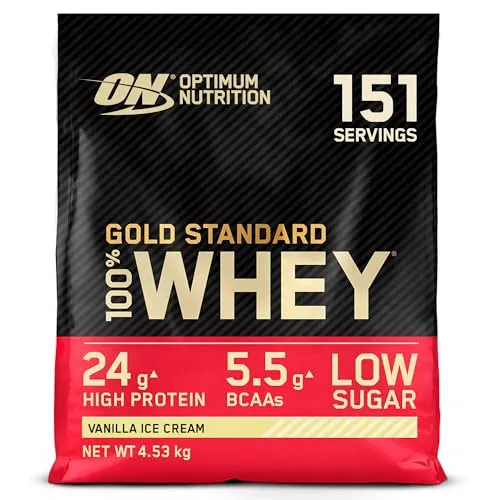
Optimum Nutrition Gold Standard 100% Whey Protein
899g bag
Optimum Nutrition Gold Standard delivers 24g protein per scoop and holds 4.6 stars across 55,000+ Amazon UK reviews. The default benchmark whey for buyers who want proven consistency over the lowest cost.
Buy Gold Standard 100% Whey Protein →See the price on AmazonPros
- + 24g protein per scoop blended WPI WPC and hydrolysate
- + Most reviewed whey protein on Amazon UK with 55,000+ ratings
- + Instantised formulation mixes cleanly in cold water
- + 20+ flavour range with Double Rich Chocolate consistently 4.6 stars
Cons
- – Premium price tier above MyProtein and Bulk
- – Contains soy lecithin and artificial sweeteners
- – Smaller 450g tubs poor value vs 900g and 2.27kg sizes
●Nutrition per scoop · 23.7g protein in 30g▼
Protein makes up 79%
of this 30g scoop · 112 kcal total
When expensive protein is actually worth it
Five scenarios where paying for a premium protein powder is a genuinely defensible choice.
You compete in a tested federation. Powerlifters, rugby players, drug tested athletes and anyone in a sport with banned substance lists need Informed Sport certified protein. Premium brands carry that certification more consistently than budget ones.
Taste makes or breaks compliance for you. If you have tried cheap whey and consistently could not stomach it, it is cheaper to pay £20 a year extra for a tub you actually drink than to throw away half of every cheap bag you buy. Taste matters. Just be honest with yourself about whether it is the issue.
You want a clean ingredient label. Some buyers genuinely want no artificial sweeteners, no soy, no artificial colours. Premium brands address this market explicitly. Budget brands rarely do.
You are buying once a year for travel. If you buy a single small tub for occasional use, the absolute price gap is small. Pay £35 instead of £25 and stop thinking about it.
You value fast retail availability. If you buy from Tesco, Asda or Holland and Barrett because of convenience or speed, you are already in the premium tier. Make peace with it or switch to direct online.
When cheap protein wins on every metric
For most UK buyers in most situations, cheap protein is not just acceptable but actively the better choice.
You drink protein daily. If you go through a kilogram a month, the price gap between budget and premium adds up to £100 to £200 a year. That is real money. The performance difference is not.
Total daily protein is what drives results. Hitting 1.6 to 2.2g of protein per kilogram of bodyweight matters far more than which tub it came from. Buying cheaper means you can drink more often or buy bigger sizes without budget anxiety.
You use protein in cooking. Mixing protein into pancakes, oats, yoghurt or baking. The flavour engineering of premium protein is partly wasted because you are masking it with other ingredients anyway. Cheap unflavoured or basic chocolate is fine.
You are a beginner finding your routine. Spending £45 on your first tub is unnecessary. Start cheap, find out whether you actually drink protein consistently, then upgrade later if you choose.
You want to buy in bulk. 2.5kg or 5kg bags of cheap UK whey are dramatically cheaper per 100g than 1kg bags of premium whey. Bulk buying is one of the easiest ways to cut your protein bill in half.
How to compare cheap and expensive protein fairly
The single biggest mistake UK buyers make is comparing tub price to tub price. A £30 tub of cheap whey at 70g protein per 100g is not always a better deal than a £40 tub of premium whey at 80g protein per 100g. Bag size and protein density both change the answer.
The metric that resolves this is cost per 25g of protein. It accounts for bag size, scoop size and protein percentage in one number. WheyWise calculates this automatically for every UK product on the main comparison page and surfaces the cheapest options on the cheapest protein per 25g list. Sort by it before deciding whether the premium tub is worth the upgrade.
Three rules for fair comparison:
Compare same size bags. A 1kg premium tub against a 2.5kg budget bag is not a fair comparison. Match sizes within each category before deciding.
Compare on sale, not RRP. Budget brands run permanent sales. Premium brands rarely do. The RRP comparison flatters the premium product.
Compare on cost per 25g of protein. Cost per 100g of powder gives a misleading answer when protein percentages differ. Always normalise.
Frequently asked questions
Why is Gold Standard whey so expensive in the UK? Optimum Nutrition Gold Standard is a global premium brand with high marketing spend, broad retail availability, and a multi source whey blend (isolate, concentrate, hydrolysate). The price premium reflects brand and distribution, not a meaningful protein content advantage. See the cheapest Gold Standard whey UK guide for the lowest current UK price.
Is Bulk protein as good as Optimum Nutrition? On muscle building outcomes, yes. The protein content per 100g is comparable, and total daily intake is what drives results. Optimum Nutrition wins on flavour consistency and certification. Bulk wins on price per 25g of protein. The MyProtein vs Gold Standard side by side covers the trade off in detail.
How much more does premium protein actually cost over a year? If you drink 1kg per month, the gap between a £20 cheap whey and a £40 premium whey is £240 a year. Two times bigger than your monthly grocery bill, often for a sub 10g per 100g protein difference. Worth the cost only if taste, brand or certification genuinely matter to you.
What is the best value protein powder in the UK? Best value depends on the metric. Cheapest cost per 25g of protein as of August 2026: Bulk Basic Whey at about 46p and NutriSport 90+ at about 39p, neither needing a code. Best value certified protein: Applied Nutrition Critical Whey. MyProtein Impact Whey and Bulk Pure Whey are no longer the cheap answer at about £1.04 and 96p. For live UK pricing across every product, see the full UK protein comparison.
Related reading
Which Protein Brands Put Prices Up in 2026, and Which Did Not
Sixty-one UK protein products changed price by more than 3% this year on our own tracking. Forty rose, twenty-one fell, and two of the biggest brands moved in one direction only. The measured version, with both observation dates on every figure.
7 min read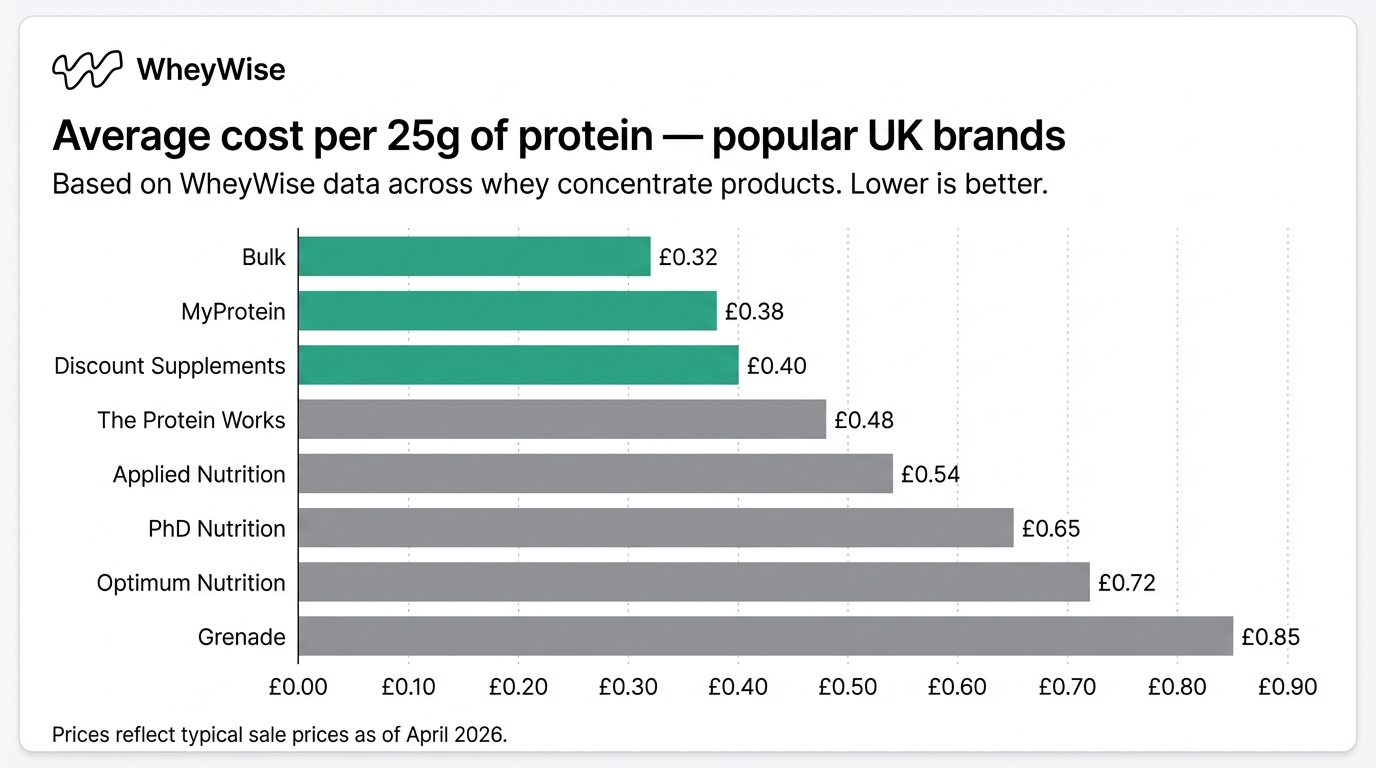
How Much Should Protein Powder Cost in the UK?
What counts as cheap, fair and overpriced for protein powder in the UK, in pounds per kilogram and per 25g of protein. Plus why the per-kilogram figure everyone quotes is the wrong one to judge on.
8 min read
What Actually Drives UK Protein Powder Prices
European whey protein concentrate rose about 120% between October 2025 and July 2026 while whole milk powder fell 30%. The mechanism is not a whey shortage, it is a processing bottleneck. What sets the price of a tub, with sources and dates.
9 min readFind your cheapest protein
872 products compared across 8 UK retailers
Sorted by best value per 25g of protein.
Compare all products