Caffeine in Pre-Workout: How Much Is Actually Safe?
EFSA caps caffeine at 400mg per day and 200mg per single dose. Most UK pre-workouts fit the window if you account for coffee. How to stay safe in 2026.
Kevin, founder of WheyWise
Quick answer
The safe limits are clear: EFSA puts the ceiling at 400mg of caffeine a day and 200mg in a single dose, and most UK pre-workouts fit inside that window as long as you count your coffee too. Stick to one serving, avoid stacking it on top of several coffees, and skip it within about six hours of bed. If you are caffeine-sensitive or train late, a stim-free option like Applied Nutrition ABE Pump gives you the performance ingredients with no caffeine at all. Dosed sensibly, pre-workout is safe for healthy adults.
The European Food Safety Authority has published the definitive caffeine safety limits for healthy adults. A single dose of up to 200 milligrams is safe. Total daily intake up to 400 milligrams from all sources is safe. Most UK pre-workouts contain between 150 and 300 milligrams per serving, which means a pre-workout alone fits inside the safe window. The challenge is total daily intake once you add coffee, tea, energy drinks, and chocolate.
The EFSA limits, in plain numbers
Three numbers matter for anyone taking a pre-workout:
- 200 milligrams per single dose. This is the safe single serving for healthy adults, including during or immediately before exercise. Most Applied Nutrition ABE servings and Grenade .50 Calibre servings fit inside this limit at 200 milligrams.
- 400 milligrams per day total. This is the combined upper limit across coffee, tea, energy drinks, chocolate, and pre-workout. Going above this regularly associates with anxiety, palpitations, and sleep disruption in healthy adults.
- 600 milligrams per day as the hard ceiling. Beyond 600 milligrams daily, EFSA flags meaningful risk of adverse cardiovascular and central nervous system effects. This is the line where caffeine stops being a training tool and becomes a health concern.
How much caffeine is already in your day before the pre-workout
A typical UK day includes more caffeine than most people realise. Running the numbers:
- A medium filter coffee contains 95 to 165 milligrams of caffeine.
- A 250ml cup of black tea contains 40 to 70 milligrams.
- A 330ml can of Coca-Cola contains 32 milligrams.
- A 250ml can of Red Bull contains 80 milligrams.
- A 500ml can of Monster Energy contains 160 milligrams.
- A 100 gram bar of dark chocolate contains 43 milligrams.
Two coffees (around 250 milligrams total) plus a 200 milligram pre-workout is already at 450 milligrams, above the daily safe limit. This is the most common way lifters end up over the EFSA threshold without realising it.
Side effects at different dose tiers
Side effects scale predictably with dose and individual sensitivity. Research and EFSA guidance map out three tiers:
- Under 200 milligrams per single dose. Most users experience improved alertness and perceived energy with no negative effects. Slow metabolisers may still see sleep disruption if taken within 6 hours of bedtime.
- 200 to 400 milligrams per single dose. Noticeable jitters, elevated resting heart rate, and increased sweating. Some users report anxiety or difficulty focusing (the opposite of the intended effect). Still within safe limits for healthy adults taken occasionally.
- Over 400 milligrams per single dose. Outside EFSA safe guidance. Symptoms include palpitations, tremor, nausea, and sleep disruption lasting 8 to 12 hours. Prolonged exposure at this level associates with elevated blood pressure.
Genetic variation: fast vs slow metabolisers
Caffeine is metabolised primarily by the CYP1A2 enzyme in the liver. The gene encoding CYP1A2 has two common variants that determine processing speed. Fast metabolisers (AA genotype) clear caffeine with a half-life of roughly 4 to 5 hours. Slow metabolisers (AC or CC genotypes) have a half-life of 7 to 10 hours. Roughly 50 to 60 percent of Europeans are fast metabolisers.
The practical implication: a 200 milligram dose at 8am has dropped to around 50 milligrams by 4pm for a fast metaboliser. For a slow metaboliser it is still around 100 milligrams at 4pm, which is enough to disrupt sleep at 10pm. Slow metabolisers should either cap their pre-workout caffeine at 100 milligrams, take it earlier in the day, or choose a stim-free pre-workout entirely.
You can identify your own type without a genetic test: if coffee after noon noticeably affects your sleep, you are likely a slow metaboliser. If you can drink an espresso at 6pm and still fall asleep at 11pm, you are likely a fast metaboliser.
Who should avoid high-caffeine pre-workouts
High-caffeine pre-workouts (300+ milligrams per serving) are not appropriate for:
- Anyone with diagnosed heart arrhythmia, elevated blood pressure, or anxiety disorder.
- Pregnant or breastfeeding women (EFSA lowers the daily safe limit to 200 milligrams total for this group).
- Anyone under 18 (no EFSA-established safe dose for adolescents).
- Slow caffeine metabolisers training in the afternoon or evening.
- Anyone on medications that interact with caffeine (some antidepressants, cardiac medications, and antibiotics).
UK pre-workouts across the caffeine spectrum
Three UK products across the stim range, from zero caffeine to moderate:
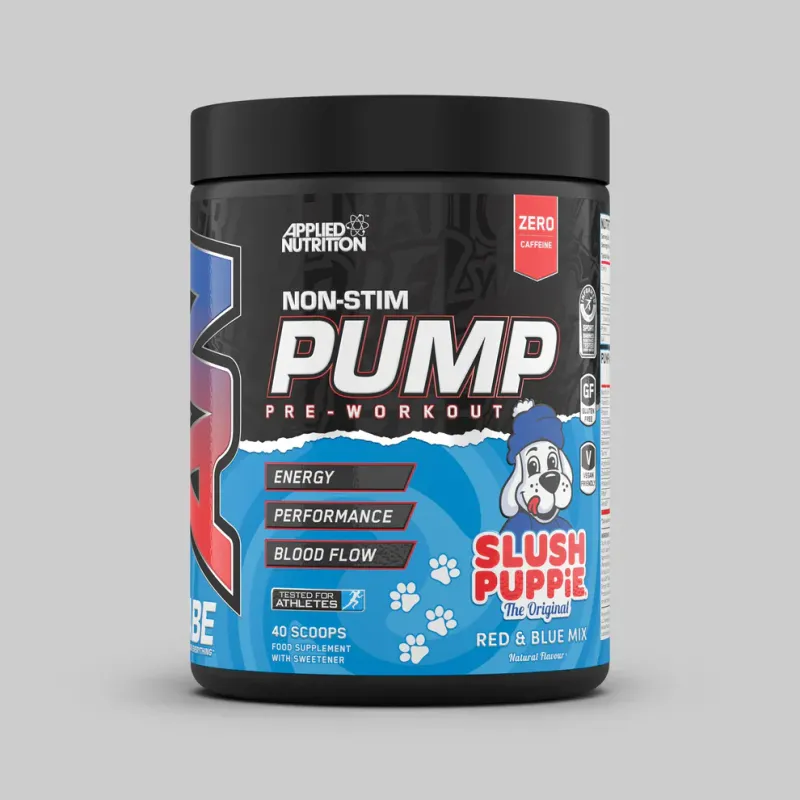
Applied Nutrition ABE Pump Pre Workout
500g bag
Stim-free pump pre-workout from Applied Nutrition. Nitrosigine + FitNox + AstraGin drive pump without caffeine. Informed Sport certified. Best for evening training.
Buy ABE Pump Pre Workout →See the price on AmazonPros
- + Zero caffeine for evening training
- + Nitrosigine and FitNox pump ingredients
- + Informed Sport certified banned-substance tested
- + Higher citrulline than stim ABE variant
Cons
- – Premium price for stim-free formulation
- – No caffeine means no alertness effect
- – Beta-alanine tingle same as stim version
●Nutrition per scoop · 0.8g protein in 12.5g▼
Protein makes up 6%
of this 12.5g scoop · 4 kcal total
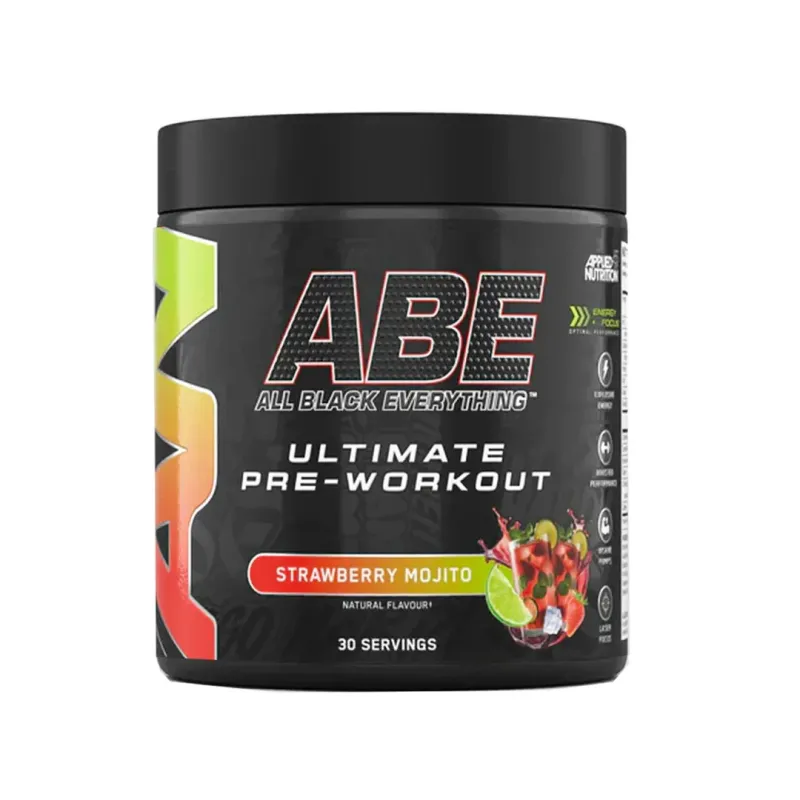
Applied Nutrition ABE Pre Workout
375g bag
Protein powder from Applied Nutrition. Compare prices across UK retailers.
Buy ABE Pre Workout →See the price on AmazonPros
- + Widely available in the UK
Cons
- – Premium price point
For the stim versus stim-free decision, see Stim vs Stim-Free Pre-Workout. For the full UK pre-workout comparison, see the pre-workout comparison table.
Related reading
Vegan Protein vs Whey: What the Evidence Actually Says
Soy actually outscores whey on the modern protein-quality metric, pea and rice do not, and at the budget end of the UK market plant now costs less per gram of protein. A head to head on the evidence rather than the marketing.
9 min read
When to Take Protein Powder: Before or After a Workout? (UK)
When to take protein powder in the UK: before or after your workout, whether the anabolic window is real, the best time of day, and how timing stacks up against total daily protein. Evidence-based, with value picks that work for any schedule.
6 min readHow Much Protein Powder Per Day (and Per Scoop)? UK Guide
How much protein powder to take per day in the UK: how many scoops, how much protein and how many calories are in a scoop, and how to work out your own target. Practical numbers plus a free calculator.
6 min readFind your cheapest protein
872 products compared across 8 UK retailers
Sorted by best value per 25g of protein.
Compare all products