Mounjaro Diet Plan UK: Eat Well, Keep Your Prescription (2026)
Losing weight too fast on Mounjaro can cost your prescription. UK diet plan with protein targets, weekly meals, and where protein powder fits in 2026.
Kevin, founder of WheyWise
Quick answer
On Mounjaro, the priority is hitting your protein target so you lose fat without losing muscle, and a shake is the easiest way there when the medication kills your appetite. A lean, low-lactose whey isolate like Bulk Pure Whey Isolate goes down easily on a small stomach, and Optimum Nutrition Gold Standard is the trusted everyday alternative. Aim for roughly 1.2 to 1.6g of protein per kg of bodyweight, spread across small meals, and use a shake to plug whatever the food leaves short.
Mounjaro and Wegovy are transforming weight loss in the UK, but they are also teaching a lot of users a hard lesson: losing weight fast feels great until your prescribing clinician pulls your script because you are not eating enough to stay healthy. Rapid weight loss, muscle wasting, and signs of disordered intake all trigger clinical concern at review appointments, and clinicians will pause or withdraw a prescription when safety flags appear.
This is not a scare piece. Most Mounjaro users are fine. But if you are not tracking your intake, hitting a protein target, or paying attention to the rate of loss, you are putting your prescription at unnecessary risk. This guide covers a practical UK-focused framework built around NICE clinical principles, with a sample weekly meal plan, protein targets, tracking tips, and where protein powder does (and does not) fit in.
Why losing weight too fast can cost your prescription
NICE guidance for weight management interventions targets a sustained, clinically meaningful loss of 0.5 to 1 kg per week during active treatment. Mounjaro and Wegovy are designed to help you land inside that range, not accelerate past it. When users consistently drop 2 to 3 kg per week for multiple weeks on end, it is usually a sign of inadequate intake rather than exceptional response to the drug.
At your review appointment, your prescribing clinician is looking for more than the number on the scale: stable energy levels, no unusual fatigue or muscle weakness, blood markers within normal ranges, and a healthy rate of loss. If any of these are off, especially combined with very low protein intake or skipping meals entirely, the clinician has a professional duty to pause or adjust your treatment. It is not punishment. It is safety, and it is exactly why they review you.
The safe weekly loss range on GLP-1
For most UK adults on Mounjaro or Wegovy, the healthy sustained loss range is:
- First 3 months: 0.5 to 1 kg per week is expected and welcomed by clinicians.
- Months 3 to 6: 0.3 to 0.8 kg per week as the easier initial losses slow.
- Beyond 6 months: plateaus are normal. Weeks where you do not lose are not failure.
Consistent loss above 2 kg per week for three or more weeks running is a red flag, not a win. It usually means calories are dangerously low, protein is not being prioritised, or both. If your tracking shows this pattern, reach out to your prescriber before your next review rather than waiting for them to flag it.
How much protein you actually need per day
The NHS baseline for adult protein intake is 0.75g per kilogram of body weight per day. That is the minimum to prevent deficiency in a weight-stable person. When you are in an active calorie deficit on a GLP-1 drug, that number is not enough to protect your lean mass. The clinical literature consistently recommends 1.4 to 1.6g per kilogram of body weight during a deficit, with some research supporting up to 2g per kilogram for heavily active users.
A worked example for a 90 kg adult targeting weight loss on Mounjaro:
- Baseline NHS intake: 90 x 0.75 = 68g per day (too low on GLP-1).
- GLP-1 target: 90 x 1.4 to 1.6 = 126 to 144g per day.
- Active upper bound: 90 x 2 = 180g per day.
A sample Mounjaro meal plan (3 day types)
Appetite on Mounjaro varies depending on where you are in your dose cycle, so a rigid seven-day plan tends to fail. Instead, here are three day-type templates you rotate based on how hungry you feel. Adapt portion sizes to your own protein target and calorie budget.
High-appetite day (typically days 3 to 6 post-injection)
- Breakfast: Greek yogurt 170g with mixed berries and a scoop of whey isolate, roughly 35g protein.
- Lunch: grilled chicken breast with quinoa and roasted vegetables, roughly 40g protein.
- Afternoon: cottage cheese with sliced apple, roughly 20g protein.
- Dinner: baked salmon, sweet potato, steamed greens, roughly 35g protein.
- Daily total: around 130g protein.
Low-appetite day (the first 48 hours after injection are often the toughest)
- Breakfast: high-protein overnight oats (40g oats, 1 scoop whey, milk), roughly 30g protein.
- Mid-morning: clear whey protein drink, roughly 20g protein.
- Lunch: small tuna wrap, roughly 25g protein.
- Afternoon: protein shake, roughly 25g protein.
- Dinner: scrambled eggs with smoked salmon, roughly 30g protein.
- Daily total: around 130g, achieved without forcing large solid meals.
Rest day (non-training, steady intake)
- Breakfast: two-egg omelette with spinach and feta, roughly 25g protein.
- Lunch: chicken and butter-bean salad, roughly 35g protein.
- Afternoon: protein shake plus a handful of almonds, roughly 25g protein.
- Dinner: turkey mince chilli, roughly 40g protein.
- Daily total: around 125g.
How to track intake without burning out
Tracking every gram forever is not sustainable and probably unnecessary. What actually matters is being accurate enough to show your clinician at reviews that you are hitting your protein target consistently. Three tools that work for UK users:
- MyFitnessPal (free): the UK standard. Its database covers most UK supermarket brands. Use it daily for the first 4 to 6 weeks to calibrate your eye, then drop to spot-tracking.
- Macrofactor (paid, around £10/month): better at tracking your actual TDEE and adjusting targets as weight drops. Preferred by serious trackers.
- Paper diary: fine if you eat a repetitive weekly rotation. Write each protein source and rough grams. Low effort, still useful at reviews.
Weigh yourself once a week, not daily. Daily weight is mostly water-weight noise and noise creates anxiety. Take a progress photo monthly. Those two metrics plus a protein-intake average are what a sensible clinician wants to see when they review your dose.
Where protein powders fit (and where they do not)
Protein powders are not magic and they are not a substitute for whole food. But they solve a very specific GLP-1 problem: when your appetite bottoms out, getting 40g of protein from a chicken breast feels impossible, while 30g of whey isolate mixed with water or milk goes down in minutes. That is the gap a good powder fills, and it is the reason clinicians often recommend them to GLP-1 users.
Two practical picks that work well for Mounjaro users who can tolerate dairy:
Best low-lactose option
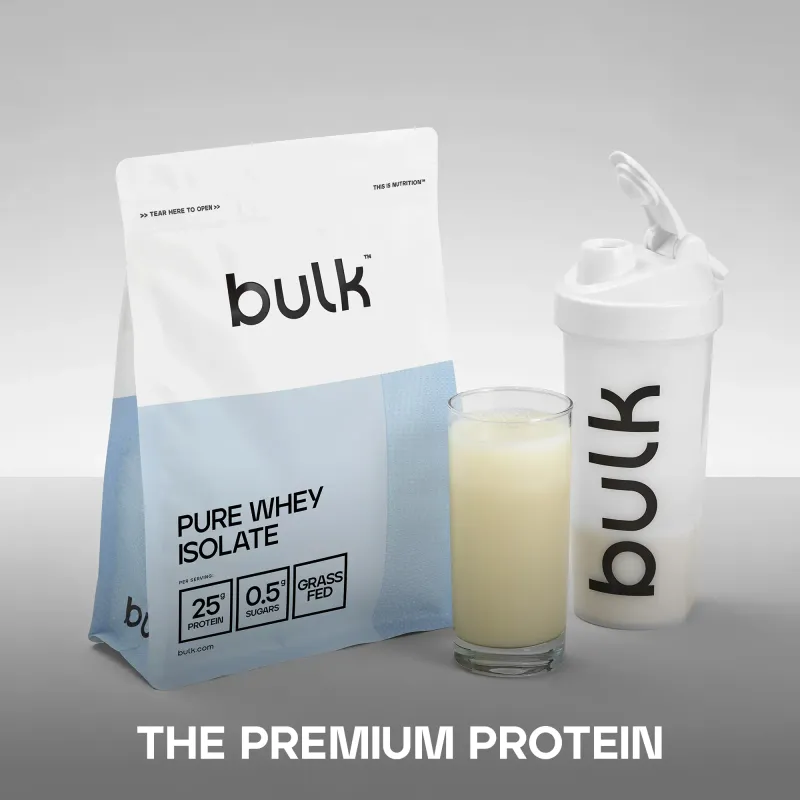
Bulk Natural Pure Whey Isolate
1kg bag
High-purity whey isolate from Bulk with 27g protein per 30g scoop. Very low fat and lactose, ideal for calorie-conscious or lactose-sensitive buyers.
or compare all UK prices →Best low-lactose option
Pros
- + 27g protein per 30g serving
- + Very low fat and carbs
- + Suitable for lactose-intolerant
- + Mixes thin and smooth easily
Cons
- – Pricier than concentrate version
- – Thinner mouthfeel less satisfying
- – Fewer flavour options
●Nutrition per scoop · 25.2g protein in 30g▼
Protein makes up 84%
of this 30g scoop · 105 kcal total
Most trusted whey blend
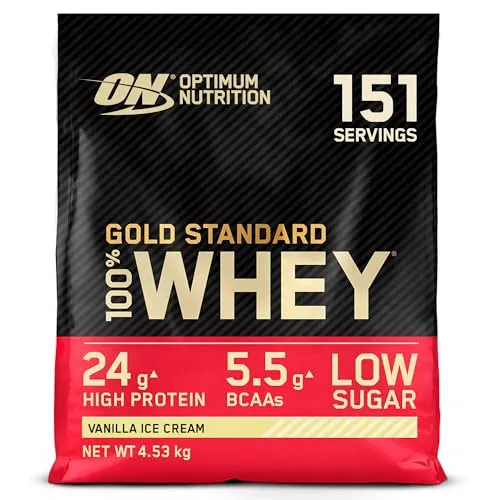
Optimum Nutrition Gold Standard 100% Whey Protein
900g bag
Optimum Nutrition Gold Standard delivers 24g protein per scoop and holds 4.6 stars across 55,000+ Amazon UK reviews. The default benchmark whey for buyers who want proven consistency over the lowest cost.
Buy Gold Standard 100% Whey Protein →See the price on AmazonMost trusted whey blend
Pros
- + 24g protein per scoop blended WPI WPC and hydrolysate
- + Most reviewed whey protein on Amazon UK with 55,000+ ratings
- + Instantised formulation mixes cleanly in cold water
- + 20+ flavour range with Double Rich Chocolate consistently 4.6 stars
Cons
- – Premium price tier above MyProtein and Bulk
- – Contains soy lecithin and artificial sweeteners
- – Smaller 450g tubs poor value vs 900g and 2.27kg sizes
●Nutrition per scoop · 23.7g protein in 30g▼
Protein makes up 79%
of this 30g scoop · 112 kcal total
For a broader product round-up framed around muscle preservation on GLP-1, read our companion guide: Best Protein Powder for Mounjaro and GLP-1 Users UK.
Where powders do not replace whole food: fibre, micronutrients, satiety, and the simple ritual of sitting to eat. On days you can eat, eat. Use shakes as a backstop, not a default.
Red flags to raise with your prescriber
If you notice any of these, bring them up at your next appointment or sooner:
- Unusual fatigue that does not improve with rest.
- Hair thinning or increased shedding.
- Feeling cold more than usual, a classic sign of very low calorie intake.
- Weakness climbing stairs or carrying shopping.
- Losing more than 2 kg per week for three weeks in a row.
- Inability to eat more than one small meal per day for multiple days running.
Your prescribing clinician can help you adjust, step down, or pause treatment. None of these is a reason for shame. They are clinical data, and sharing them early is what keeps your prescription on track.
Common questions about diet on Mounjaro
How much protein do I need if I am vegan?
The target is the same (1.4 to 1.6g per kilogram of body weight), but you need to spread it across more meals and supplement strategically. Pea-rice vegan blends like Form Performance Protein or Bulk Vegan Protein deliver roughly 20 to 25g per serving. Two servings a day plus legumes, tofu, and pulses typically hits target.
Can I have a protein shake on the same day I inject?
Yes. Protein does not interact with tirzepatide or semaglutide. Timing is about your appetite, not the drug. Most users find they can tolerate liquid protein on injection day even when solid food is tough.
Do I need creatine too?
If you are resistance training on Mounjaro, 3 to 5g of creatine monohydrate a day is well-evidenced for preserving strength during a deficit. Check with your prescriber if you have kidney concerns, but for most users it is safe.
What if I can barely eat at all?
If you cannot consistently eat at least one meal plus a shake per day, speak to your prescriber. You may need a dose adjustment or a different anti-emetic. Severely restricted intake on GLP-1 is the most common trigger for clinicians to pause or reduce dose.
The bottom line: Mounjaro and Wegovy work best when you treat them as a tool to make a structured diet easier, not a replacement for eating properly. Hit your protein target, stay inside the 0.5 to 1 kg weekly loss range, track enough to show your clinician a clear picture at reviews, and use protein powder to fill the appetite gap when it appears. That is how you lose weight and keep your prescription.
Related reading
Vegan Protein vs Whey: What the Evidence Actually Says
Soy actually outscores whey on the modern protein-quality metric, pea and rice do not, and at the budget end of the UK market plant now costs less per gram of protein. A head to head on the evidence rather than the marketing.
9 min read
When to Take Protein Powder: Before or After a Workout? (UK)
When to take protein powder in the UK: before or after your workout, whether the anabolic window is real, the best time of day, and how timing stacks up against total daily protein. Evidence-based, with value picks that work for any schedule.
6 min readHow Much Protein Powder Per Day (and Per Scoop)? UK Guide
How much protein powder to take per day in the UK: how many scoops, how much protein and how many calories are in a scoop, and how to work out your own target. Practical numbers plus a free calculator.
6 min readFind your cheapest protein
1,411 products compared across 57 UK retailers
Sorted by best value per 25g of protein.
Compare all products