Best Protein Powder for Summer Weight Loss UK 2026
Best summer cut proteins deliver 20g protein under 110 kcal at sub-50p per 25g. PhD Diet Whey, Applied ISO-XP and Bulk Pure Whey Isolate ranked for UK 2026.
Kevin, founder of WheyWise
The best protein powder for summer weight loss in the UK is one that delivers 20 to 25g of protein for under 110 calories per serving, comes from a category engineered for cutting (diet whey, whey isolate, or a lean all-in-one blend), and costs less than 50p per 25g of protein so you can actually drink it daily for the full 12 to 16 weeks of a summer cut without budget anxiety.
PhD Diet Whey, MaxiNutrition Promax Lean, Applied Nutrition ISO-XP, MyProtein Impact Whey Isolate, and Bulk Pure Whey Isolate are the five UK products that actually hit those numbers in 2026. The first three are purpose-built for fat loss with extras like CLA, green tea extract, and L-carnitine. The last two are pure whey isolates with cleaner macros and lower price per gram of protein. This guide breaks down which is right for your cut, what makes them work, and the cutting protocol that ties it together.
What makes a protein powder good for a summer cut?
A summer cut runs on three nutritional levers: a calorie deficit, a high protein intake, and enough training stimulus to keep the lean muscle you built in winter. The protein powder you pick controls two of those three. Five label specs decide whether a powder helps or hinders the deficit:
Calories per 25g of protein under 110 kcal. A standard whey concentrate scoop delivers 20g of protein for around 110 calories. A diet whey or whey isolate scoop hits the same protein for 95 to 100 calories by stripping out fat and carbs. Across a 12-week cut that runs to roughly 1,800 to 2,500 fewer calories from protein shakes alone, which is a full week of additional deficit.
Protein per 100g above 68g. Below 68g, the powder is filler-heavy and your cost per gram of actual protein climbs fast. Diet wheys typically sit at 68 to 72g per 100g. Whey isolates sit at 84 to 90g per 100g. Anything declaring under 65g per 100g is not a serious cutting product regardless of how the front label is dressed.
Low sugar, under 2g per serving. Premium diet wheys and isolates hit this easily. Mass gainers, "all-in-one" recovery blends, and weight-loss shakes aimed at the supermarket aisle often do not. Check the back label, not the marketing claim on the front.
Real cost per 25g of protein under 50p. A summer cut takes 12 to 16 weeks of consistent intake. The total protein bill matters. PhD Diet Whey on sale sits near 35 to 45p per 25g of protein. MaxiNutrition Promax Lean is closer to 55 to 70p. The difference compounds over a full cut.
A flavour you can drink twice a day for four months. The honest one. Cutting protein powders are typically lower in fat and sugar, which means they live or die on flavour engineering. Reading Trustpilot and Amazon UK reviews for taste consistency before you buy a 2kg tub saves real money.
The 5 best protein powders for summer weight loss UK 2026
Five UK protein powders that pass every spec above and cover every cutting use case from supermarket convenience to ultra-clean macros.

PhD Nutrition Diet Whey Protein Powder 1kg
1kg bag
PhD Diet Whey is the UK's most-bought diet whey, with 8,000+ Amazon UK reviews at 4.4 stars. The macros do the heavy lifting at under 100 kcal per 20g protein serving — the diet-extra ingredients are a small bonus, not the main draw. Best for anyone who wants a supermarket-shelf option for a 12-week cut.
Buy Diet Whey Protein Powder 1kg →Live price across UK retailersPros
- + 68g protein per 100g with added CLA, green tea extract, and L-carnitine
- + Under 100 kcal per 25g protein serving for clean deficit fit
- + Stocked in Tesco, Asda, Boots, Holland and Barrett, and Amazon UK
- + Sale prices drop to under 40p per 25g of protein
Cons
- – 1kg tub is the only sensible size — no 2.5kg option
- – CLA and L-carnitine doses too low to drive meaningful fat metabolism
●Nutrition per scoop · 17g protein in 25g▼
Protein makes up 68%
of this 25g scoop · 91 kcal total

MaxiNutrition Promax Lean All-In-One Protein Powder
990g bag
MaxiNutrition Promax Lean is the premium pick of the UK diet whey category — Informed Sport tested with a vitamin and metabolism stack built in. The isolate plus casein base gives a slower-digesting profile that keeps you fuller for longer between meals. Worth the price gap over PhD if you train fasted, compete in a tested sport, or want fewer pots on the shelf.
Buy Promax Lean All-In-One Protein Powder →Live price across UK retailersPros
- + Whey isolate plus calcium caseinate base — higher protein density than concentrate
- + Built-in B-vitamin complex, green tea, L-carnitine, and 100mg caffeine per serving
- + Informed Sport tested batch by batch for drug-tested athletes
- + All-in-one formulation replaces stacking three separate supplements
Cons
- – RRP near £40 per 1kg — sale prices rarely match PhD's value
- – Caffeine content rules it out for evening shakes if you train AM
●Nutrition per scoop · 28.4g protein in 35g▼
Protein makes up 81%
of this 35g scoop · 123 kcal total

Applied Nutrition Iso-XP 1kg
1kg bag
Applied Nutrition ISO-XP delivers 90g of protein per 100g from pure whey isolate with virtually no carbs or fat. The macro profile is as clean as it gets for a UK protein powder — every calorie is protein. Best for cutting macros where you want the protein and nothing else.
Buy Iso-XP 1kg →Live price across UK retailersApplied Nutrition Iso-XP 1kg
1kg bagPros
- + 90g protein per 100g whey isolate — highest density in this guide
- + Near-zero carbs and fat for the cleanest cutting macros available
- + Informed Sport certified, transparent label, no proprietary blends
- + Amazon Prime delivery and frequent multibuy promos
Cons
- – Premium price per 100g of powder, though competitive per 25g of protein
- – Lactose content low but not zero — sensitive guts should still test a single tub first
●Nutrition per scoop · 22.5g protein in 25g▼
Protein makes up 90%
of this 25g scoop · 93 kcal total
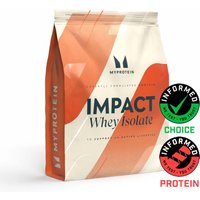
MyProtein Impact Whey Isolate Powder
1kg bag
MyProtein Impact Whey Isolate is the budget isolate that anchors most UK cutting stacks. Wait for an Impact Week 50%+ code, buy the 2.5kg or 5kg bag, and you land at the lowest cost per 25g of protein of any UK isolate. Best for high-volume drinkers and anyone running a four-month cut.
Buy Impact Whey Isolate Powder →Live price across UK retailersor buy direct from MyProtein →Pros
- + 76g protein per 100g with low lactose for sensitive guts
- + 40+ flavours including Clear Whey Isolate options
- + Largest UK isolate range with bag sizes from 250g to 5kg
- + Discount-code price floor near 50p per 25g of protein during Impact Week
Cons
- – Full-price RRP is poor value — only worth buying on a code drop
- – Frequent flavour reformulations affect taste consistency review-to-review
●Nutrition per scoop · 23.7g protein in 30g▼
Protein makes up 79%
of this 30g scoop · 105 kcal total

Bulk Pure Whey Isolate
1kg bag
Bulk Pure Whey Isolate delivers 84g of protein per 100g at honest pricing that beats MyProtein at RRP and stays competitive on code drops. Best for buyers who hate timing purchases around discount cycles.
Buy Pure Whey Isolate →Live price across UK retailersor buy direct from Bulk →Bulk Pure Whey Isolate
1kg bagPros
- + 84g protein per 100g — outstanding purity for the price tier
- + Transparent direct-to-consumer pricing without code games
- + 2.5kg and 5kg bag sizes drop cost per 100g sharply
- + Clean ingredient list with no proprietary blends
Cons
- – Narrower flavour range than MyProtein's isolate line
- – Direct shipping only — no Amazon Prime fallback
●Nutrition per scoop · 25.2g protein in 30g▼
Protein makes up 84%
of this 30g scoop · 105 kcal total
For live UK prices across all five products, sorted by cost per 25g of protein and updated weekly across 85+ retailers, the weight loss protein comparison table and the whey isolate comparison show every option side by side.
Diet whey vs whey isolate: which is better for cutting?
Diet whey and whey isolate both work for a summer cut, but they win on different metrics. Diet whey adds functional ingredients (CLA, green tea, L-carnitine) and is calibrated to a low-calorie serving. Whey isolate strips out almost everything except the protein itself. The honest answer to which is better depends on what you value.
Diet whey wins on convenience and price. PhD Diet Whey at £15 to £18 per 1kg on sale gives you a low-calorie serving with the diet extras already in the tub. You do not need to buy green tea capsules or L-carnitine separately. The price per 25g of protein is among the cheapest in the cutting category.
Whey isolate wins on macro purity and protein density. Applied Nutrition ISO-XP at 90g protein per 100g delivers more protein per scoop with fewer wasted calories. For a hard cut where every macro counts, isolate is the cleaner tool. The diet whey functional extras are present in doses too small to move fat loss measurably — the meta-analyses on CLA and L-carnitine show modest effects only at gram-level doses, not the milligrams diet wheys actually include.
For most UK buyers on a 12-week summer cut, diet whey is the simpler choice and the cheaper one. For powerlifters, drug-tested athletes, or anyone running a final-six-weeks aggressive cut, an isolate gets you cleaner macros. The detailed head-to-head in whey isolate vs concentrate covers when the price gap is worth it. The dedicated PhD Diet Whey vs MaxiNutrition Promax Lean review breaks down the two best UK diet wheys side by side.
How much protein do you actually need to lose weight?
The evidence-backed protein target for fat loss is 1.6 to 2.2g of protein per kg of bodyweight per day. For an 80kg adult, that is 128 to 176g of protein daily across food and shakes. The higher end of the range matters more during a cut because the calorie deficit increases the risk of losing lean muscle alongside fat.
A typical UK adult eating a meat or dairy-inclusive diet hits around 60 to 90g of protein from food alone. That leaves a gap of 40 to 100g per day for someone trying to cut at 1.6 to 2.2g per kg. Two scoops of a 20g-protein diet whey close most of that gap in under 200 calories. That is the entire job of a cutting protein powder — make a hard daily target easy to hit without spending half your remaining calories on it.
Use the WheyWise protein calculator to dial in your daily target by bodyweight and activity level. Hit that number every day for 12 to 16 weeks and the rest of the cut sorts itself out around it.
When to take protein powder in a calorie deficit
Timing matters less than total daily intake. But three windows are genuinely useful during a cut:
Mid-morning or mid-afternoon as a between-meal shake. A 100 kcal diet whey shake closes a hunger gap that would otherwise become a 400 kcal snack. This is the single most useful slot for a cutting protein powder.
Pre-training, 30 to 60 minutes before a lift. Gives the body amino acids during the session and reduces post-workout muscle breakdown. Caffeinated all-in-one blends like MaxiNutrition Promax Lean double up as a pre-workout for cost efficiency.
Within 60 minutes post-training. The classic post-workout window is wider than once believed, but a protein shake within an hour of training is a fast, low-calorie way to refuel without breaking the deficit. Skip the added carbs unless you are training twice a day.
What does not matter as much as the wellness internet claims: protein right before bed, casein-only night shakes, or precise 30-minute anabolic windows. Daily total drives the result. Hit the number, train hard, sleep enough.
Five mistakes that wreck a summer cut
Five protein-related mistakes that most often derail a UK summer cut, drawn from forum and Trustpilot threads where people document why their first cut failed.
Buying weight-loss shakes instead of diet whey. "Meal replacement" shakes from supermarket wellness aisles typically deliver 12 to 15g of protein for 200+ calories with added carbs. They are not protein powders, they are calorie-controlled meal replacements with poor protein density. Stick to diet whey, whey isolate, or lean all-in-one blends.
Counting protein bars as a primary source. A 20g-protein bar typically delivers 200 to 240 kcal with 8 to 12g of sugar alcohols or added carbs. Useful as a snack, terrible as a daily target tool. A diet whey shake gives the same protein for half the calories.
Under-buying. A 1kg tub at 1 scoop per day lasts roughly 30 servings. On a serious cut at 2 scoops per day, the tub runs out in 15 days. Buyers who order the smallest size end up either spending more long-term or running out and falling off the protein target. Buy 2kg or 2.5kg from the start.
Switching brands mid-cut for variety. A consistent protein source is one less variable to manage when the deficit is already biting. Pick one diet whey and one isolate, stock both, switch between them by training day rather than tub by tub. Stability beats novelty over 12 weeks.
Ignoring price per 25g of protein. A £20 1kg tub at 60g protein per 100g works out worse value than a £25 1kg tub at 80g protein per 100g. The cheap-looking tub costs more per gram of actual protein and runs out faster. WheyWise normalises every UK product to cost per 25g of protein automatically on the main comparison table — sort cheapest first before buying anything.
Frequently asked questions
What is the best protein powder for summer weight loss in the UK? PhD Diet Whey is the best value pick for most UK buyers in 2026, delivering 20g of protein per serving for under 100 calories at roughly 35 to 45p per 25g of protein on sale. Applied Nutrition ISO-XP is the cleanest-macros pick for hard cutters who want 90g protein per 100g with near-zero carbs and fat.
Is diet whey better than normal whey for losing weight? Diet whey delivers the same protein per serving as standard whey concentrate but at lower calories (95 to 100 kcal vs 110 to 130 kcal) by reducing the fat and carb content. Over a 12-week cut, that 15 to 30 kcal per serving difference adds up. The added CLA and L-carnitine are present in doses too small to move fat loss measurably, so the value of diet whey is in the calorie reduction, not the diet extras.
How many protein shakes a day should I have on a cut? Two scoops per day is the typical sweet spot for an 80kg adult — that covers 40 to 50g of protein, closes the gap between food intake and the 1.6 to 2.2g per kg target, and stays under 220 calories. Three scoops is the upper limit before powder starts replacing real food unnecessarily.
Can I just use whey isolate instead of diet whey? Yes — whey isolate works as well or better for a cut because it is higher in protein density (84 to 90g per 100g vs 68 to 72g for diet whey) with cleaner macros. The trade-off is that isolate does not include the small dose of CLA or green tea extract, and isolate is often slightly more expensive per 100g. For most UK cutters, the cheaper option that hits the macros wins. See the whey isolate vs concentrate breakdown for the full price-versus-purity trade-off.
Is MaxiNutrition Promax Lean worth the premium over PhD Diet Whey? MaxiNutrition Promax Lean costs roughly 50 to 70% more per 25g of protein than PhD Diet Whey. The premium buys a whey isolate plus calcium caseinate base (slower digesting), Informed Sport testing, and 100mg of caffeine built in. Worth the gap only if you train fasted, compete in a drug-tested federation, or want to consolidate stack to one tub. The dedicated PhD Diet Whey vs MaxiNutrition Promax Lean review covers the trade-off on real UK prices.
When should I start cutting for summer in the UK? A typical UK summer cut runs 12 to 16 weeks from start to peak, putting the start date in February for a June peak or in March for an August peak. Starting in May for a July or August target is workable on a moderate deficit, but a hard 4 to 6 week cut leaves more risk of losing lean muscle. The GLP-1 user protein guide covers the slower 16+ week protocol where muscle retention is the higher priority.
Related reading
Best Protein Powder for Beginners UK 2026: A Simple First Buyer's Guide
The best protein powder for beginners in the UK in 2026. What to buy first, which type to pick, how much to take, and the simplest value options ranked by cost per 25g of protein.
10 min read
Best Protein Powder for Smoothies, Oats, Coffee and Baking UK
The best UK protein powders for smoothies, porridge, coffee and baking in 2026. Which type mixes, bakes and dissolves best, plus the most versatile picks ranked by use and cost per 25g.
9 min read
Best Pre-Workout UK 2026: The Honest Buyer's Guide
Best UK pre-workout 2026: Applied Nutrition ABE leads on dosing (200mg caffeine, 3.2g beta-alanine, 6g citrulline). Grenade .50 Calibre wins on flavour. Stim-free options for evening lifts.
11 min readFind your cheapest protein
1,958 products compared across 85+ UK retailers
Updated weekly. Sorted by best value per 25g of protein.
Compare all products